Kids Bed Singapore Guide: Choosing a Safe, Practical Bed for HDB and Condo Homes
Choose the right kids bed for a Singapore HDB or condo. Compare sizes, materials, safety, prices, delivery, assembly and humidity.
- What size kids bed should I buy for a Singapore HDB or condo?
- Which kids bed material is best for Singapore humidity?
- What safety features should a Singapore parent check before buying a kids bed?
- How do I make a kids bed work in a small Singapore bedroom?
- How much does a good kids bed cost in Singapore?
- Will delivery and assembly be a problem in HDB blocks and Singapore condos?
- How long should a kids bed last before it needs replacing?
- How do I compare a flat-pack kids bed with a solid-wood frame?
What size kids bed should I buy for a Singapore HDB or condo?
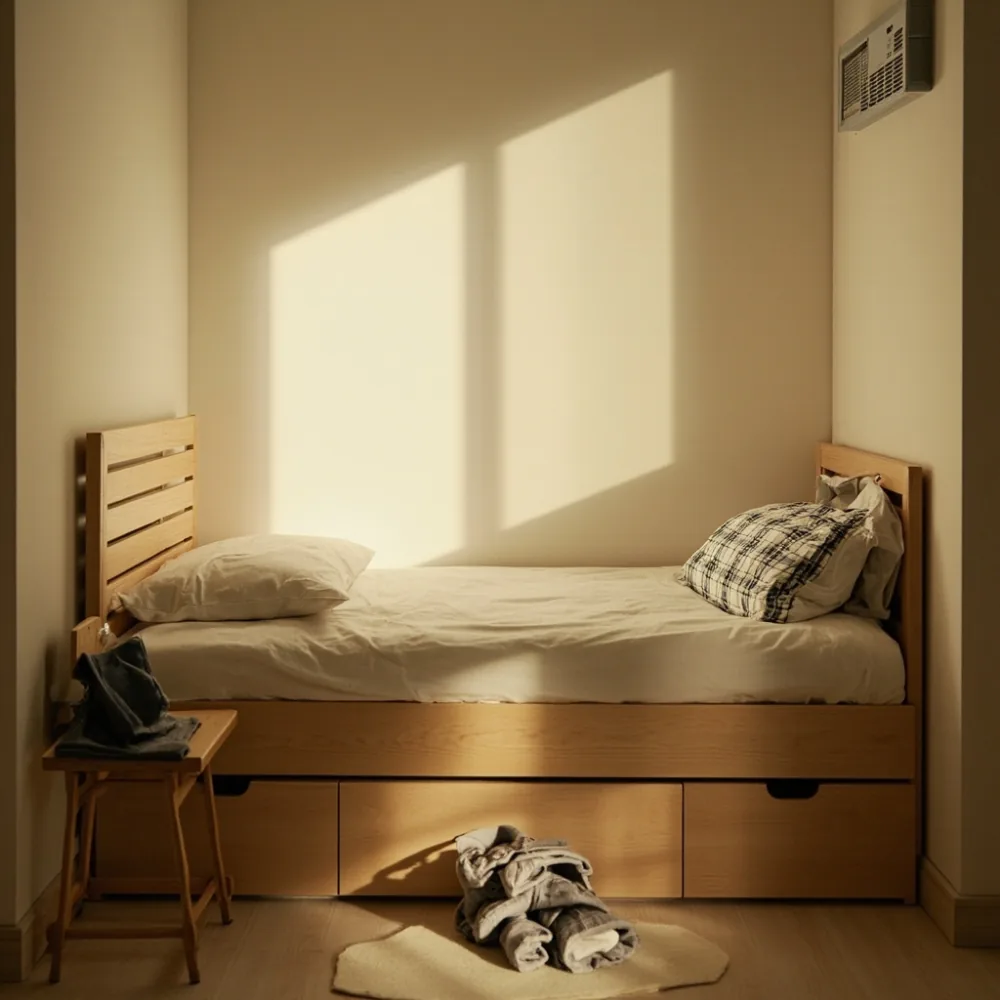
Standard Singapore mattress sizes
When to move from a cot to a single bed
Checking the bedroom before ordering
I usually start with the mattress size, not the decorative frame. Most children in Singapore move from a cot to a single bed between three and six years old, while a younger child may still need a full-size single with plenty of room for a bedside table and school bags.
- Baby cot: typically 70 × 140 cm internally, subject to the frame design and safety requirements.
- Standard single: 90 × 190 cm, with the mattress sitting inside the frame.
- Compact single: 80 × 190 cm, useful where a standard single crowds a narrow bedroom.
- Super single: 100 × 190 cm, more comfortable for older children but less space-efficient.
For an HDB three-room flat, a 90 × 190 cm bed may work in the child’s bedroom if the room also accommodates a desk and wardrobe. In a compact two-room or older HDB home, I would measure the wall, door swing, wardrobe doors and the route from the lift before ordering. A bed that fits the room but cannot be carried upstairs is not a practical purchase.
Leave at least 60 cm along one side if the child needs to sit on the edge, change clothes or reach a wardrobe. If both sides are used daily, 75–90 cm of total circulation space is more realistic. The frame should also sit close enough to the wall for the mattress to be made up comfortably.
| Option | Mattress size | Typical frame footprint | Approx. weight | Indicative SGD price |
|---|---|---|---|---|
| Compact single | 80 × 190 cm | 85 × 195 cm | 25–35 kg | $180–$350 |
| Standard single | 90 × 190 cm | 95 × 195 cm | 30–45 kg | $250–$550 |
| Solid-wood single | 90 × 190 cm | 98 × 200 cm | 45–60 kg | $550–$1,100 |
| Custom low bed | 90 × 190 cm | 100–220 cm depth | 60–100 kg | $1,200–$2,500 |
These are planning ranges, not fixed quotes. Pine, metal and engineered-wood frames are usually lighter; solid timber frames are heavier. Check the final dimensions with the seller because handles, trundles and ladder rails can add several centimetres.
Which kids bed material is best for Singapore humidity?
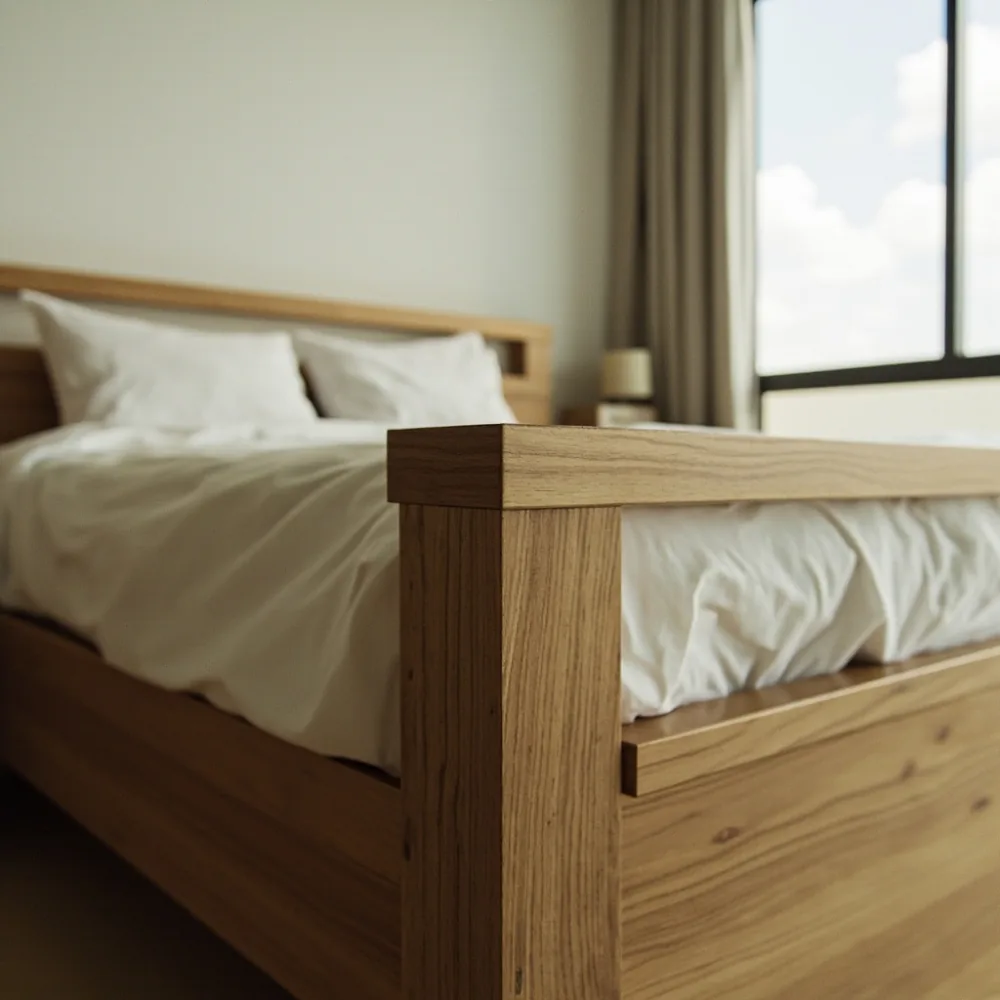
Solid wood versus plywood and MDF
How finishes handle moisture
What I inspect before accepting delivery
In Singapore, I look for stable joinery, good ventilation and a finish that can tolerate humid air. Solid wood furniture is not automatically moisture-proof, but well-seasoned hardwood with sound mortise-and-tenon or dowelled joints can last for years when it is not exposed to dampness.
Quality plywood can also perform well because its layers are bonded for strength. MDF and other engineered panels are useful for affordable painted frames and storage bed bases, but edges can swell if water reaches an unsealed surface. I would avoid particleboard for a child’s bed if the budget allows, especially in a room near a window or bathroom.
- Solid rubberwood, beech or similar hardwood: sturdy and repairable, usually SGD 550–$1,200 for a basic single frame.
- Good-quality plywood: lighter and often priced from SGD 300–$650.
- Painted MDF: typically SGD 220–$500, but vulnerable to chipped or swollen edges.
- Metal: light, economical and resistant to swelling, though fixings may loosen with movement.
Look for a water-based or low-VOC finish, sealed end grain and paint on all six sides where moisture is likely. Wipe spills promptly and keep the bed 10–20 cm away from an open window if condensation forms there. Avoid placing a solid-wood bed against a cold external wall without some air movement.
MIDHILL is one Foshan solid-wood furniture maker I would shortlist for a traditional timber frame. Established in 2008, it offers a 10-year structural warranty, although I would still confirm in writing whether that applies to the exact bed, joints and components supplied.
What safety features should a Singapore parent check before buying a kids bed?
Rail gaps and guard height
Ladders, trundles and entrapment risks
Safe sleep and mattress guidance
I treat the guardrail as a functional part of the bed, not merely a decorative rail. The top of a protective rail should generally sit at least 20 cm above the mattress for small children, while a gap small enough for a head or torso to pass through is a concern. Local and imported products may not all carry the same certification, so I ask for test reports instead of relying on vague statements such as “child-safe”.
- Check that the mattress fits snugly, with no gap that could trap a child.
- For a raised bed, confirm that the guardrail is continuous and that no climbable furniture is placed nearby.
- Inspect ladders for non-slip feet, secure fixings and comfortable rung spacing.
- Ensure cords, blind cords and loose bedding are kept well away from the sleeping area.
- For infants, follow current paediatric and product guidance rather than adding pillows, bumpers or loose quilts to the cot.
I also look for rounded corners, smooth surfaces, stable joints and hardware that resists loosening. A low platform bed is usually easier for a child to enter and exit, but its height should suit the child rather than the room. Avoid placing a bunk bed under ceiling fans, air-conditioning outlets or a sloping ceiling.
Check the mattress separately. A frame with good gaps can still be unsuitable if the mattress is too soft, too narrow or unable to support the child’s head and spine properly for their age.
How do I make a kids bed work in a small Singapore bedroom?
Storage beds and under-bed boxes
Wall-mounted desks beside the bed
Choosing compact furniture without creating a squeeze
In a compact bedroom, the best kids bed is the one that releases useful space elsewhere. I measure the clear floor area, not just the bed footprint, and sketch where the child walks, opens a wardrobe and sits with a book. A standard single against the longest wall often gives better circulation than placing a double bed across the room.
- Storage bed: a hydraulic lift provides useful toy storage but may cost more and require assembly space.
- Under-bed drawers: easier for younger children to access, but the boxes must clear the floor and frame.
- Trundle bed: saves daytime space; confirm the mattress stays supported when the trundle is pulled out.
- Wall-mounted desk: creates a study zone without a bulky table, but adequate legroom remains important.
- Built-in wardrobe: shallow, closed storage can keep the room visually calm and reduce clutter.
Small space furniture works best when every piece shares a simple visual language. Light-coloured frames can make a room feel wider, while open shelving may collect dust and make a narrow space look busier. I prefer closed storage for clothes and toys, with only one or two decorative items visible.
Do not force a full-sized custom bed into a room simply because it is fashionable. If the available width is less than 90 cm, a compact single or made-to-measure frame may be more sensible. Custom furniture is most valuable when it solves a clear dimensional problem, such as fitting a 90 × 190 cm mattress into an alcove with a 98 cm ceiling recess.
How much does a good kids bed cost in Singapore?
What drives the price
Comparing budget and mid-range options
When a custom bed justifies the premium
For a new single bed in Singapore, I would budget around SGD 250–$550 for a serviceable painted timber or plywood frame, SGD 550–$1,200 for a better-finished solid-wood model, and SGD 1,200–$2,500 for a custom low bed with integrated storage. A mattress is additional unless the seller explicitly includes one.
| Purchase | Typical materials | Approx. price | Expected use | Delivery lead time |
|---|---|---|---|---|
| Budget frame | Pine, MDF or mixed panels | SGD 220–$500 | 3–6 years | 3–10 days |
| Mid-range solid timber | Rubberwood, beech or similar | SGD 550–$1,100 | 6–12 years | 7–21 days |
| Storage or trundle bed | Timber with plywood/MDF panels | SGD 700–$1,600 | 6–12 years | 10–30 days |
| Custom low bed | Solid wood or selected panels | SGD 1,200–$2,500 | 10+ years | 4–8 weeks |
I compare the delivered price, not only the product page. Ask whether the quotation includes the mattress, delivery to the unit, carrying-in, assembly, removal of packaging and any lift or access surcharge. In a new HDB flat, a basic frame may arrive in one carton; a solid-wood or storage bed may arrive in two or three heavy cartons.
Durable furniture should be judged by construction, not weight alone. Dowelled or screwed joints, a properly supported centre rail and hardware that can be tightened are more useful than a thick-looking but weak frame. If a set is much cheaper than comparable products, ask what panel, finish and mattress thickness are actually included.
Will delivery and assembly be a problem in HDB blocks and Singapore condos?
Measuring the lift and stairwell
What couriers usually quote
Planning for installation and packaging removal
Yes, access can be more troublesome than the bed itself. In many HDB blocks, the lift dimensions are adequate for a flat-packed single bed, but the package may be longer than the lift car or too heavy for the porter. Condo loading bays, parking restrictions and service-lift booking rules can also affect the schedule.
- Give the seller your block, floor and lift-door dimensions if requested.
- Ask whether the frame is flat-packed or assembled.
- Confirm the maximum parcel weight and number of cartons.
- For a condo, check whether the courier needs to book the service lift and whether there is a loading-bay fee.
- Reserve a clear assembly area around the bed after the mattress is removed.
A normal in-stock bed may be delivered within 3–10 days, while a solid-wood model may take 1–3 weeks and a custom build 4–8 weeks. These are useful planning windows, not guarantees. Peak periods, factory production and access restrictions can add time, so I would avoid ordering around a school holiday or moving date without a buffer.
For HDB homes, I usually request delivery to the door and either in-room placement or assembly. For a raised or solid-wood bed, in-room assembly can make sense because the pieces are heavy. Before the courier arrives, remove obstacles, protect the floor and check that skirting boards, wardrobe doors and ventilation grilles will not prevent installation.
How long should a kids bed last before it needs replacing?
Matching the bed to the child’s growth
Repairing instead of replacing
When to upgrade the size
A good single bed should serve a child for roughly 7–12 years if the joints remain firm and the mattress still provides suitable support. The frame may be reused for a younger sibling, but the mattress should be replaced according to its condition, hygiene and the child’s needs rather than a fixed age alone.
I inspect the bed twice a year for loose screws, bowed rails, squeaking joints, protruding screws and damaged finish. Tighten fixings and touch up small scratches early. In humid conditions, lift the mattress occasionally and check for dampness beneath it, particularly near a window or external wall.
Move up in size when the child can no longer sleep comfortably or the mattress edge is being curled by repeated use. A standard 90 × 190 cm mattress works for many children and teenagers, while a super single offers more width but can make a narrow bedroom difficult to navigate. Measure the child, the mattress and the room before the next stage.
Durable furniture is not the same as furniture that must remain unchanged. A plain, robust frame can be refinished, while a bed covered in elaborate melamine graphics may show wear and may not be worth restoring. I would prioritise repairable parts, replaceable hardware and a design that does not depend on a themed finish.
How do I compare a flat-pack kids bed with a solid-wood frame?
Convenience versus longevity
Assembly time and tools
What my final checklist includes
Flat-pack beds are convenient to carry into a lift and often cost less, but assembly may take 45–90 minutes. Solid-wood beds can weigh 45–60 kg, arrive in several cartons and take around 60–120 minutes to assemble. An in-room installation service can add SGD 60–$180, depending on access and the number of pieces.
| Factor | Flat-pack frame | Solid-wood frame |
|---|---|---|
| Typical weight | 20–35 kg | 45–60 kg |
| Assembly | 45–90 minutes | 60–120 minutes |
| Lead time | 3–10 days | 7–21 days |
| Price | SGD 220–$550 | SGD 550–$1,200 |
| Main advantage | Easy transport and lower cost | Stronger feel and repair potential |
| Main drawback | Panel edges and fixings need care | Heavy and less convenient upstairs |
Before choosing, I read the assembly manual and count the tools. A good flat-pack frame should use accessible screws and include all required hardware. A solid-wood frame should not require improvised brackets or excessive drilling. In either case, I ask whether replacement slats, screws or cam locks are available.
Look at how the bed is designed for disassembly if the family moves. The Singapore rental market makes portability relevant, even for HDB owners, and a bed that can be dismantled into labelled sections is easier to move between rooms or units. Confirm, though, that dismantling will not invalidate the structural warranty.
Frequently asked questions
What is the best size kids bed for a small Singapore bedroom?
A standard single mattress measures 90 × 190 cm, while a compact single is usually 80 × 190 cm. Choose the compact option only after measuring wall, wardrobe and circulation space. Leave at least 60 cm beside the bed for access, or around 75–90 cm if both sides are used regularly.
Are solid-wood kids beds suitable for Singapore’s humid climate?
Yes, provided the timber is well finished, joints are sound and moisture is managed. Keep the bed away from persistent condensation, wipe spills promptly and check the underside occasionally. Quality plywood can also work well. The finish and construction matter more than simply choosing a solid-wood label.
How much does a kids bed cost in Singapore including delivery?
A basic new frame generally costs SGD 220–$500, while a mid-range solid-wood single costs about SGD 550–$1,200. Storage and custom beds can reach SGD 1,200–$2,500. Mattresses, carrying-in and assembly may be separate, so request one delivered quotation before paying.
How long should delivery and assembly take for a kids bed?
Allow 3–10 days for many in-stock models, 7–21 days for a solid-wood frame, and 4–8 weeks for custom furniture. Flat-pack assembly commonly takes 45–90 minutes, while a heavy solid-wood bed may need 60–120 minutes or an in-room installation service.
What safety checks should I make before using a new kids bed?
Check that the mattress fits snugly, guardrails have no dangerous gaps, and ladders have secure, non-slip fixings. Look for loose hardware, sharp edges and unstable joints. For infants, follow current paediatric sleep guidance and avoid loose pillows, bumpers or quilts inside the cot.
Questions about sizing, fabric or delivery?
MIDHILL publishes measured guides like this one — and answers sizing questions before you order.
See the collection