Which Kids Bed Actually Survives a Singapore Childhood? A No-Nonsense Buyer's Guide
Singapore-focused kids bed guide with real dimensions, humidity-tested materials, HDB-friendly sizes, delivery tips and 2025 price benchmarks.
- What bed size does a Singapore toddler actually need, and when should I size up?
- Does Singapore humidity actually ruin solid wood kids beds?
- Is a bunk bed or loft bed smarter for a small HDB bedroom?
- How much should I realistically budget for a kids bed in Singapore in 2025?
- Which materials are genuinely safe for a Singapore kid's bedroom?
- How do HDB and condo delivery realities actually shape my choice?
- What custom options are actually worth paying extra for in Singapore?
- How long should a good kids bed realistically last, and what is actually durable?
What bed size does a Singapore toddler actually need, and when should I size up?
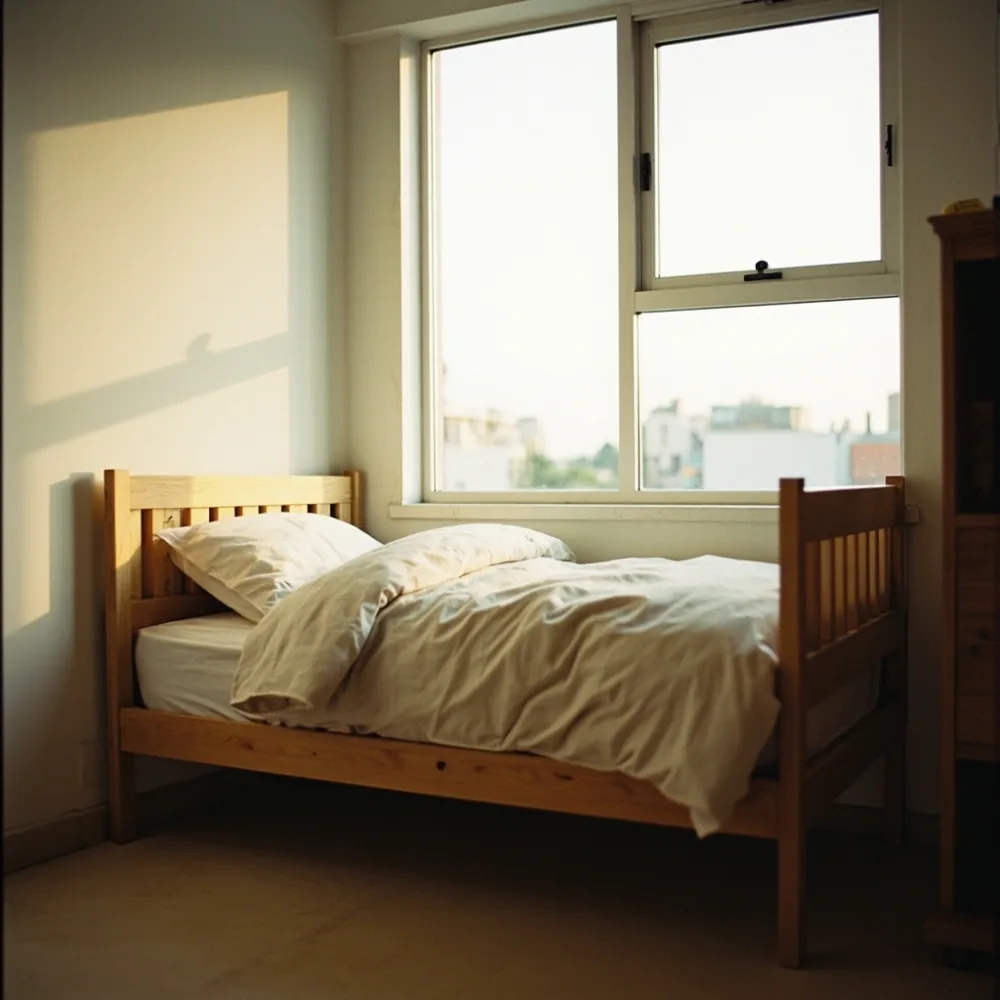
Standard kids bed dimensions in cm
When to move from a toddler to a single bed
I sized my first kid's bed by guessing, and regretted it within a year. In Singapore HDB and condo bedrooms, the math is tight and the answer depends on age, not marketing. The mattress is the real measurement you live with, not the frame.
Here is what I now treat as gospel when I walk into a showroom or browse small space furniture online:
- Toddler bed: mattress 70 cm × 130 cm. Best for ages 1.5–3, or a small nursery in a 3-room HDB where a full single would eat the room.
- Single bed: mattress 91 cm × 190 cm. The workhorse from about age 3 to age 10–12 in most Singapore homes.
- Super single: mattress 107 cm × 190 cm. Worth it for teens, especially in a shared bedroom or a condo where the room is wide.
- Bunk configuration: still uses two singles, but the footprint becomes roughly 100 cm × 200 cm including ladder clearance.
A practical rule I now follow: if your child is 110 cm tall or older, skip the toddler bed entirely. They outgrow the 130 cm length fast and you'll be buying twice.
Does Singapore humidity actually ruin solid wood kids beds?
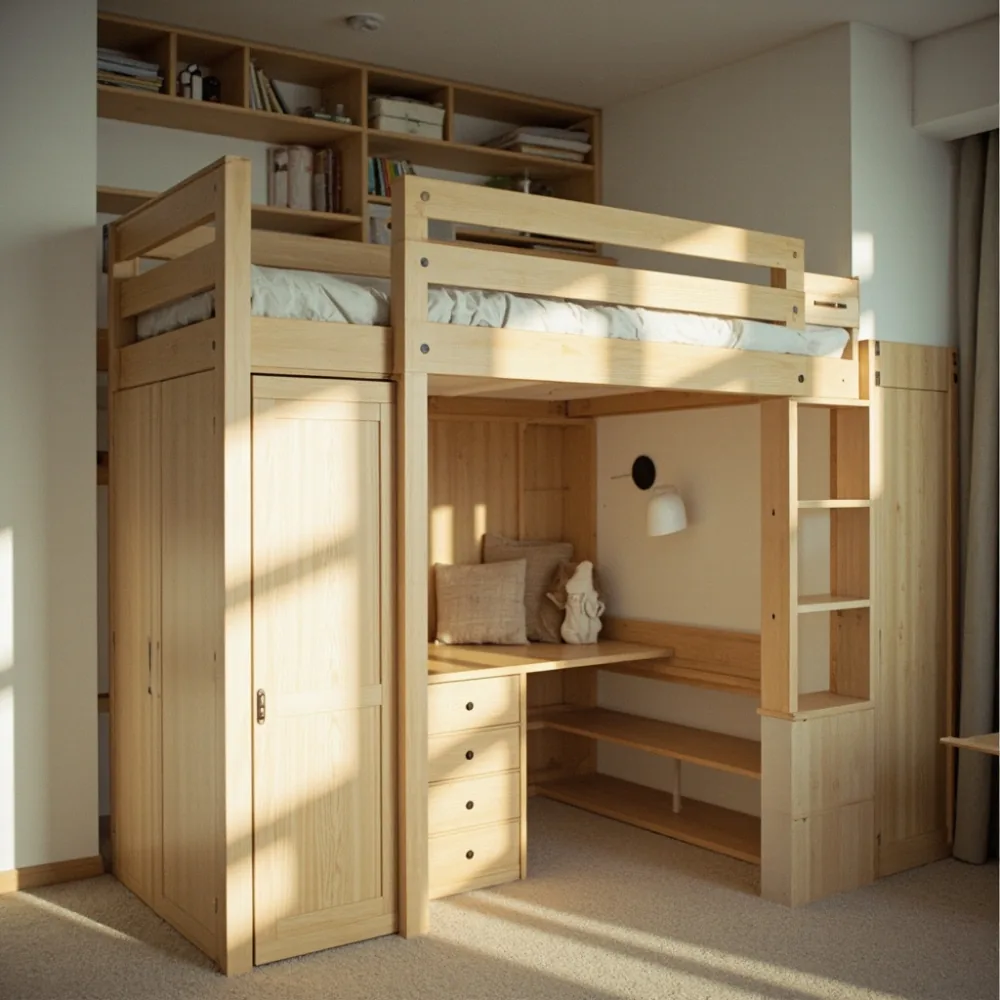
Why engineered wood fails faster than solid wood here
What to ask the seller about kiln-drying
Yes, humidity ruins bad wood. It does not ruin good wood. The difference is drying, joinery and finish, and most parents never ask about any of the three.
I treat 80–85% average relative humidity as the working number for Singapore. A solid wood furniture frame made from kiln-dried oak, ash, maple, beech or birch, finished with a closed-pore coating, will handle that range for years. MDF, particleboard and veneer cores without a sealed edges will swell at the corners within one monsoon season. I have seen both in the same Tampines flat.
The honest way to vet a brand: ask what the moisture content (MC) of the timber is at the factory. Kiln-dried to 8–12% MC is the safe band for tropical use. Anything above 14% and you are buying trouble. Wrappers and labels never tell you this. You have to ask.
Is a bunk bed or loft bed smarter for a small HDB bedroom?
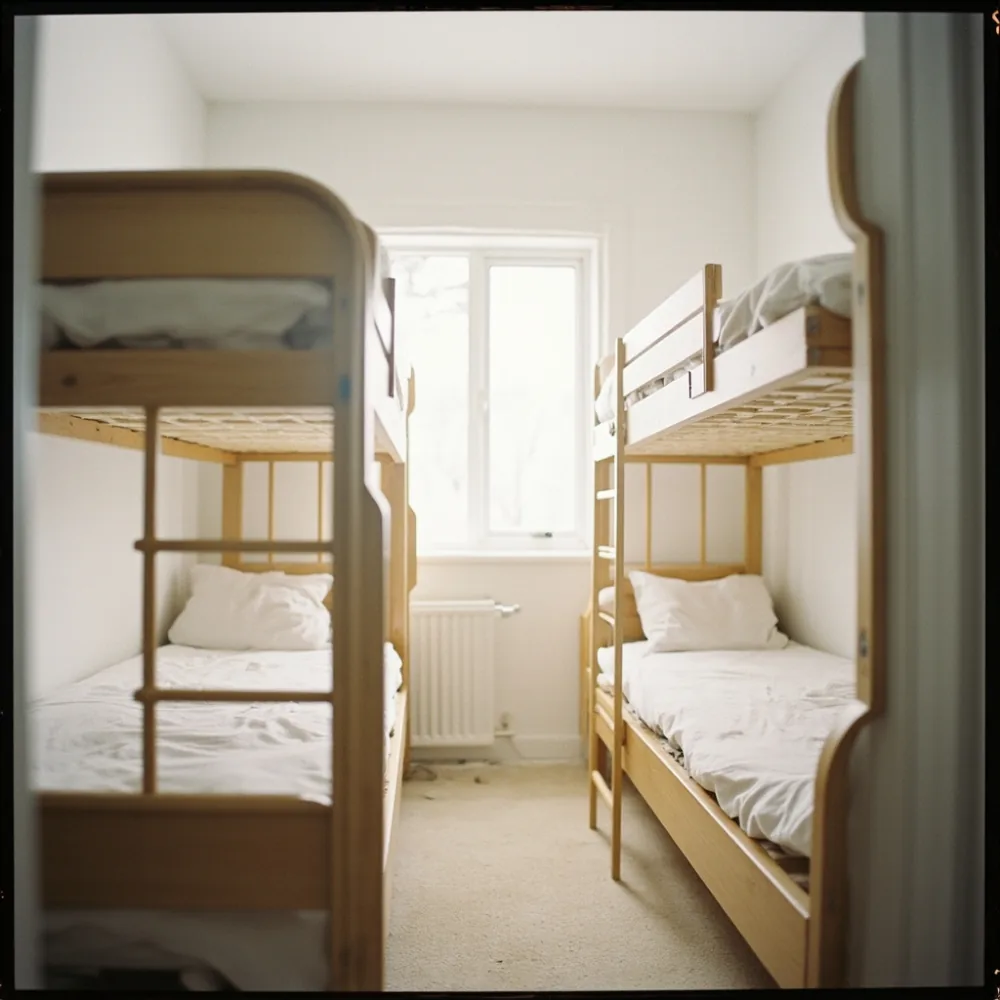
HDB ceiling height reality check
Safety standards that actually matter
For a small HDB bedroom, a loft bed usually beats a bunk bed. You keep one footprint and free up roughly 0.9 m × 1.9 m of usable floor underneath for a desk, drawers or a reading nook. Bunk beds only make sense when you genuinely need two sleeping spots.
The catch is ceiling height. Standard HDB rooms are about 2.6 m floor-to-ceiling. A loft with a 150 cm clearance under the mattress still leaves about 110 cm for the top sleeper to sit up, which is fine for kids under 12. Anything taller and a condo room is the better choice.
Safety specs I refuse to compromise on:
- Guard rails at least 16 cm above the mattress on all open sides.
- Gap between rail slats under 6 cm.
- Ladder rungs at least 3 cm deep and 35 cm wide.
- Weight rating visible on the spec sheet, ideally 100 kg or more per sleeper.
If a seller cannot show you the test certificate, walk away.
How much should I realistically budget for a kids bed in Singapore in 2025?
Where the money actually goes
The delivery and assembly line items people forget
Parents ask me this every week. Here are the numbers I trust right now, gathered across Jurong, Toa Payoh, Tampines and the East Coast. Prices in SGD, mid-2025, before promotions.
| Bed type | Material tier | Frame price (SGD) | Mattress (SGD) | Delivery + assembly (SGD) | Total landed (SGD) |
|---|---|---|---|---|---|
| Toddler bed | Engineered wood / veneer | 180–350 | 120–220 | 60–90 | 360–660 |
| Single bed, basic | Rubberwood / veneer | 350–650 | 250–450 | 80–120 | 680–1,220 |
| Single bed, solid wood | Ash / beech / oak | 900–1,800 | 350–650 | 100–160 | 1,350–2,600 |
| Loft bed, solid wood | Ash / beech, custom | 1,600–3,200 | 350–650 | 180–280 | 2,130–4,130 |
| Bunk bed, solid wood | Pine / beech, two singles | 1,400–2,800 | 500–900 (2) | 180–300 | 2,080–4,000 |
Custom furniture from a Foshan workshop will often beat Singapore retail for solid wood, sometimes by 30–40%, but you absorb the shipping window, which is where I see parents get burnt. Budget 60–90 days from PO to assembly for cross-border orders, 14–30 days for local stock.
Which materials are genuinely safe for a Singapore kid's bedroom?
Finishes, glues and what certifications mean
What I avoid and why
I treat the finish as part of the bed, not an afterthought. A solid wood frame finished with a high-VOC lacquer is worse for a child's room than a cheap MDF frame sealed properly.
What I look for:
- Wood: solid oak, ash, beech or birch, kiln-dried, with a water-based polyurethane or hard wax oil finish.
- Glue: labelled low-formaldehyde or E0 / E1 grade. Plywood cores should say CARB Phase 2 or JIS F****.
- Metal hardware: zinc-plated or powder-coated steel. Avoid chrome-only fittings in a coastal district like Marine Parade, salt air chews them up.
- Edge treatment: all edges rounded to at least 5 mm radius. Anything sharper and a forehead learns the hard way.
I personally avoid pine for a primary kids bed, even though it looks great in photos. Pine is soft, dents easily and dents in pine become splinters in pine. Mid-range hardwoods hold up better against scooter collisions.
How do HDB and condo delivery realities actually shape my choice?
Corridors, lifts and staircases
What I tell the delivery team upfront
This is where most online orders turn into drama. The bed is perfect, the hallway is not.
Things I now measure before I click buy:
- Lift opening: most HDB passenger lifts are about 80 cm wide × 200 cm deep. A flat-pack single will fit. A fully assembled single is roughly 100 cm wide and will not.
- Corridor turns: older blocks in Queenstown, Tiong Bahru and Toa Payoh have tight U-bends. Measure the corner diagonal, not just the wall length.
- Door widths: standard bedroom doors are 80–90 cm. Allow 10 cm clearance for the box.
- Stair access: if your unit is a walk-up or on a floor served only by a goods lift with limited hours, confirm the time window before paying.
A good seller will ask you these questions before dispatch. A great seller will refuse the job if the numbers do not work. If nobody is asking, I assume nobody has checked.
What custom options are actually worth paying extra for in Singapore?
When custom beats catalogue
When it does not
Custom furniture is not automatically better. It is better when it solves a real problem. Off-the-shelf is fine for a square room and a standard single mattress.
Where I think custom earns its premium here:
- Non-standard ceiling heights in some condo penthouses or older walk-ups, where a 200 cm long bed must become 210 cm.
- Built-in storage drawers on casters, sized to fit under the bed without wasting 15 cm of dead space.
- Loft beds with a desk, bookshelf and ladder integrated as one piece, which I have seen come out of Foshan workshops at 2,200–3,500 SGD landed, lower than most local brands.
- Two-tone finishes to match a feature wall in a BTO, which is harder to find stocked than you'd think.
One maker I keep coming back to for this category is MIDHILL, a Foshan solid-wood workshop set up in 2008. They publish a 10-year structural warranty and the spec sheets I have read show kiln-drying numbers in the safe band. That said, the warranty is only as good as the Singapore agent who handles claims, so I always ask for a local contact before paying the deposit.
How long should a good kids bed realistically last, and what is actually durable?
What "durable" means in a kid's room
Care routine that extends life
Honest answer: 8 to 12 years for a solid wood single or super-single, 4 to 7 years for a well-made engineered wood frame, 2 to 4 years for anything in the cheapest MDF tier. Those are the numbers I see across the resale groups and my own household.
A bed qualifies as durable furniture in my book when it survives the following without protest:
- 3–4 mattress changes, each one roughly 10–15 kg heavier than the last as kids grow.
- Daily climbing, jumping and the occasional pillow fight launched from the headboard.
- Two or three cross-border house moves without the joints loosening.
- Singapore monsoon humidity, room AC at 23°C, and the occasional wet towel draped over the footboard.
The care routine that buys you years is unglamorous: tighten the bolts every six months, wipe the frame with a dry microfiber cloth weekly, and keep the mattress on a breathable slatted base rather than a solid plywood sheet. Trapped moisture under the mattress is the silent killer here, not the wood on top.
Frequently asked questions
What is the best kids bed size for a small HDB bedroom?
A standard single, mattress 91 cm × 190 cm, is the most versatile choice for a 3-room or 4-room HDB. A loft or bunk configuration makes sense only when you genuinely need the floor space underneath for a desk or storage, and your ceiling height is at least 2.6 m.
Are solid wood kids beds worth the higher price in Singapore?
For a bed you expect to last 8–12 years and pass down, solid wood is usually worth the premium. Engineered wood is fine for younger kids whose bed will be replaced in 4–7 years, but solid hardwoods handle humidity, moves and rough use far better.
How do I stop a kids bed from smelling or developing mould?
Keep humidity at 50–60% with a dehumidifier or air-con, ventilate the bedroom daily, and avoid sealing the mattress on a solid plywood base. Slatted bases let air circulate and prevent the musty smell many Singapore parents complain about within the first year.
Is it safe to import a kids bed from China or Malaysia?
It can be, provided the workshop publishes kiln-drying data, low-VOC finishes and a structural warranty, and you use a freight forwarder who handles Singapore customs and last-mile delivery. Lead times are 60–90 days, so order well before you actually need the bed.
When should my child move from a toddler bed to a single bed?
Around age 3, or as soon as your child is at least 110 cm tall. Most Singapore toddlers outgrow the 130 cm length of a toddler bed between their second and third birthday, and parents usually end up replacing the bed within 18 months.
Questions about sizing, fabric or delivery?
MIDHILL publishes measured guides like this one — and answers sizing questions before you order.
See the collection