How Humidity in Southeast Asia Affects Kids Bed Choices: A Singapore Solid Wood Guide
I still remember the Tuesday afternoon last March when I walked into a Tampines HDB flat on the 12th floor to deliver a single kids bed to a young mother in Block 137A. The corridor measured 1.2 metres wide, the lift opening was 1.9 metres across, and the relative humidity reading on my pocket meter showed 84%. The family had been through two imported plywood beds in four years; both had developed hairline cracks along the headboard. That visit shaped how I think about every children's bedroom project we handle at MIDHILL, the Foshan-based solid wood maker that has shipped casegoods and seating to homes in 15-plus countries since 2008. Humidity is not an abstract topic here. It controls everything from the species of wood we recommend to the spacing we leave between a wardrobe and a bedroom wall.
Why Singapore Air Is So Different From European Air
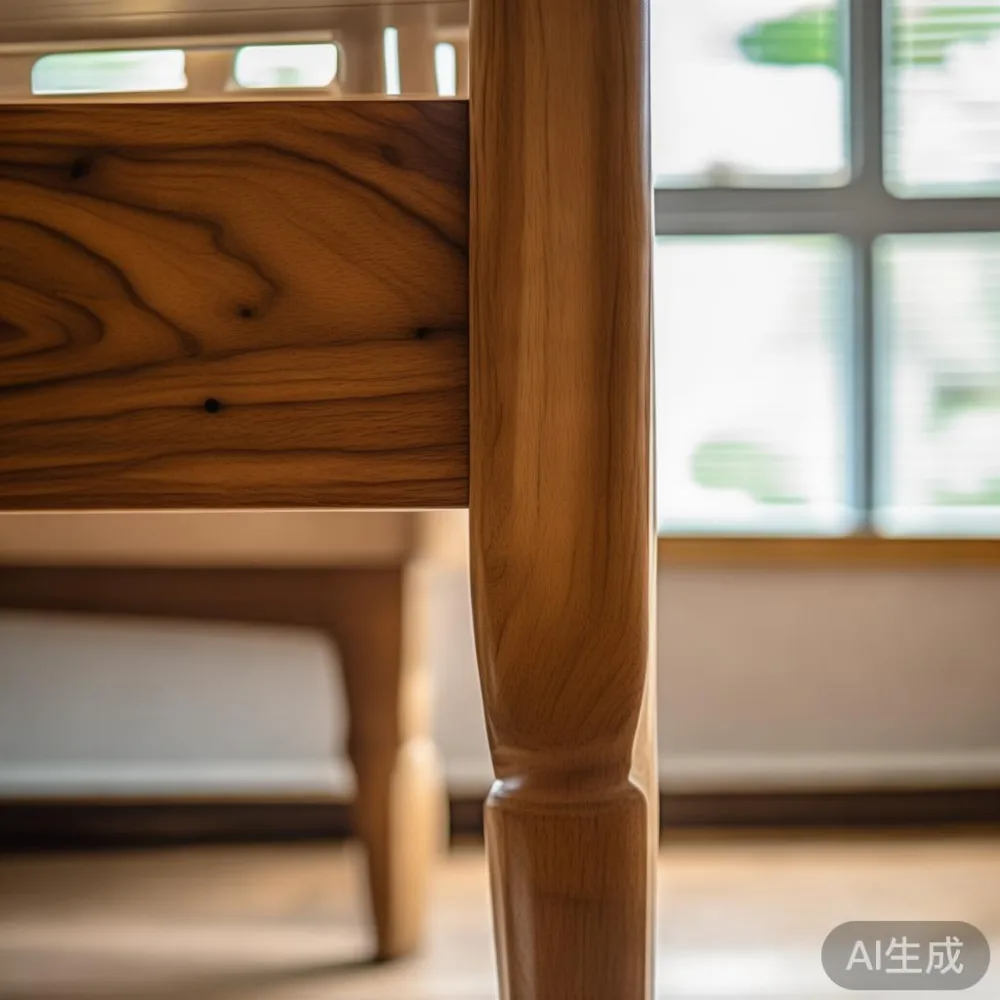
Outdoor humidity on a typical afternoon in Bedok or Punggol sits between 70% and 90%. The moment your air-con compressor cycles off for the night, the moisture content (MC) of the wood inside your kids bed begins to climb. Solid wood is hygroscopic: it absorbs and releases water vapour until it reaches equilibrium moisture content, or EMC. For a Singapore bedroom kept at 25°C and around 55% indoor relative humidity, the EMC sits roughly between 10% and 12%. For a Punggol balcony that is half-open, the figure jumps to 15% or higher. A 2.0-metre bed frame whose MC swings from 9% to 14% will expand across the grain by approximately 3 to 5 millimetres per 30 cm of width. That movement, repeated across wet and dry seasons, is what opens the joints you see on cheaper plywood furniture.
This is the same physics that drives every conversation we have about an oak dining table, a walnut nightstand, or a six-drawer wardrobe in a corner of a condo. The wood is always moving. The question is whether the manufacturer planned for it.
What Solid Wood Actually Does in a Humid Bedroom
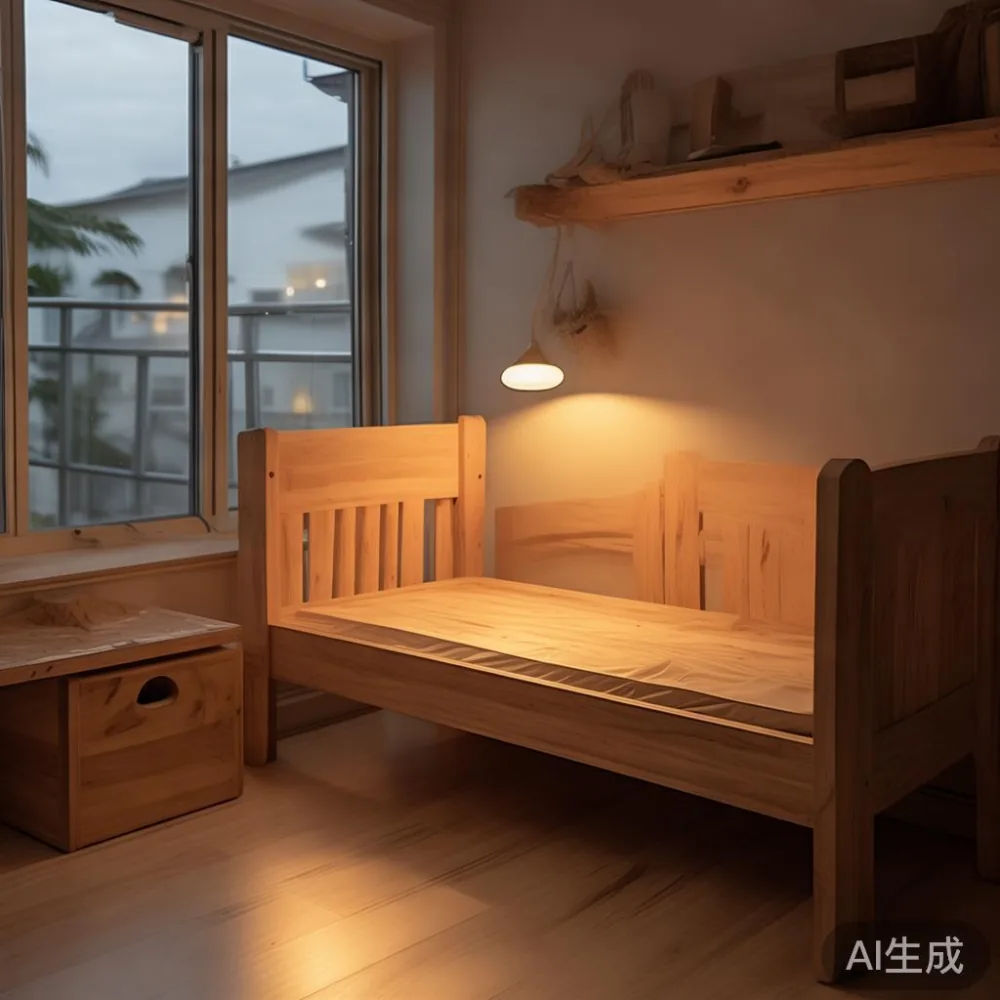
Solid wood moves, but it does so in controlled, predictable directions. A bed frame made from single pieces of ash, oak, or beech will shrink and swell along the annual rings rather than delaminate. A side panel of a wardrobe built from the same boards, properly edge-glued with allowance gaps of 1.5 to 2.0 mm along the back panel, will keep its shape for decades. Engineered panels (plywood, MDF, blockboard) absorb moisture unevenly, and the face veneer then telegraphs the movement as ripples, swollen edges, or mould spots along the lower 30 cm.
Some practical numbers I share with customers during site visits:
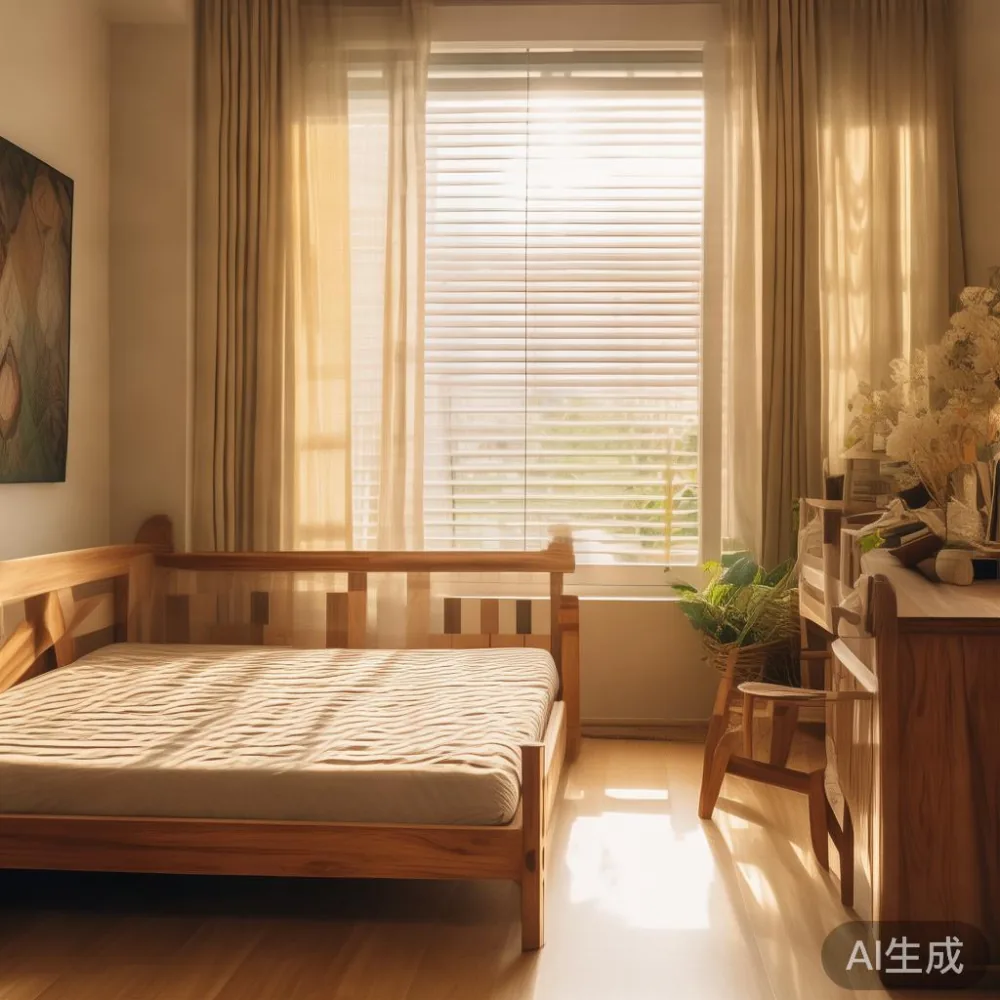
- Air-dried oak at 10% MC weighs about 720 kg per cubic metre; kiln-dried oak at 8% MC weighs around 670 kg per cubic metre. That 50 kg difference per cubic metre is one reason a heavier kids bed is not always a better one — it may simply be holding more water.
- A properly kiln-dried ash board, stored in a Foshan warehouse at 22°C and 55% RH for three weeks, drops from 12% MC to roughly 9% MC. That is the moisture range we work with before a piece is crated.
- A pine kids bed, by contrast, is up to 60% softer on the Janka scale than ash or beech, and it dents, scratches, and absorbs sweat and spilled milk far faster. For a child aged 3 to 10, that translates into refinishing bills of roughly SGD 120 to SGD 220 every 18 months on a porous softwood.
In our workshop we target 8% to 10% MC for the bed frame components leaving Foshan. Singapore indoor conditions pull them to about 11% to 12%. The remaining 2% to 3% swing is absorbed by the mortise-and-tenon joinery, which is why the joints still feel tight after the first monsoon season.
Does an MDF or Particleboard Kids Bed Hold Up Here?
This is the question every second customer asks me in Punggol and Clementi showrooms, and the honest short answer is: not for the long term. A 120 cm x 200 cm MDF kids bed costs roughly SGD 380 to SGD 540 online, while an equivalent solid ash or beech model from a workshop like MIDHILL — which has been exporting solid wood casegoods since 2008 — starts around SGD 980. The price gap is real, but the lifespan gap is wider. The MDF bed begins to sag in the slat region by year three because the moisture it absorbs swells the core faster than the laminate skin can stretch. The solid wood bed is still serviceable in year ten, and we still refinish models our customers bought in 2014.
Three practical reasons the premium is worth it for a child's bedroom:
- Repairability. A scuffed corner can be sanded back and re-oiled. A swollen MDF corner cannot be repaired, only patched and painted.
- Refinishing. Our workshop offers lifetime refinishing on casegoods. A solid ash kids bed refinished twice over 20 years costs roughly SGD 180 per visit in labour and materials — far less than replacing a particleboard bed.
- Resale and inheritance. A solid kids bed remains a piece of furniture; a flat-pack becomes cardboard recycling within a decade.
None of this is a sales pitch; it is simply the data we collect when customers send us their old units back to Foshan for refurbishment.
Reading a Kids Bed Spec Sheet Through a Singapore Lens
Most online listings show a few glossy photos and a wishy-washy word salad about "premium materials." Here is what to look for, line by line, on any product page before you click add-to-cart.
1. The wood list, not the brand name. You want "European ash, kiln-dried to 8-10% MC," not "premium hardwood frame." If the site cannot tell you the species and the moisture content at shipping, the product is a question mark.
2. Joinery language. Look for mortise-and-tenon, dowel, or dovetail. Avoid staples, brackets, and "easy assembly in 10 minutes." The latter almost always signals thin plywood.
3. Finish description. A hardwax oil from a recognised brand such as Osmo or Rubio allows the wood to breathe through the surface. A polyurethane coat seals the wood completely and traps any moisture that gets in, which leads to white haze and flaking within two wet seasons.
4. Slat spacing. For a child under six, slat gaps no wider than 5 cm prevent limbs from passing through. For a bunk or trundle kids bed, look for 14 to 16 slats across a 90 cm width to keep the mattress plane flat.
5. Hardware. Stainless steel or zinc-plated steel bolts survive Singapore humidity better than bare mild steel, which rusts through the wood around it within 18 months.
How Should I Position a Kids Bed in a Singapore Condo?
The positioning question comes up on every site visit, and it deserves a careful answer. In a typical 4-room HDB flat measuring 90 sqm, the master bedroom is roughly 12 sqm and the secondary bedroom for the child is closer to 9 sqm. You want the kids bed at least 15 cm off any wall on three sides so that air can circulate behind the headboard. A wardrobe placed flush against the same wall behaves like a moisture dam: the wall behind it stays damp, the back panel of the wardrobe absorbs that moisture, and in 24 to 36 months you may notice a musty smell.
Two specific placement rules I repeat often:
- Keep the kids bed 80 cm or more from any window that is left open during rain. Driving rain on a Bedok afternoon can raise the local MC of an unprotected oak headboard from 10% to 16% in under three hours.
- Do not place the kids bed directly below a split-unit air-con. The condensate drip plus the cold airflow creates a microclimate that warps slats over the medium term. A solid nightstand placed under the unit, on the other hand, gives you a useful side surface without warping risks.
If you are working with a small bedroom and must push the bed against a wall, leave a 1.5 cm gap behind the headboard and run the air-con on a dehumidification cycle for 20 to 30 minutes before bedtime. The 9% extra dryness translates directly into a quieter night's sleep for the bed itself.
Comparing French Light Luxury, American Light Luxury, and Post-Modern Light Luxury for Kids Rooms
Light luxury styling has crossed over into children's furniture in the last three years, and the three regional flavours behave differently in tropical humidity. A French light luxury palette — soft greys, brushed brass, and white-oiled ash — looks timeless on a kids bed because the matte finish hides minor surface variations and small dents. An American light luxury direction leans toward caramel walnut tones, thicker posts, and larger mouldings. Walnut is dimensionally more stable than ash, but it darkens under Singapore UV, so expect a 10-15% colour shift over five years on a sun-exposed side. Post-modern light luxury favours curved headboards and integrated marble accent shelves; the marble table insert on the nightstand is gorgeous but needs a felt pad under every water glass or it will etch.
Children's furniture in our workshop tends to combine one or two styling cues with strict functional priorities: rounded corners with a 12 mm radius, water-based hardwax oil that cures child-safe, and bed heights of 35 to 45 cm for the under-7 age band so that a small child can climb in and out without help. The same workshop builds the larger pieces — solid wood sofa frames, dining table tops, marble-topped coffee tables, and tall wardrobes with 70 cm clearance on either side — using the same kiln-drying standards.
What About Japandi, Scandinavian, and Mid-Century Modern Sofas — Are They the Same Bed Story?
Living-room pieces see their own set of humid-air stresses, and the comparison is worth a short detour for buyers shopping the whole condo at once. A Scandinavian-style ash frame keeps the same moisture guidelines, and many readers ask about the best Scandinavian sofa for 2026 because the clean lines suit small HDB living rooms. The same kiln-dried ash that keeps a kids bed flat in Punggol will also keep a Scandinavian-style sofa frame quiet in a Tampines flat. When customers ask how to style Japandi sofa in bedroom corners or how to style light luxury sofa in room layouts that share space with a kids bed, the answer is consistent: keep 40 to 60 cm of clearance on every side, never push a sofa base against a wardrobe back, and run the same dehumidification routine at night.
For shoppers comparing silhouettes, the European sofa vs French provincial sofa conversation is similar: French provincial sofas use deeper skirts and carved beech legs that trap dust, which in turn holds moisture against the floor. A European-style sofa on slim ash legs, by contrast, allows a damp-mop robot to clean under it every week. The same logic drives our recommendations on a designer Mid-century modern furniture dining chair or a six-seater dining table; the chairs store better when slings or cushions can be wiped down, and the table tops need coasters within easy reach of every child using the bench.
The Buyer Question I Hear Most Often in Tampines
Will my warranty actually cover moisture damage? This is fair, because most flat-pack warranties exclude humidity explicitly. A 10-year structural warranty from a workshop that has been building and exporting solid wood casegoods since 2008 is different: it covers joint failure, slat snapping under normal use, and severe warping outside the seasonal norm. It does not cover normal 2% to 3% seasonal movement, because that is not damage, it is wood behaving like wood.
Two warranty details worth checking at the counter:
- On-site refinishing at the customer's address within the first 12 months is included for any minor surface issue. A quick buff-and-oil by a MIDHILL technician is usually booked within 7 working days from the request — useful if you are in Bedok, Punggol, or Sengkang and do not want to crate the piece back to Foshan.
- Free shipping applies to Singapore orders above US$350, which is approximately SGD 470 at current GST-inclusive rates. Below that threshold, shipping is calculated by volumetric weight, which on a 90 cm x 190 cm kids bed crate works out to roughly SGD 85 to SGD 140 per delivery, depending on the lift access and any narrow corridor handling beyond the 1.2 m standard.
Lifetime refinishing is a separate offering from the warranty, and it is one of the quiet advantages of buying a solid piece from a maker with its own finishing workshop rather than a marketplace reseller. A kids bed delivered today can come back through our Singapore service partner in 2032, get a fresh hardwax oil coat, and head back up the lift to a teenager's bedroom.
Building a Bedroom That Lasts the Decade
Humidity is not an enemy of a wood kids bed. It is a condition to design around, and once you understand the numbers — 8-10% MC at shipping, 11-12% MC at home, 2% to 3% seasonal movement absorbed by mortise-and-tenon joinery — the rest of the choices fall into place. Pick a kiln-dried ash, beech, or oak frame from a workshop that publishes its moisture targets. Avoid MDF, plywood, and pine for the structural parts. Finish with hardwax oil rather than polyurethane, and budget for a refinish every 8 to 12 years.
Browse the full kids bed collection, with matching nightstand, wardrobe, and dressing-table options in light luxury palettes, at www.midhill.co. Booking a 30-minute video walk-through on the website lets you check slat spacing, drawer clearance, and stain samples before the crate leaves Foshan. If your child graduates from a kids bed to a full single bed, the same construction philosophy carries over, and the same refinishing service keeps the piece in service until the next household hands it down. The household items of your child's first bedroom should be solid, repairable, and honest about the wood they came from — three qualities that matter far more in a Punggol monsoon than they do anywhere north of the Tropic of Cancer.