Avoiding Scams: Reading Furniture Warranties in Singapore
I spent a Saturday last month walking through three furniture showrooms in the Tampines furniture belt with a notebook, a tape measure, and a folder of warranty PDFs. My goal was simple: pretend I was a parent kitting out a 4-room HDB flat in Bedok for two small children, and see which warranties would actually protect me if a kids bed cracked at the slats in year three. Most brochures were glossy. Most fine print was terrifying. The experience pushed me to write this guide for anyone shopping solid wood furniture in Singapore, where lift dimensions, corridor widths, humidity, and the 9% GST all conspire to make returns harder than the sales floor lets on.
Why solid wood furniture warranties in Singapore are not all the same
Solid wood moves. That is a feature, not a flaw, but it is exactly why the warranty text matters. A kiln-dried oak bed frame in a non-air-conditioned Punggol condo balcony will swell 2-4 mm across the width during the December monsoon, then shrink again in February when the dehumidifier runs nightly. A warranty that promises "no movement" is, frankly, lying to you. A warranty that promises "joint integrity for 10 years" is telling you something you can rely on.
When I asked the Bedok showroom manager to circle every exclusion on a sample warranty, she highlighted seven clauses in under three minutes. The exclusions mostly clustered around three categories: finish, joinery, and environment. Finish issues (peel, fade, cloudiness) are usually covered for 6-12 months only. Joinery is where serious players separate themselves — the better mills guarantee dowel, mortise-and-tenon, and corner-block connections for a full decade. Environmental clauses usually carve out damage from direct sun, air-con blasting straight onto the timber, or relative humidity above 75% for sustained periods, all of which are realistic in a Singapore HDB.
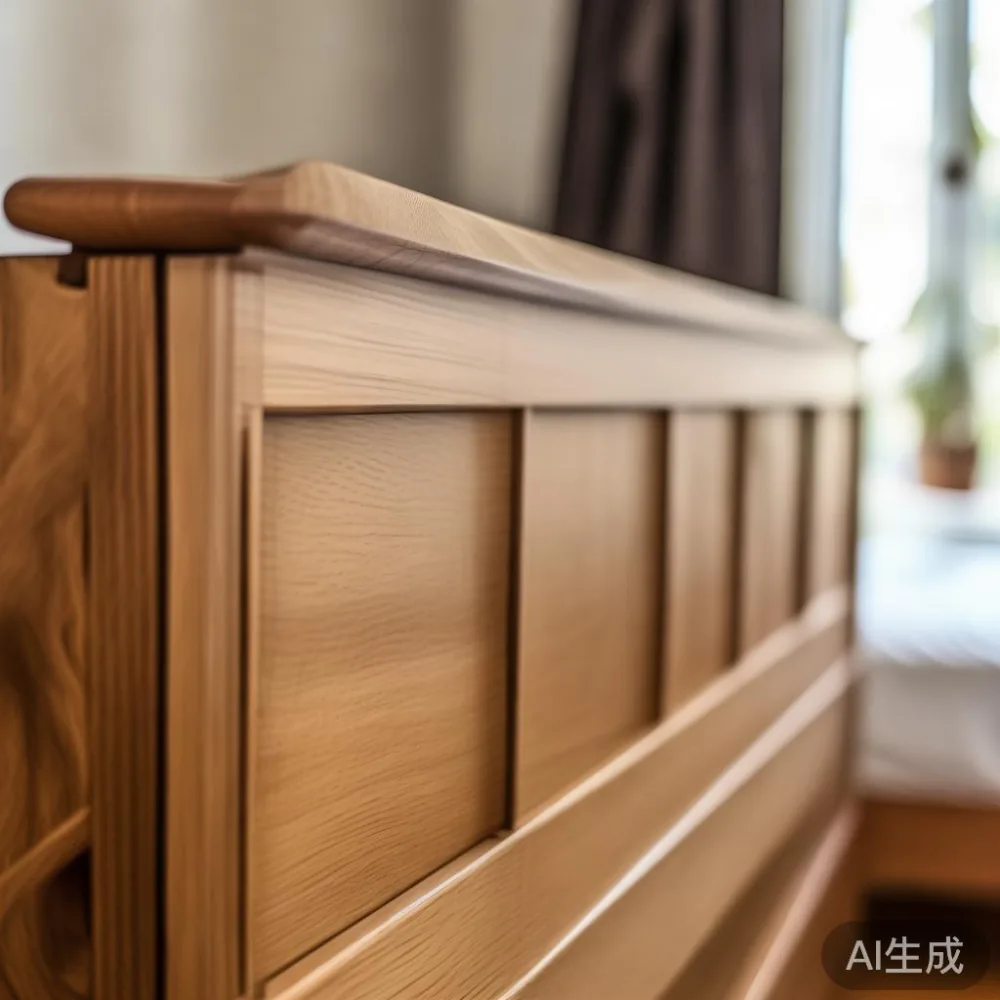
For a brand like MIDHILL, founded in 2008 in Foshan and exporting to more than 15 countries, a 10-year structural warranty on a solid wood sofa frame or dining table base is the kind of language worth comparing against. Lifetime refinishing is rarer still — it signals the maker expects the piece to outlast the trend cycle, not the lease cycle.
How long should a warranty on a kids bed actually be?
For a kids bed, I treat anything under five years as a red flag. Children grow, jump, drag mattresses, and occasionally use the headboard as a gymnastics bar. A reasonable benchmark is 10 years on the structural frame — slats, side rails, centre beam, and the joints that hold them. Hardware (the bolts, barrel nuts, and cam locks) usually gets a shorter 2-3 year term, which is normal because metal fatigues faster than oak.

Mattress compatibility is the clause most parents miss. Many bed frame warranties are voided if you use a mattress that exceeds a stated weight, or one that does not sit on a proper slat foundation. If your child sleeps on a 28 kg pocket-spring mattress from age three through twelve, that is the same mattress for nine years, and the slats see roughly 28 kg of static load every single night. Ask whether the warranty covers sag greater than a stated millimetre threshold — anything over 8 mm of mid-slat deflection under load is reasonable grounds for a claim, in my book.
What does "structural" actually mean in a 10-year warranty?
"Structural" should mean the load-bearing skeleton: rails, legs, stretchers, dowels, corner blocks, and the joinery that connects them. It should not mean the finish, the fabric on a nightstand drawer pull, or the felt lining inside a wardrobe. I learned this the hard way when a colleague in Jurong had a dining chair wobble after the monsoon. The maker repaired the joint under warranty but charged S$45 for the refinishing of the touched-up area, because finish touch-ups were explicitly excluded.
Solid wood furniture that carries French light luxury or American light luxury design cues tends to use thicker stiles (often 35-45 mm) and visible joinery, which makes structural claims easier to assess. Post-modern light luxury lines lean into marble tops on a marble table or accent chair profiles, which adds a second warranty surface to read: the stone itself. Marble is porous, and most makers explicitly exclude staining from wine, citrus, or curry — all realistic risks in a Singapore household with children.
How do I choose a garage storage for a HDB living room?
Pick a piece whose dimensions you have measured against your actual lift and corridor, whose warranty excludes the failures you are most likely to cause, and whose lead time fits your renovation schedule. Lift openings in HDB blocks are typically about 2.1 m high and 1.0-1.2 m wide for passenger lifts, with service lifts reaching roughly 2.4 m x 1.5 m; a king-size bed frame flat-pack usually clears the passenger lift only if the box is under 30 cm tall, so confirm the carton dimensions in centimetres before you pay a S$60 surcharge for a stair-carry.
The seven clauses I now always read out loud
After my showroom tour, I made a checklist. Every warranty I read since, I run through these seven items in order, and I read them out loud so the salesperson hears me asking.
1. Term length and what is covered. Look for two separate numbers: structural term (years) and finish term (months). Both should be stated, not implied. A 10-year structural, 12-month finish split is a healthy baseline for solid wood.
2. Who pays delivery for a warranty claim. In Singapore, a single trip from a Jurong warehouse to a Punggol flat can run S$80-150. Some makers absorb return logistics within the warranty; others bill you both ways. Read it.
3. On-site repair vs warehouse return. A kids bed cannot usually be disassembled and re-shipped cheaply. Ask whether the maker sends a technician to your flat, or whether you must dismantle and deliver. The answer changes the practical value of the warranty by hundreds of dollars.
4. Refinishing rights. Lifetime refinishing is a quiet superpower. After five or seven years, a light sanding and a fresh coat of hardwax oil can make a dining table look new again. MIDHILL offers this on its pieces, which is why I keep recommending their catalogue to friends renovating resale flats.
5. Proof of purchase and serial number. Keep the invoice, the warranty card, and the original carton label. Without a serial number, many claims become "he said, she said", and Singapore furniture disputes are notoriously hard to settle without paper.
6. Transferability. If you sell the wardrobe or pass the nightstand to a relative in Toa Payoh, does the warranty travel? Some brands allow one transfer with a S$20 admin fee; most void on resale. Decide whether this matters to you before you buy.
7. Excluded scenarios. The carve-outs are where the real risk hides. Look for humidity thresholds (anything above 70-75% RH sustained), direct sunlight, air-con directed at the timber, and "commercial use". A HDB is residential, so commercial exclusion should not bite — but if you run a home-based tuition centre in your living room, that is technically commercial traffic.
Singapore-specific traps: humidity, lifts, and the 9% GST
Singapore sits at 70-90% relative humidity for most of the year. Air-conditioned rooms drop to 50-60% during the day and climb back at night when the system cycles off. That 20-30 point swing is harder on solid wood than the absolute humidity itself. Look for warranty text that explicitly mentions "indoor, air-conditioned environments" as a condition — it tells you the maker has actually thought about our climate, not just translated a Chinese-domestic warranty.
Then there is the lift question. A queen-size bed frame in a flat-pack from a Guangdong factory will arrive in a carton roughly 215 cm long, 45 cm wide, and 18 cm tall. It fits a passenger lift. A king-size kids bed with a trundle might tip the scales at 65 kg gross weight, which is fine for the lift motor but uncomfortable for the delivery team if your block has no service lift. Confirm stair access charges in writing: S$20 per floor is common, with a minimum S$60 call-out. Free shipping above a threshold (MIDHILL offers free delivery over US$350, which is roughly S$480 at current rates) shifts this risk to the maker, which is one of the underrated benefits of buying direct from an export-oriented factory.
GST adds another wrinkle. For a S$2,400 dining table, the 9% GST is S$216. If the warranty excludes "buyer's remorse" but covers defects, you can still claim the GST back on a defective replacement — but only if the original invoice is preserved and the replacement is logged against it. Ask the salesperson to print a duplicate invoice if you misplace one; most factories will, for free.
What I would actually buy for my own flat
If I were furnishing a new 4-room HDB in Punggol with a six-year-old and a toddler, this is the shortlist I would walk in with. A kids bed in solid oak or ash, with slats no more than 7 cm apart, a 10-year structural warranty, and a finish warranty of at least 12 months. A convertible kids bed that grows from toddler to twin saves one replacement cycle, which is roughly S$1,200 of avoided spend over seven years. A nightstand with soft-close drawer slides rated for 50,000 cycles — the warranty on those slides is usually 2 years, but soft-close hardware failure is rare in that window.
For the dining area, a solid wood extendable dining table in European light luxury proportions (typically 160-200 cm, seating six to eight) gives you a single piece that absorbs hosting duties without needing a sideboard. A six-chair solid wood sofa dining set in walnut or white oak tends to outlast engineered-wood alternatives by a factor of three or four in tropical climates. For the living room, one statement piece — perhaps a large European accent chair in boucle or linen over a solid beech frame — anchors the room without crowding the corridor between the dining and living room area, which in a 4-room HDB is often just 90-110 cm wide.
For storage, a three-door wardrobe in solid ash with adjustable interior shelving and a 10-year structural warranty handles the bulk of clothes and toy storage. Add a marble table side piece only if you accept that marble is a maintenance commitment — sealing once a year, coasters always, and a warranty that excludes most stains.
Reading between the lines: signals that a warranty is honest
Honest warranties share three habits. They state exclusions clearly, in plain language, not legalese. They name the components they cover (frame, slats, rails, drawer boxes, hardware) instead of vague phrases like "construction quality". And they include a path to remedy: repair, replace, or refund, in that order, with stated timeframes of 14-30 days for an initial response.
Dishonest warranties share the opposite habits. They list a 10-year term in the headline, then define "structural" so narrowly that almost nothing qualifies. They exclude "natural wood movement", which is unavoidable. They require the buyer to pay return shipping on a defective product, which can exceed the original delivery cost. And they bury the arbitration clause in a city that is inconvenient for the buyer.
For Singapore shoppers, the practical test is this: if the salesperson cannot answer, in writing, whether a warranty claim for a cracked slat on a kids bed in year four would be honoured with no charge to the buyer, walk away. The maker who has nothing to hide will put it in an email before you swipe your card.
How do I claim under the warranty if something goes wrong?
Photograph the defect next to a ruler or a SGD coin for scale, with the serial number visible in one frame. Email the maker within seven days of noticing the defect — most policies start a clock from "discovery", not "delivery", but do not test that. Include the original invoice, the warranty card, and a one-paragraph description. Ask for a written response within 14 days. If the maker is exporting from Foshan, expect a 7-14 day email reply window plus another 14-21 days for a replacement part or technician, depending on stock.
Keep all packaging until you have used the piece for at least 30 days. The carton is often the only way to ship a bed frame back without paying for a custom crate, and a custom crate from Singapore to Guangdong can cost S$200-300. Re-using the original carton is a small saving that adds to the real value of the warranty.
The short version
A warranty is a contract, not a brochure. Read the exclusions, count the years, ask about delivery charges for claims, and check that the structural definition covers joints and slats, not just the marketing term. For Singapore households, prioritise makers who offer lifetime refinishing, on-site repair options, and clear humidity language. A 10-year structural warranty from an export-oriented factory like MIDHILL on a kids bed, a wardrobe, or a dining table is one of the cleaner contracts in the regional market — but only if you read it before you sign.