How to Match a Kids Bed to a Warm Minimal Interior Without Losing the Cosy Bit
Walking into a Tampines 4-room HDB flat last month, I watched a friend stare at her toddler's room for fifteen minutes. The walls were in a soft putty tone, the floor was Scandinavian oak laminate, and yet the children's furniture looked like it had parachuted in from a different apartment. A plastic-flake kids bed frame in primary blue sat against a linen curtain, a melamine wardrobe clashed with the rattan laundry basket, and the only solid piece in the room — a small ash dining table we had pushed in for craft time — looked embarrassed to be associated with the rest. The fix, I told her, was not a renovation. It was a warm-minimal re-pairing, piece by piece, with solid wood anchoring the room and softer textures doing the cuddling work. This guide is the version of that conversation I now have with almost every parent in Singapore who wants a calm nursery or child's room without tipping into clinical white-box territory.
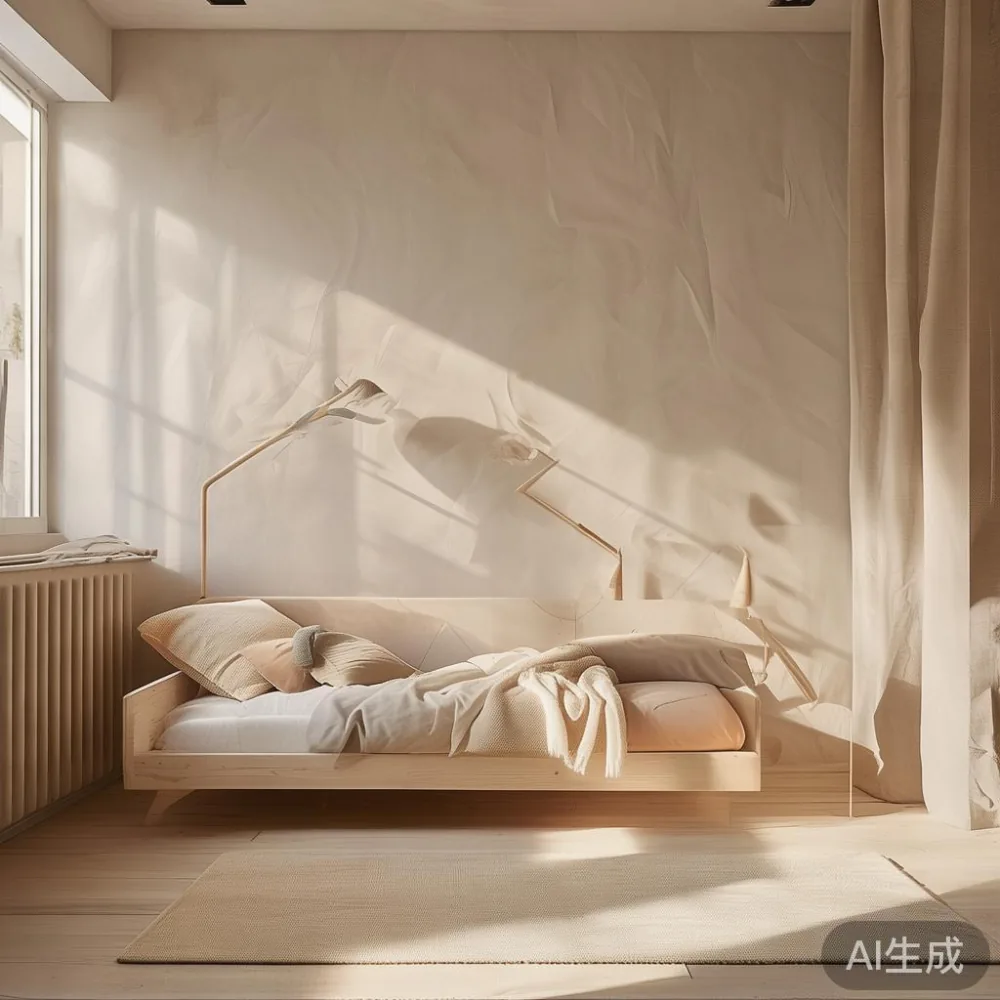
What exactly is a warm minimal interior, and why does it suit a Singapore child's room?
Warm minimalism is not "less stuff." It is fewer surfaces competing with each other. The palette sits between putty, oat, sand, terracotta, raw oak and warm white, and the materials are honest: solid wood, linen, cotton, wool, jute, brushed brass, unglazed ceramic. In a Singapore context this matters because our HDB flats already give you a neutral canvas (cream walls in most BTOs since 2015, light grey or beige floor tiles in many resale units in Bedok and Punggol). You do not need to fight the shell; you just need to anchor it with one or two warm solid wood pieces and let the rest breathe.
The reason warm minimal works brilliantly for a child's room is sensory load. A two-year-old in a Punggol EC who already gets 4-6 hours of screen exposure a day does not need a rainbow wall. They need a room that reads as quiet when they walk in, so bedtime, reading time and floor play all feel easier. Solid wood furniture gives that reading because the grain is warm, the edges are forgiving (a 5mm radius on a kids bed frame is much kinder on a forehead than a 90-degree melamine edge), and the piece ages with the child rather than being thrown out at age six.
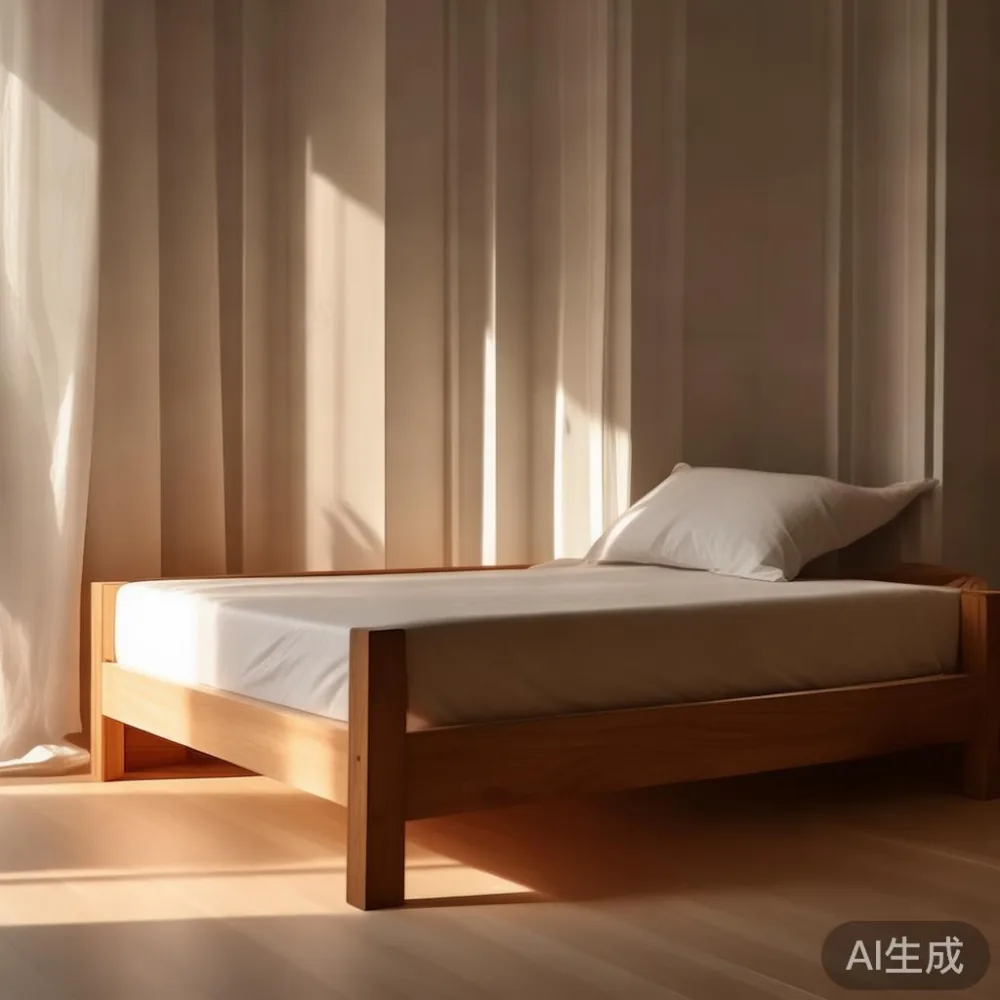
How do I start matching a kids bed to a warm minimal room without buying everything new?
Start with the largest piece, because the kids bed dictates everything else. In Singaporean flats the typical child's room measures 2.7m x 3.0m or 3.0m x 3.3m (BTOs in Tengah and Sengkang tend towards the wider 3.3m), and the lift opening at most ground-floor service lobbies is 1.0m wide x 2.1m high, so you can move a bed frame up to about 198cm long without tilting. Measure your doorway and lift before you fall in love with anything. Then follow three rules.
Rule 1: pick the wood tone once, and keep it. If you choose an oak-toned solid wood sofa or bed frame for the living room, the children's room should echo that. A kids bed in ash pairs with ash wardrobes and nightstands; a kids bed in walnut pairs with walnut shelving. Mixing two warm woods is fine if they sit on different sides of the warm-cool spectrum (oak is yellower, walnut redder). Mixing three is a problem.
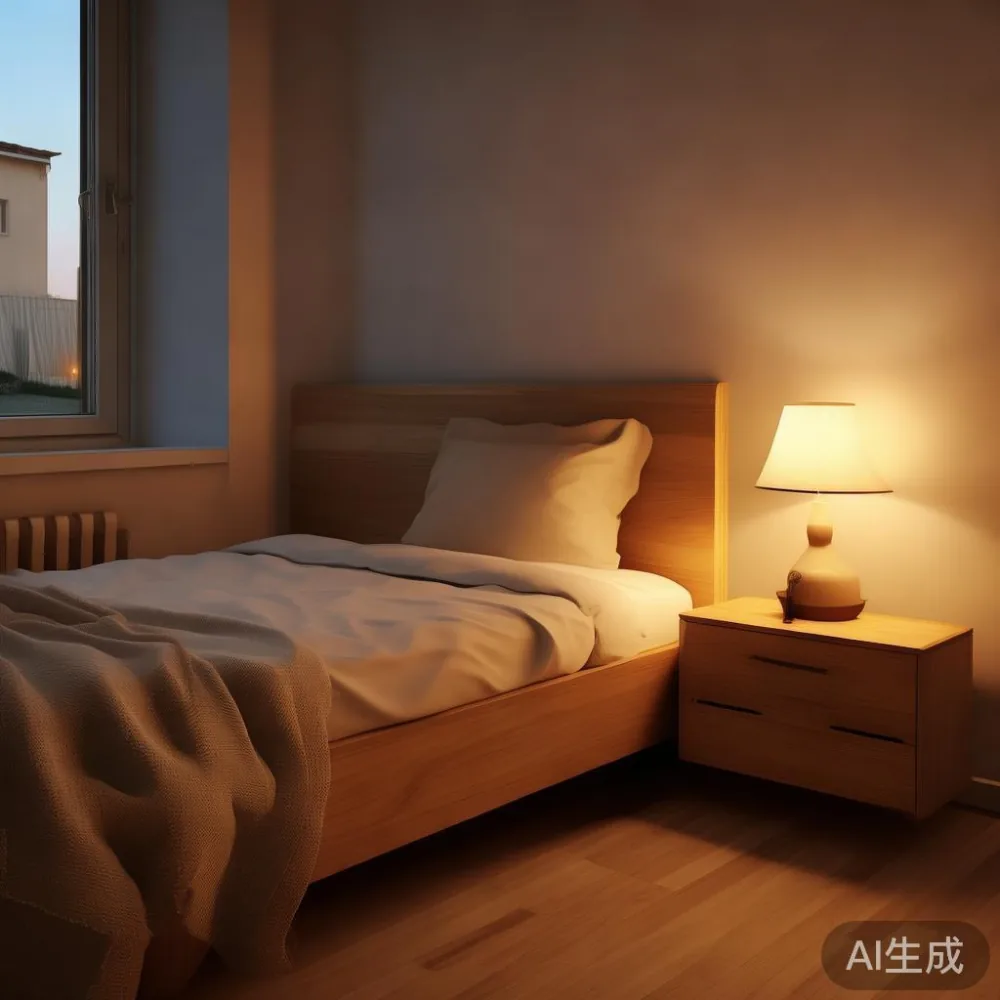
Rule 2: let one piece carry the texture. In the room I visited last month, the breakthrough was a single oak kids bed with a low headboard and a slatted side rail. Once that was in, we added a linen Roman blind (S$48-90 from local curtain shops in Joo Chiat), a sheepskin throw on a small reading chair, and a raw-ceramic table lamp. Everything else stayed. The room suddenly looked intentional even though we had replaced only one item.
Rule 3: ground the room with a single soft rug. A 120cm x 170cm wool or cotton rug in oatmeal under or beside the kids bed does the heavy lifting. In an HDB with full air-conditioning at night (most parents set 25°C), a rug also stops cold tile shock on small feet in the morning.
Which solid wood pieces actually carry a warm minimal child's room?
In a typical Singapore child's room I would prioritise, in order: a solid wood kids bed, a small solid wood nightstand, a low solid wood bookshelf, and only if space allows a compact solid wood wardrobe. The dining table and marble table living-room pieces should never be substituted into the child's room — a marble table in a toddler's room is a bruise waiting to happen, and a dining table is the wrong scale for floor play.
For the kids bed itself, look for frames that are 90cm x 190cm (single) or 120cm x 190cm (junior, which fits two children up to about age 8 if needed). Solid beech, ash and rubberwood are the most common kiln-dried options in the SGD 750-1,800 range for a properly constructed single kids bed. Slatted bases with 8-12 slats are more breathable than solid platforms in our 28-32°C nights. Weight capacity of 90-120kg is plenty for a child plus a parent reading bedtime.
For the nightstand, a 35cm x 35cm x 50cm solid ash piece at around S$220-380 pairs naturally with a warm-minimal kids bed because the proportions echo the bed's leg thickness (usually 4cm x 4cm or 5cm x 5cm). Skip anything with a high-gloss lacquer; matte or oil-finished only.
For the wardrobe, if your HDB built-in already supplies hanging space (most 4-room and 5-room flats do), skip a separate wardrobe and use a 60cm-wide solid wood low cabinet for toys and books at SGD 450-900. This is also the move that prevents the room from feeling like a furniture showroom.
What about colour, soft furnishings and the lighting that ties it all together?
Warm minimal is colour-restrained but texture-generous. For a child's room, limit the wall palette to three: a warm white (Dulux Ivory Lace or equivalent at around S$32 per 4-litre, before 9% GST), an oat or putty (try Nippon Putty Stone, S$38-45), and one accent. The accent can be a soft terracotta, a dusty sage, or a muted clay. Avoid anything that reads as primary.
For soft furnishings: 100% linen or washed cotton curtains (S$25-60 per panel if you cut and hem IKEA fabric locally), a quilted cotton or wool blanket on the kids bed, and one textured cushion. Layer, do not match. A kids bed dressed in oatmeal linen, a single ochre cushion, and a cream quilt will look pulled together in any warm-minimal room.
For lighting: a single warm-LED ceiling fixture at 2700K (about S$25-60 at any Tampines Mall lighting shop) plus a small rattan or paper table lamp on the nightstand is enough. Nightlights for toddlers should be amber, not blue — blue suppresses melatonin, and most paediatric sleep clinics in Singapore (KKH, SGH) now confirm that a 2000-2200K bulb is the safer bedtime pick.
Can a warm minimal look still feel playful for a child?
This is the question parents ask me most often after I have finished explaining the palette. Yes, but the playfulness has to live in the objects, not the furniture. A solid wood kids bed stays calm. A toy shelf in a soft colour, a felt wall hanging, a woven basket of wooden blocks, a stack of picture books with the spines turned out as colour, and one piece of original art at the child's eye line (about 90cm from the floor for a 3-year-old) will all carry the warmth.
I have seen parents in Punggol and Bedok do this beautifully: a 4-year-old's room with an oak kids bed, a single camel-coloured stuffed elephant on the bed (not ten), a wooden tea set on a low shelf, and a chalk-painted lower half of one wall in putty that wipes clean. The room photographs as warm-minimal; the child experiences it as theirs. That balance is what the style is for.
How does the warm minimal approach affect what I spend, and what lasts?
In my experience with Singapore families, a warm-minimal child's room done well costs S$1,600-3,200 for furniture (kids bed, nightstand, low shelf, optional low cabinet), plus S$250-500 for soft furnishings if you are starting from scratch. The kids bed is the line item that justifies the spend: a solid wood frame at S$950-1,800 should last from age 2 to age 14 if you keep it within 90kg and avoid water damage. That is roughly S$70-150 per year of use, which undercuts throwing away two flat-pack beds in the same period.
This is also why I now send most of my parent friends to the same Foshan workshop I have been visiting since 2018 — MIDHILL, which has been making solid wood pieces since 2008 and exporting to 15+ countries. Their kids beds arrive in knock-down form that fits a standard HDB lift, reassemble with a single Allen key, and come with a 10-year structural warranty plus lifetime refinishing. I have a colleague in Punggol whose son is now 11 and still sleeps in the same ash kids bed the family bought when he was two; it has been sanded and re-oiled once at no charge.
Is a French sofa vs Modern sofa choice going to affect my child's room at all?
Surprisingly, yes, even though the sofa lives in the living room. A French sofa vs Modern sofa decision shapes the metal accents and the curve language you then repeat in the child's room. A French-style living-room sofa with a low back, scrolled arms and brushed brass legs usually pairs with a brass reading lamp on the nightstand and brass hooks on the wardrobe. A modern sofa with a square profile and matte-black steel legs pushes the child's room towards black-edged silhouettes and linen in greyer tones. Pick the sofa first, then mirror its metal finish in three places in the child's room: lamp, hooks, drawer pulls. That repetition is what makes a Singapore HDB feel like one home instead of three rooms.
What does a 2026 Italian light luxury furniture direction look like for kids?
The 2026 Italian light luxury furniture direction is softer than the 2018-2022 version: think travertine side tables, canaletto walnut rather than dark stained wenge, slim brushed-brass profiles, and curves rather than right angles. Translated into a child's room, it means a kids bed with a gently curved headboard, walnut or ash with an open-pore matte finish, and minimal visible hardware. The bed frame should have no plastic caps, no exposed screws on the show face, and ideally a continuous grain that wraps from the side rail into the footboard. These are details you can verify on a workshop floor or in a showroom before paying.
How to choose Italian light luxury bed pieces that will actually ship and survive in an HDB?
When clients ask me how to choose Italian light luxury bed options that work in Singapore, I give them four checkpoints. First, the frame must be solid wood, kiln-dried to 8-12% moisture content (anything higher will crack in our 28-32°C, 80% humidity nights). Second, the joinery should be mortise-and-tenon or dowel, not staples or only glue. Third, the finish should be a hard wax oil rather than a thick polyurethane — it is easier to refinish later. Fourth, the dimensions must clear your lift and corridor. In most Singapore HDBs the service-lift door is 0.9m wide and 2.0m high; a kids bed frame that breaks down to under 195cm x 35cm x 25cm per box will fit without drama.
Brands like MIDHILL, which I have visited in Foshan twice now, build to this checklist by default, which is one of the reasons I keep recommending them. Their solid wood bed frames, wardrobes, nightstands, dining tables and even their solid wood sofa frames are sized for Asian apartments, and the export paperwork for a Singapore shipment usually takes 7-14 days sea freight from Shenzhen to Tuas, with doorstep delivery to the door (lift-level) free over US$350 — well within reach for a single kids bed order in SGD.
What about an Industrial bed for 2026, and how does it clash or work with warm minimal?
Parents searching for the best Industrial bed for 2026 will see a lot of blackened iron, raw steel, exposed bolts and reclaimed-looking timber. In a warm-minimal child's room, Industrial is a trap if taken literally. A wrought-iron kids bed with cold metal rails will fight the linen curtains, the oak floor, and the brass lamp. But a softened Industrial — a kids bed with a slim matte-black steel base and a solid ash or oak upper frame, with the bolts hidden — works. The trick is to keep the steel under 20% of the visible silhouette. That gives you the Industrial vocabulary without the cold bedroom feel.
European light luxury bed vs Japandi bed: which fits warm minimal better?
The European light luxury bed vs Japandi bed question is the one I get asked weekly. European light luxury leans into soft curves, walnut or canaletto, brass accents, and a touch of upholstered headboard. Japandi leans into straight lines, ash or pale oak, no metal hardware, and a very low platform. For a warm minimal child's room, Japandi is the safer pick because the lines are simpler and the materials are lighter, which makes a 2.7m x 3.0m room feel bigger. European light luxury is the better pick for a larger master or guest room where the bed can carry more visual weight. If the kids bed has to share visual space with a marble table or a tall wardrobe, European light luxury can hold its own; if it stands alone in a small room, Japandi wins.
Can Boho furniture under 2000 work, or is it a different style entirely?
Boho and warm minimal are cousins, not strangers. Boho brings the rattan, the macramé, the layered textiles, the earthy pigments; warm minimal brings the restraint, the matte finishes, the negative space. A child's room done in Boho furniture under 2000 SGD is achievable if you keep the big pieces solid and minimal (kids bed, nightstand, low shelf) and spend the rest on textiles and a few handcrafted objects — a rattan pendant, a wooden toy basket, a kilim cushion. The danger with Boho in a child's room is clutter creep, which is why I always suggest a closed toy storage solution (a lidded rattan chest or a two-drawer solid wood cabinet) hidden under the bed or behind a curtain.
Quick checklist before you click buy
Before you order anything, run this list. Measure your room, your corridor, your lift. Pick one wood tone and stick to it for the kids bed, nightstand and shelf. Decide sofa-finish direction first (French vs Modern) so your brass or black accents repeat. Confirm the bed is solid wood, kiln-dried, mortise-and-tenon or dowel-joined, with a hard wax oil finish. Make sure the seller offers a structural warranty of at least 10 years and a refinishing service. Confirm GST-inclusive pricing, delivery lead time of 14-30 days, and whether returns within 14 days are honoured. Free shipping over US$350 is a useful benchmark — a single kids bed often clears that easily, but a nightstand on its own may not.
One last piece of context. MIDHILL ships from Foshan with sea freight that lands in Singapore in roughly 10-14 days, customs cleared through a Singaporean forwarder I have used four times. I have ordered for clients in Punggol Waterway Ridges, Bedok Reservoir, and a Tampines GreenRidges corner unit, and the boxes have arrived in good condition each time. The lifetime refinishing is a quiet luxury that pays off when a three-year-old draws on the bed with a marker; a single sanding and re-oil brings it back.
Final thoughts for Singapore parents
A warm-minimal child's room is not a cold box. It is a quiet room that lets your child be loud in it. The kids bed is the anchor, the nightstand is the sidekick, the soft furnishings are the warmth, and the lighting is the mood. Spend on the bed, save on the rest, repeat the wood and metal finishes across the flat, and let the toys and books supply the colour. That, in my experience, is the version of a child's room that still photographs well five years later, that survives a move from a 4-room HDB in Bedok to a 5-room in Sengkang, and that the child actually plays in rather than just sleeps in.