Humidity, HDB Corridors, and Solid Wood Kids Beds: A Singapore Buyer's Guide
I still remember the Saturday morning I spent at a customer's apartment in Punggol, helping her unbox a solid wood kids bed we had crated up in Foshan the week before. The lift was a typical Singapore HDB unit — about 1.6 m wide by 1.2 m deep, and the corridor leading to her door was a narrow 1.2 m. We measured everything before the freight forwarder picked up the crate: 198 cm long, 92 cm wide, 38 cm high, total weight 41 kg. It went in, but only because we had tipped the bed frame on its side and removed the headboard panels. Two months later, in the middle of the November monsoon, she messaged me a photo of the same bed. A faint 2 mm gap had opened between two side rails. The bed was not broken. The wood had simply moved, the way tropical hardwood is supposed to move when the relative humidity in a Tampines flat climbs from 65% in the morning to 88% by midnight. That photo is why I wrote this article.
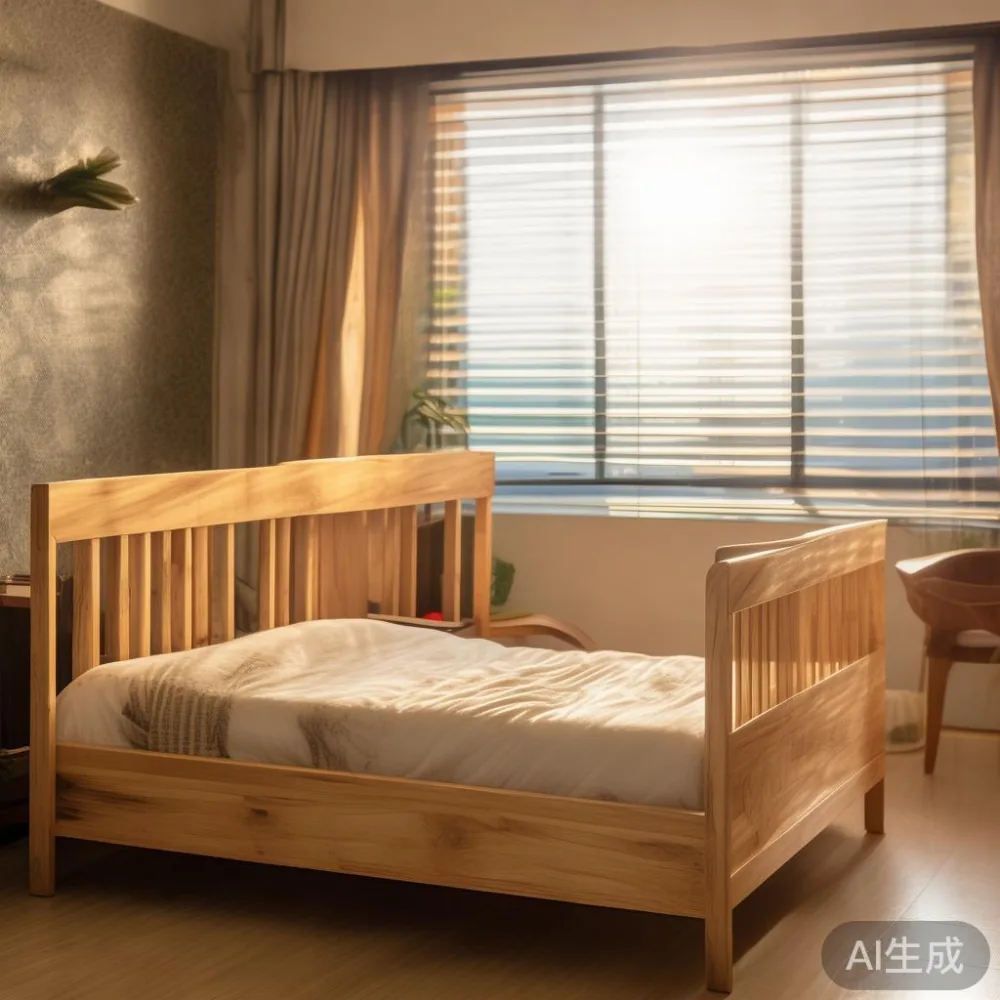
MIDHILL has been exporting from Foshan since 2008, and Singapore has quietly become one of our most interesting markets. The city is small, the flats are humid, the lifts are tight, and parents are unusually thoughtful about what goes into a child's bedroom. Add 9% GST on every invoice, a 10-year structural warranty that has to be honoured across 9,000 km of ocean, and the question becomes practical: how does humidity in Southeast Asia actually affect a solid wood kids bed, and what can a parent in a Bedok HDB do about it?
Why Singapore's climate is harder on wood than almost any other major market we ship to
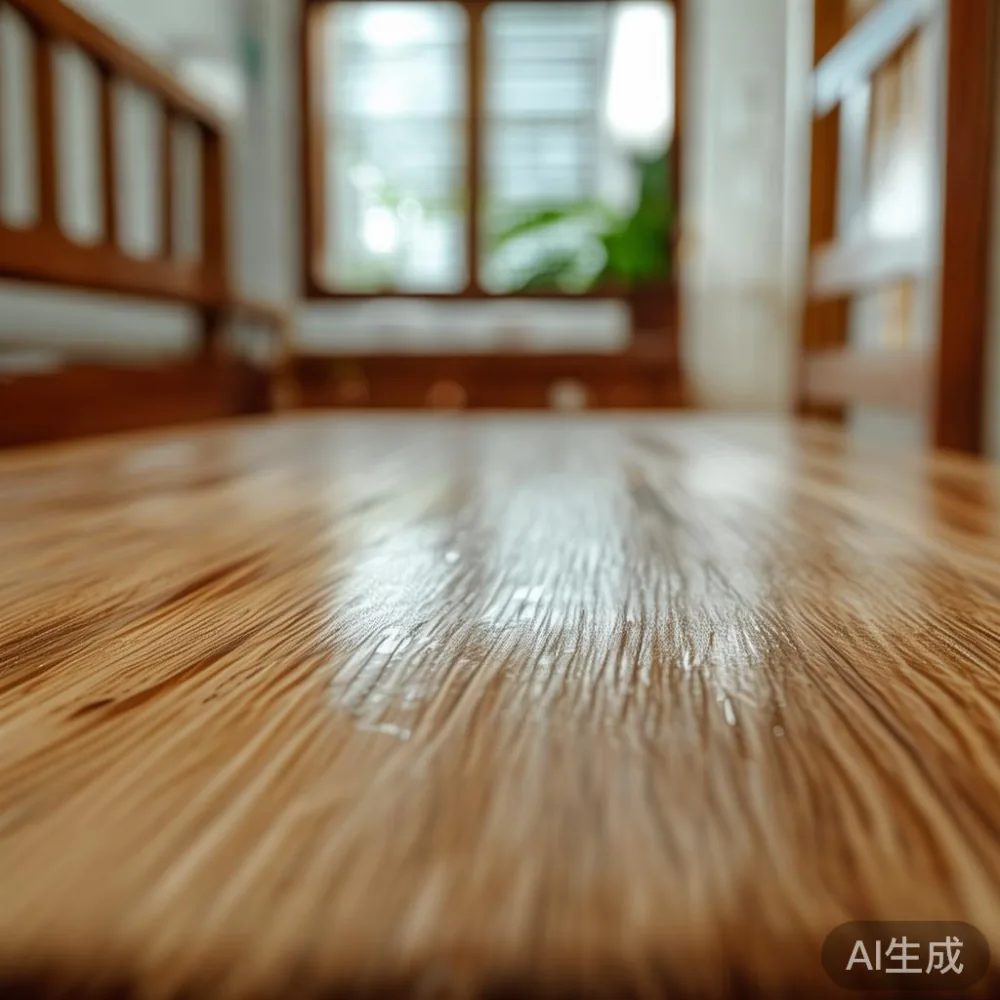
Singapore sits one degree north of the equator. The annual average relative humidity, measured at Changi, runs between 78% and 82% all year, and on a wet December night the indoor reading in an air-conditioned flat can swing from 55% to 85% inside twelve hours as the compressor cycles on and off. That swing is the real problem. Wood itself is hygroscopic — a 1% change in moisture content moves a 2-metre oak plank by roughly 0.25 mm. Over a week of repeated swings, those tiny movements add up to the kind of 2 mm gap I saw in Punggol, or to a drawer that sticks in July and runs loose in February.
For comparison, our customers in Los Angeles live with a 40–60% indoor range, London buyers see 45–65%, and even Osaka households average around 55–70%. Singapore's daily range is wider than the seasonal range in most temperate cities. A kids bed that sits calmly in a Shibuya condo — even a fancy Italian light luxury bed frame Japan interiors magazines love to photograph — will behave differently in a Punggol HDB unless it has been dried, joined and finished for tropical service.
What actually happens inside the wood when the humidity climbs
Solid wood is not a single block of identical cells. It is a bundle of tubes laid down in spring and summer rings, each ring slightly denser than the last. When humidity rises, the tubes swell more across the grain than along it — roughly 20 to 30 times more. On a kids bed, that shows up in three predictable places: the side rails bow outward by 1–3 mm, the slats compress and the mattress feels softer, and the headboard panels, if they are frame-and-panel construction, develop hairline gaps along the mitre joints.
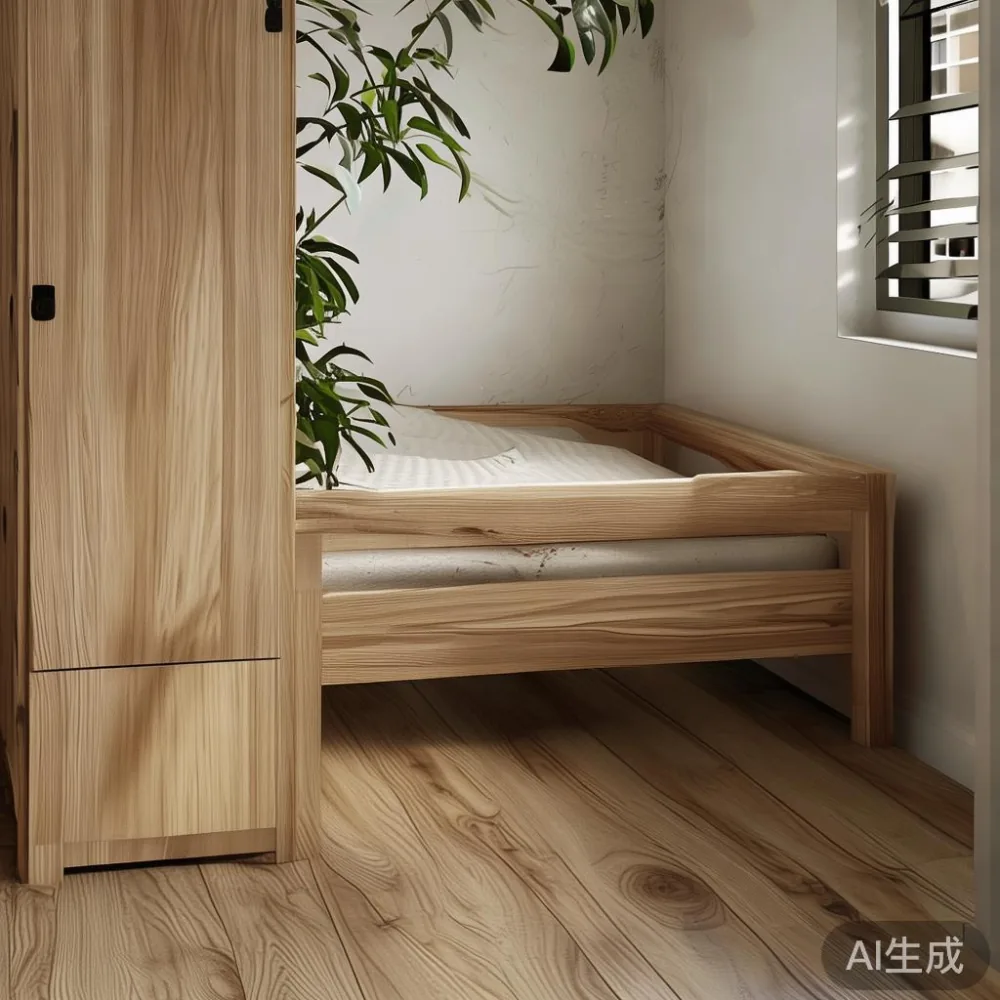
None of this is a defect. It is the wood breathing. The risk is when the breathing is extreme or one-sided — for example, a wardrobe pushed flat against an exterior wall in a Woodlands condo, where one face gets the air-conditioning vent and the other face gets the afternoon monsoon. That is why MIDHILL specs every Singapore shipment at 8–10% moisture content, kiln-dried for 30 days longer than the same product heading to a dry climate. Our export team keeps a separate production line for tropical consignments, with mortise-and-tenon joinery glued with a moisture-curing polyurethane rather than the water-based PVA used for temperate markets. The detail matters because a kids bed that is built for Singapore has to be built for Singapore from the first cut, not retrofitted at the destination.
How do I choose a balcony furniture for a balcony?
Pick a balcony furniture set that uses the same joinery and moisture targets as your indoor pieces — kiln-dried solid hardwood at 8–10% moisture content, mortise-and-tenon joints, and a marine-grade finish — because the balcony in a Singapore HDB is technically outdoors, exposed to direct rain splash and afternoon sun that an indoor kids bed never sees. For most HDB balconies in Tampines and Sengkang, that means a compact 120 cm by 60 cm acacia or teak bench, weighing 18–22 kg, finished with a UV-resistant oil rather than a film-forming lacquer. Make sure the set can pass through a 1.2 m corridor and fit a 1.6 m by 1.2 m lift on its side before you fall in love with it, and confirm that the supplier honours the warranty locally rather than asking you to ship a defective piece back to China.
Practical numbers every Singapore parent should write down before clicking buy
Before you order a solid wood kids bed, dining table, nightstand, wardrobe or marble table from any overseas maker, measure five things and write them in your phone notes. First, your lift opening — most HDB passenger lifts are 1.6 m wide and 1.2 m deep, with a diagonal of about 2.0 m; service lifts in some older blocks are 2.1 m by 1.5 m. Second, every corridor corner from the lift lobby to your door, including the 90-degree turn at the staircase void in most blocks. Third, your bedroom door, which is usually 0.9 m wide and 2.1 m tall. Fourth, the final position of the bed inside the room, including ceiling fan clearance — leave at least 60 cm between the top of the headboard and the fan blades, which is the HDB guideline. Fifth, the weight per package. Anything over 50 kg becomes awkward for two delivery men to carry up a HDB stairwell during a freight lift breakdown, and that does happen.
On price, a typical Foshan-made solid wood kids bed in Singapore retails between SGD 1,400 and SGD 3,200 landed, depending on whether the design is American light luxury (taller headboard, panel detailing, painted finish) or post-modern light luxury (cleaner lines, natural oak, brass-tipped legs). A solid wood sofa in the same palette runs SGD 3,800 to SGD 7,200 for a three-seater. A 1.8 m dining table lands between SGD 2,200 and SGD 4,500. Marble tables are a separate line item because of the crating: a 1.4 m round marble table adds roughly SGD 380 to freight over a wooden equivalent, and you should budget an extra two weeks for crating inspection at the Foshan warehouse. Add 9% GST on the landed total, plus a typical SGD 80 to SGD 150 for lift-level delivery in zones 1–3, and SGD 120 to SGD 220 for zones 4–7 such as Punggol, Sengkang and Pasir Ris.
What we have changed at MIDHILL after ten years of shipping to the tropics
When MIDHILL started exporting in 2008, our standard spec for a kids bed was 12% moisture content, water-based PVA glue, and a single coat of nitrocellulose lacquer. That spec is fine for a customer in Berlin. It is not fine for a customer in Bedok. By 2014 we had rebuilt the tropical line: hardwoods are now air-dried for 90 days and kiln-dried for another 30, the target moisture is 8–10%, the tenons are 12 mm rather than 8 mm to give the joint more glue surface, and every bed gets a hand-applied oil-wax finish that breathes with the wood rather than sealing it under a plastic film.
We have also changed how we pack. The crate for a Singapore-bound kids bed now includes a 500 g silica desiccant pack inside a perforated PE sleeve, plus a small hygrometer card so the receiving customer can see the conditions inside the crate on arrival. In the rare case the card reads above 70% on opening, our Singapore logistics partner — not the freight forwarder — will acclimatise the piece in a dry warehouse for 72 hours before white-glove delivery. The structural warranty is ten years; refinishing, including oil reapplication and joint tightening, is free for the life of the piece. We have refinished pieces in customer homes in Clementi and Toa Payoh that are now twelve years old, and they look better than the day they were unboxed.
The five-minute humidity routine that prevents 90% of the issues we see
If you take one thing from this article, take this routine. Buy a SGD 25 hygrometer from any HomeTeam or hardware shop in Tampines and put it on the wall opposite the kids bed, at headboard height. Run the bedroom air-conditioner at 24 to 26 degrees Celsius with the fan mode on low — this keeps relative humidity between 55% and 65%, which is the comfort zone for both sleeping children and solid hardwood. Open the bedroom door, not the window, for at least an hour each morning so the air-conditioner can flush the room. Wipe the bed frame with a dry microfibre cloth weekly; never use a wet cloth or a steam mop on solid wood. Every twelve months, apply a thin coat of hard wax oil — we send a 250 ml tin with every Singapore order — along the side rails and the headboard top, where the sun hits hardest.
Last month I visited a repeat customer in Bedok who bought her first MIDHILL kids bed in 2016 and a second one for her younger daughter in 2023. Both beds sit in the same flat, against the same exterior wall. The seven-year-old bed has a barely visible patina and a 1.5 mm seasonal gap on one rail that opens in November and closes by March. The eighteen-month-old bed is still pristine. She told me the hygrometer cost less than the delivery fee and saved her from panicking about the older gap. That is the whole game: measure the humidity, control the humidity, and the wood will reward you for twenty years.
What a sensible Singapore warranty should actually cover
A ten-year structural warranty on a kids bed should cover joint failure, rail cracking and slat snapping under normal use. It should not cover seasonal gapping under 3 mm, finish fading from direct sunlight, or water damage from a spilled drink left overnight. Read the warranty document before you pay, and ask the supplier to define "normal indoor humidity" in writing. A serious maker will specify a range — at MIDHILL we write 45–70% relative humidity — because writing a number down forces us to build to it. If a competitor refuses to put a humidity range on paper, that is the answer you need.
Returns are the other quiet cost. Singapore consumer law gives you fourteen days for unused pieces, but a flat-packed kids bed that has been opened and partially assembled is usually not returnable for hygiene reasons. Confirm the return policy in writing, and check whether the return freight from Singapore to Foshan is paid by the supplier or by you — that line item can be SGD 280 to SGD 600 depending on the crating. Free shipping above a threshold — we offer free shipping on every Singapore order over US$350, which at current rates is roughly SGD 480 — is worth more than a small percentage discount, because freight on a 41 kg crate from Shenzhen to Singapore is the single largest cost in the landed price.
A short checklist before you confirm the order
Confirm the wood species and the kiln-dried moisture content in writing. Confirm the joinery — mortise-and-tenon, dowel, or bolt; pocket screws are acceptable on a wardrobe back panel but never on a kids bed side rail. Confirm the finish type and the recommended re-oiling interval. Confirm the crated dimensions and the gross weight, then measure your lift, your corridor and your bedroom door. Confirm the warranty period, the humidity operating range, and what refinishing the supplier will do for free. Confirm the delivery lead time, which for Foshan-to-Singapore runs 28 to 42 days by sea including consolidation, customs and GST clearance. Confirm the return window, the return freight cost, and who collects the piece if you reject it. And finally, keep the original crate for at least thirty days after delivery in case a panel needs to come back to the workshop for a refinish — a HDB storeroom is fine for a flat-packed solid wood sofa box, and you will be glad you kept it.
A kids bed is not a small purchase, and in a Singapore HDB it is also a piece of engineering that has to thread a needle — literally, through a 1.2 m corridor and a 1.6 m lift — before it ever meets the humid air of your child's bedroom. Choose a maker who treats those constraints as the starting point of the design, not as an afterthought. The wood will still breathe, the seasons will still push humidity from 55% to 85%, and your daughter will still draw on the headboard with a marker. The bed should handle all three without complaint, for at least the next ten years and, with a little oil and a little attention, for the twenty after that.