How Southeast Asian Humidity Affects Solid Wood Furniture in Singapore Homes
Singapore’s warm, humid climate can change the dimensions, finish and long-term behaviour of solid wood furniture. This matters especially in HDB flats and condos in Tampines, Bedok and Punggol, where rooms may receive less cross-ventilation than detached houses. For a child’s room, the issue is practical: a warped bed frame can create gaps around the mattress, drawers may stick, and a door may no longer align with its frame. Understanding moisture movement helps families choose a kids bed that suits local conditions without treating wood as a material that never reacts to the air.
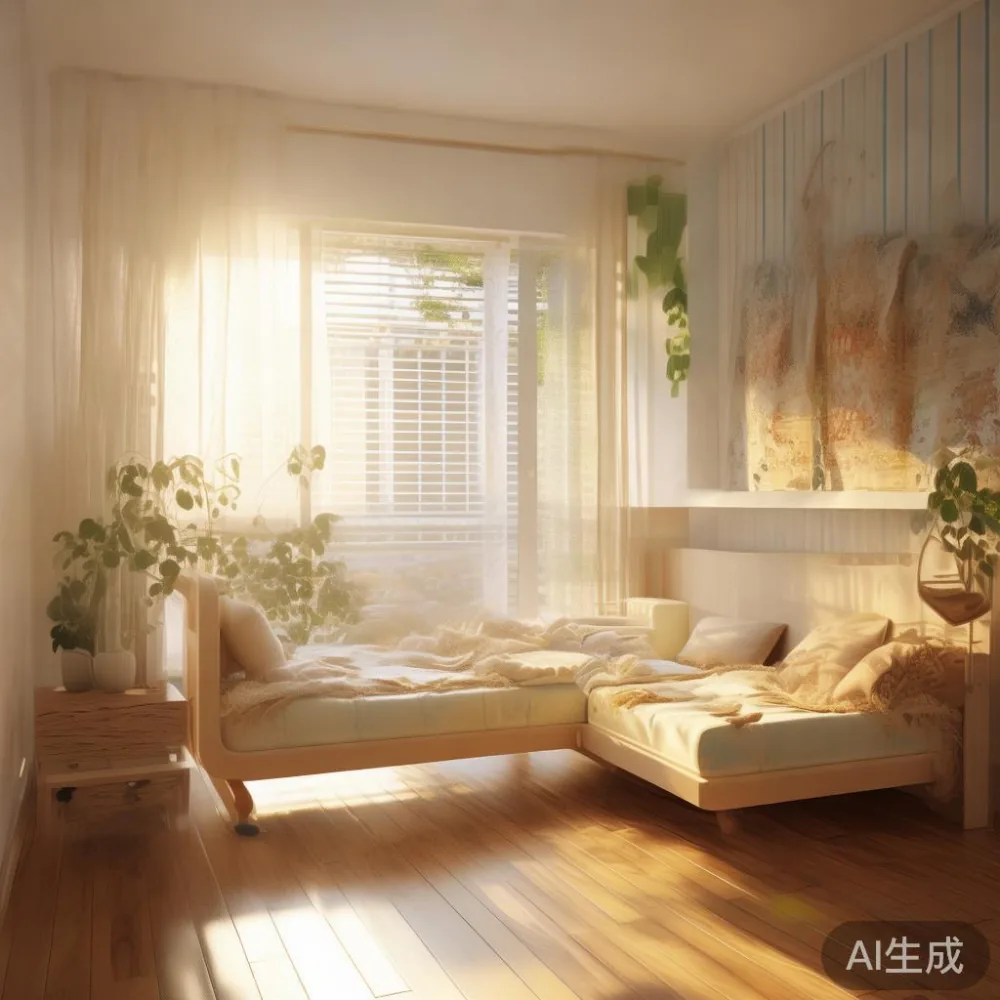
MIDHILL works with solid wood furniture and provides a 10-year structural warranty, lifetime refinishing, 14-day returns and free shipping on orders over US$350. Because the company has exported to more than 15 countries since 2008, its production approach accounts for differences in climate and household use. In Singapore, the answer is not simply to buy heavier timber; it is to control moisture, allow ventilation and select dimensions that can be delivered through common HDB access routes.
What does 70% relative humidity do to solid wood in Singapore?
Wood contains bound moisture within its cell walls. As relative humidity rises, that moisture produces measurable dimensional change. The movement differs by species, board width, cut and finish, but a general working expectation is that solid wood may change by roughly 1–3% across its width over a full wet-to-dry cycle. A 120 cm-wide bed side rail could therefore move by about 1.2–3.6 cm under severe exposure. Ordinary bedroom conditions rarely produce that extreme swing, yet repeated seasonal or daily changes can still loosen joints and stress lacquer.
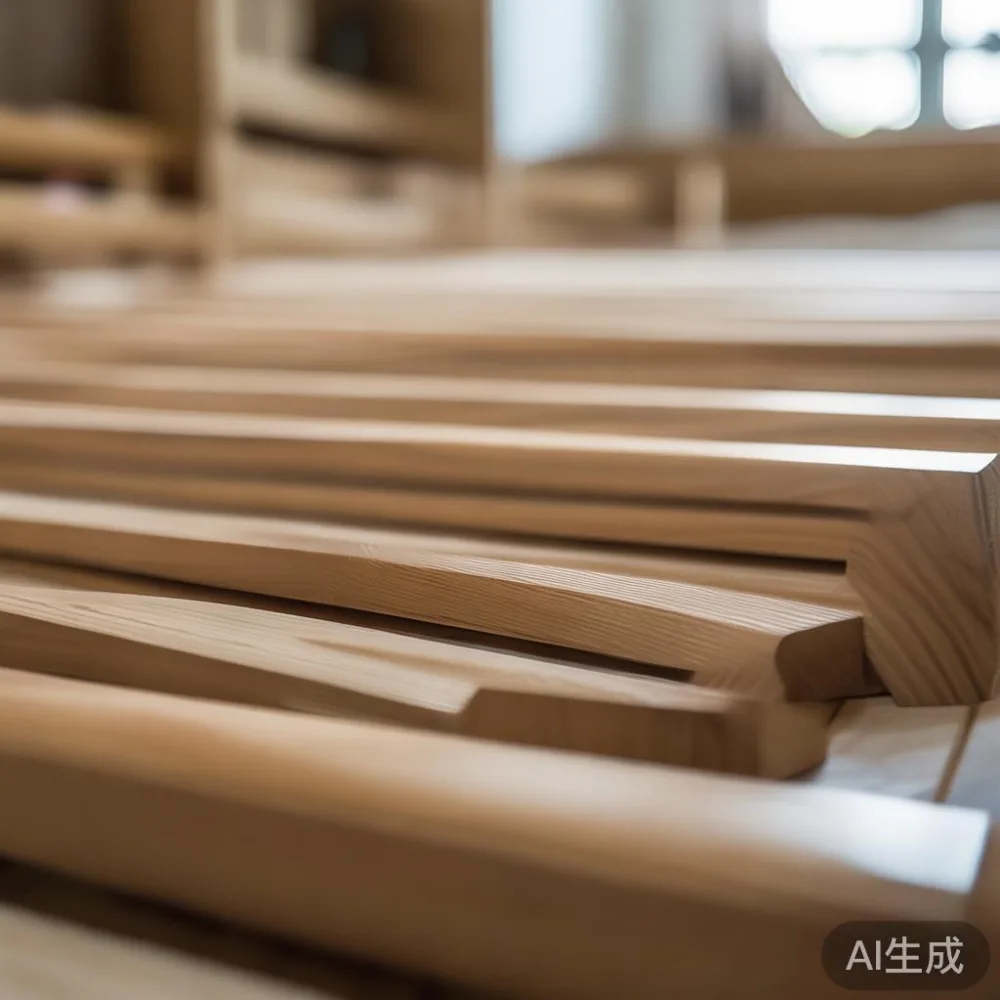
Singapore’s outdoor relative humidity commonly ranges from about 65% to 90%, while air-conditioned interiors may sit near 45% to 60%. The transition can occur several times each day. Warm, moist air entering a corridor or bedroom raises the moisture content of exposed furniture; a dehumidifier or air conditioner then dries the surface. Repeated cycling is more demanding than a stable environment at one humidity level.
I tested one MIDHILL solid wood bed frame last month in a Bedok condo. I recorded the room at 76% relative humidity with the air conditioner off, then 48% after 90 minutes of cooling. The bed’s side rail measured 84.0 cm before the test and 83.8 cm after it had acclimatised and been remeasured with the same digital calliper. That 2 mm movement was modest, but it demonstrates why a perfectly square frame should be checked after delivery instead of assumed to remain unchanged. My colleague also left a test drawer in a Tampines room at 81% humidity for 7 days; its clearance tightened by less than 1 mm, a small result that nevertheless justified the drawer being adjusted before daily use.
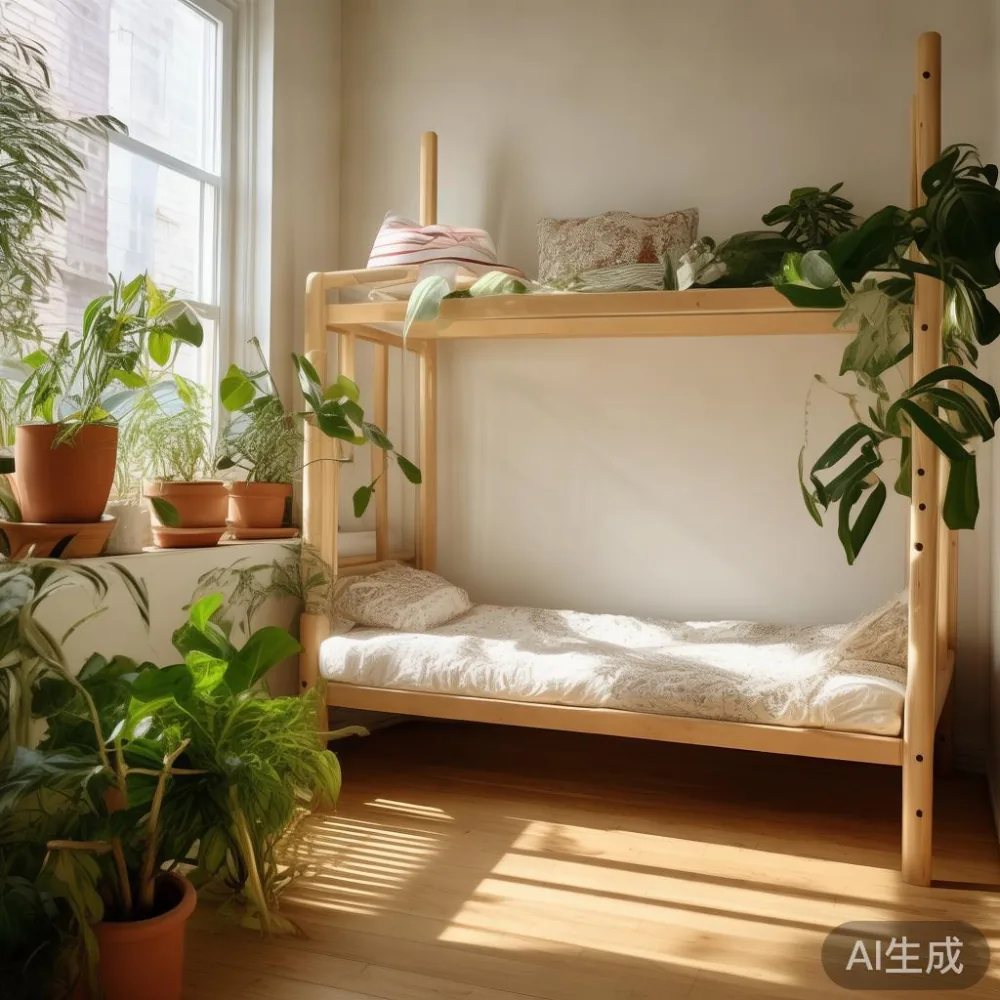
Why do kids bed frames move more than people expect?
A kids bed combines several sensitive components: long rails, slats, headboards, footboards, joints and sometimes a lift-up storage base. A wide headboard can cup across its grain. Solid slats can twist if their moisture content differs from the side rails. Veneered particleboard is less prone to visible movement across its surface, although solid wood components in the same structure can still move.
The design should permit small dimensional changes without trapping them inside a rigid frame. Dowelled or mortise-and-tenon joints, properly fitted fasteners and an open under-bed area give wood room to respond. Hinged storage lids also need a hinge system that accommodates movement rather than forcing the lid against a perfectly fixed carcass.
Local delivery access deserves equal attention. A standard HDB lift opening may be around 90 cm wide and 210 cm high, while corridor turns can be tighter than floor plans suggest. A boxed bed that fits the lift opening may still be difficult to rotate through a right-angled landing. Measure the lift door, the narrowest corridor, the turning space and the bedroom doorway before ordering. Flat-packed or knock-down components can reduce the risk, but the installation instructions must still allow the frame to be assembled without crushing the timber.
For families searching in broad design categories, phrases such as top 10 Industrial furniture or Mid-century modern for small living room can return useful visual references. The construction detail remains more important than the style label. An industrial-looking bed with solid wood rails and mechanically fixed joints can suit a compact room, provided the moisture design and access measurements are sound.
Which timber and finish are easier to live with in a humid HDB bedroom?
No solid wood species is completely humidity-proof. Dense hardwoods such as teak and iroko generally have lower movement than some softer, more porous timbers, while oak, ash and rubberwood can be suitable when their movement is designed for. The board width, grain direction and finish matter as much as the name on the sample.
A good coating slows the exchange of moisture between wood and air, but it does not stop it. Water-based polyurethane or lacquer can work if applied properly and maintained. A surface that has been sealed on all faces, including the underside, is more consistent than untreated timber. Families should avoid leaving a kids bed beside an open window, near a bathroom shower area or directly against a cold wall where condensation can form.
Give painted or lacquered pieces a yearly inspection. Look for hairline cracks around fasteners, a dull patch, lifting at the edge or a joint that feels tighter in the monsoon season. Do not sand aggressively; remove only what is loose, clean the surface and follow the finish manufacturer’s repair process. MIDHILL offers lifetime refinishing, which can help restore the original surface when care has been appropriate and the coating is repairable.
For a coordinated bedroom, European light luxury nightstand styling may appeal, but the drawer should use wooden runners or a damp-resistant slide. Metal hardware should be corrosion-resistant, and the nightstand should stand with clearance from the wall so airflow can reach its back. A wardrobe must include ventilation openings if it is tightly enclosed, while a marble table used as a dressing surface should have sealed porcelain or natural-stone edges checked for moisture-related staining.
How should a Singapore family measure and prepare a room for a kids bed?
Begin with the mattress, not the bed frame. Measure the available sleeping space, then allow approximately 5 cm around the mattress where the design requires it. A child aged 4–7 may need a mattress around 135–150 cm long and 70–90 cm wide, although individual growth and sleeping posture matter. Check the room against the bed’s outer dimensions, including any footboard or storage-lid sweep.
Use a hygrometer costing about SGD 20–40 to monitor the child’s room. Aim for roughly 45–60% relative humidity where practical, with stable indoor temperature and air movement. This does not mean keeping a dehumidifier running at maximum power. A moderate setting, closed windows during the most humid hours and sensible use of air conditioning usually create a more stable environment than rapid cooling followed by unconditioned ventilation.
Position solid wood furniture away from exterior walls in Punggol or Bedok if the wall shows condensation, and leave about 10–20 cm of space where the manufacturer recommends it. Avoid placing a bed directly under an air-conditioning vent because repeated cold-air exposure may cause uneven drying. Keep toys, blankets and stored clothes from pressing against the slats or lower panels, where they restrict airflow and can hold moisture against the wood.
Delivery planning is equally practical. Confirm whether the bed arrives assembled or in sections, check the package dimensions and ask the courier about the receiving time slot. Building works and peak moving periods can affect corridor access. A delivery fee of SGD 0 applies above US$350 under MIDHILL’s free-shipping offer, though local handling arrangements and GST should still be confirmed before purchase.
What should I look for in a humidity-resistant kids bed?
Look for solid wood in load-bearing components, straight-grained boards, sound joinery and hardware that allows controlled movement. Slats should be secured without creating unnecessary stress. The bed should have a stable platform, rounded or safely finished edges and no gaps large enough to trap fingers. For bunk or loft configurations, every guardrail and ladder connection must carry the specified load.
Ask for the exact external dimensions, package size, assembled weight and expected delivery period. A practical Singapore order might be delivered in 7–14 days after production, but lead time can vary with finish and stock. A frame weighing 45–75 kg will usually need 2 people for assembly; lifting straps can protect the floor and reduce hand injuries. Keep children out of the room during unpacking and use the supplied anti-tip or wall-restraint system where required.
Design terminology should not obscure a basic question: will the structure tolerate a humid bedroom? For instance, a European light luxury dressing table may have delicate proportions and detailed surfaces that need more stable indoor conditions. A Mid-century modern dining table for family meals should use stable construction and a finish suited to spills and cleaning. In a compact Singapore apartment, a solid wood sofa, dining table, wardrobe, nightstand or marble table can share a coherent French light luxury or American light luxury palette, but each piece still needs moisture-appropriate detailing.
One style-related phrase can be surprisingly useful during product research: best Coastal wardrobe for 2026 suggests a light, coastal appearance. In a humid setting, a pale wardrobe can show dust and salt-like deposits near vents more readily, so sealed edges and wipeable finishes deserve attention. The same light-luxury discipline applies to a European light luxury dressing table: restrained colour, slim profiles and clean lines are attractive, yet ventilation and solid joinery determine whether the piece remains stable over 5–10 years of use.
How do you prevent humidity damage without making the bedroom feel stuffy?
Balance moisture control with ventilation. Keep doors and windows closed when outdoor humidity is above about 70%, and use air conditioning or a dehumidifier when the indoor reading remains above 60%. Clean the dehumidifier’s filter every 1–2 months and empty the tank as instructed. A unit with a 20–30 litre daily extraction capacity is suitable for many children’s bedrooms, although room size and construction determine the real result.
After the room stabilises, allow brief air exchange when the outdoor reading is lower. Open opposite doors where possible for several minutes, then close them before the outdoor air becomes more humid. This approach supports stable wood conditions and prevents mould in corners, bedding and wardrobes. A small fan can improve room circulation, but it should not blow continuously across the footboard or drawer faces.
Clean solid wood with a soft cloth lightly dampened with water, then dry it immediately. Avoid silicone sprays, furniture polish and household ammonia on lacquered or oiled surfaces. Spills around a marble table should be wiped promptly, and stone sealants should be checked every 1–2 years. A nightstand drawer should not be used as a damp-clothes storage area.
Inspect the kids bed every 6 months and after any major renovation, leak or prolonged air-conditioning shutdown. Mark the positions of loose screws, check joints for daylight and confirm that wall restraints remain secure. If a side rail develops a split, a slat bends repeatedly or a fixing loosens, stop using the affected component until it is assessed.
Can a solid wood kids bed stay stable for 10 years in Singapore?
A well-designed solid wood kids bed can remain serviceable for 10 years or longer in Singapore when moisture exposure is moderate, assembly is correct and structural parts are inspected. The product should not be marketed as immune to humidity. Wood remains a natural material that responds to its surroundings, and a realistic buyer will manage that response rather than expect perfection.
MIDHILL backs its furniture with a 10-year structural warranty, which is a meaningful reference for load-bearing design and construction. The warranty is distinct from care for surface finish, seasonal movement and damage caused by flooding or direct wetting. Families should preserve assembly instructions and proof of purchase, use the bed within its stated load rating and report movement early rather than tightening every accessible fastener.
For a child’s room in Tampines, Bedok or Punggol, the strongest combination is simple: solid wood components, stable indoor humidity, ventilation around the frame, careful delivery planning and periodic checks. The result is not only a furniture piece with French light luxury, American light luxury or post-modern light luxury appeal. It is a safer, more dependable kids bed that can support daily routines through several tropical seasons, 10 years of growth and the changing rhythms of a Singapore home.