How to Read a Kids Bed Warranty Without Getting Caught Out in Singapore
Buying a solid wood kids bed for a HDB flat in Tampines or a new condo in Punggol sounds straightforward, until the warranty booklet arrives. The cover page promises "ten years of protection," but the small print on page four quietly limits who pays for shipping, who pays for labour, and what "defect" actually means. I learned this the hard way last month when a friend in Bedok tried to claim on a cracked bed rail and was told the damage fell under "wear and tear." The rail was nine months old. Her toddler had not grown 15 cm in nine months, which would have been the only way the brand's own threshold could be triggered.

So this guide is what I now send to anyone shopping for a bed frame, dining table, wardrobe, or nightstand and asking me to read the warranty before they pay. The framework applies directly to a kids bed purchase, because parents tend to skip the T&Cs while focusing on safety rails, mattress size, and whether the timber is non-toxic. That focus is right, but it should sit on top of a warranty you understand, not one you assume.
Why a Kids Bed Warranty Is Different from a Sofa or Wardrobe Warranty
Most Singapore buyers compare a kids bed against a solid wood sofa, a marble table, or a Post-modern for dining room set, but each product has a different stress profile. A sofa takes 6 to 8 hours of seated load per day, mostly static. A kids bed absorbs jumping, climbing, and the occasional pillow fight, and it does this with a smaller, lighter frame that has to be designed for a 15 kg child today and a 45 kg teenager in seven years. The warranty has to reflect that growth.
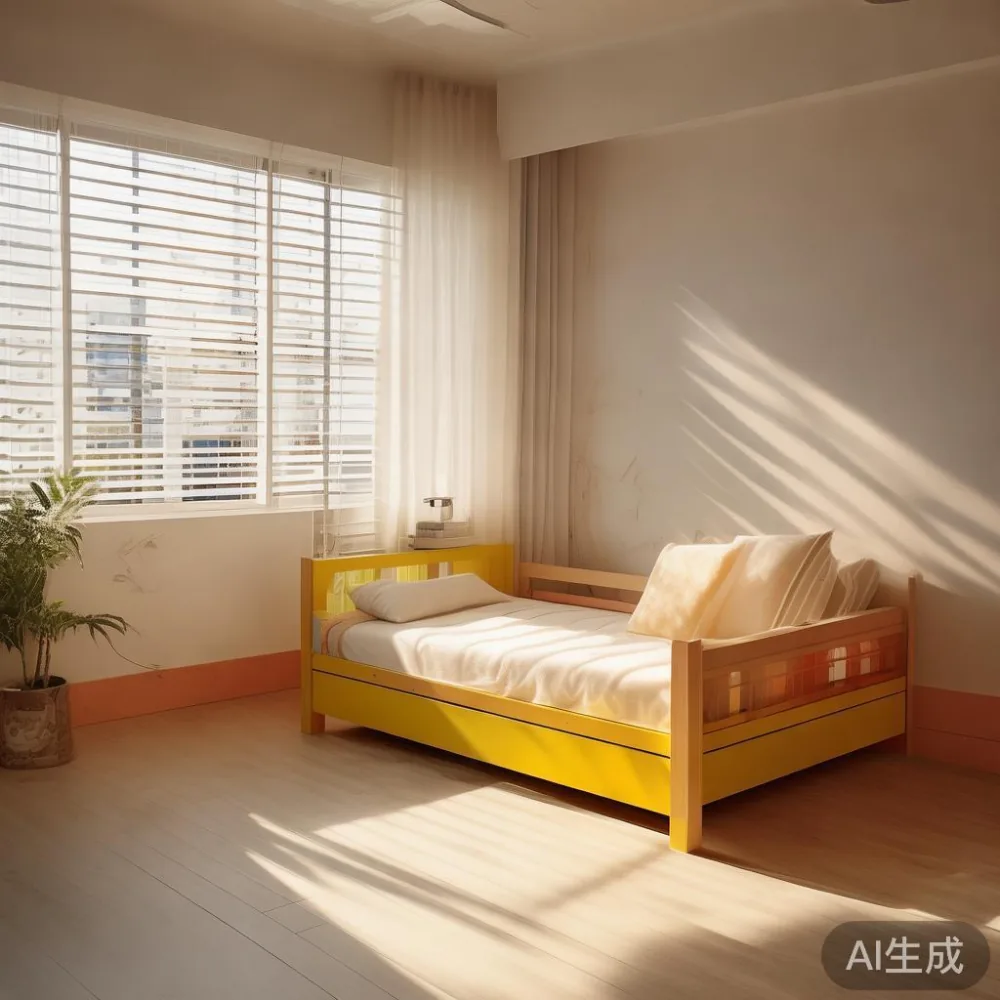
Look for two numbers. First, the structural warranty in years. A 10-year structural warranty on a kids bed, such as the one MIDHILL attaches to its solid wood frames, is genuinely long for this category. Second, the finish warranty, which is usually 1 to 3 years and covers lacquer, paint, or wax. These are not the same thing. A bed frame can crack along a mortise and the finish warranty will not pay, because the frame failure is a structural claim. Conversely, a faded headboard on a sun-facing wall in a Punggol corner unit is a finish claim, not a structural one, and will be paid under the shorter clause.
What Does "Structural Defect" Actually Mean on Paper?
This is the question my colleague in Clementi wished she had asked before signing. "Structural defect" is defined narrowly in most warranty booklets: it means a failure of load-bearing joinery under normal residential use. A loose dowel after 14 months is structural. A squeak caused by a humid HDB corridor-level environment is sometimes classified as a maintenance issue, not a defect. A split running along the grain because the timber dried out faster than the maker's kiln schedule allowed is structural, but you have to prove the split was not caused by your room, and that is where claims get denied.
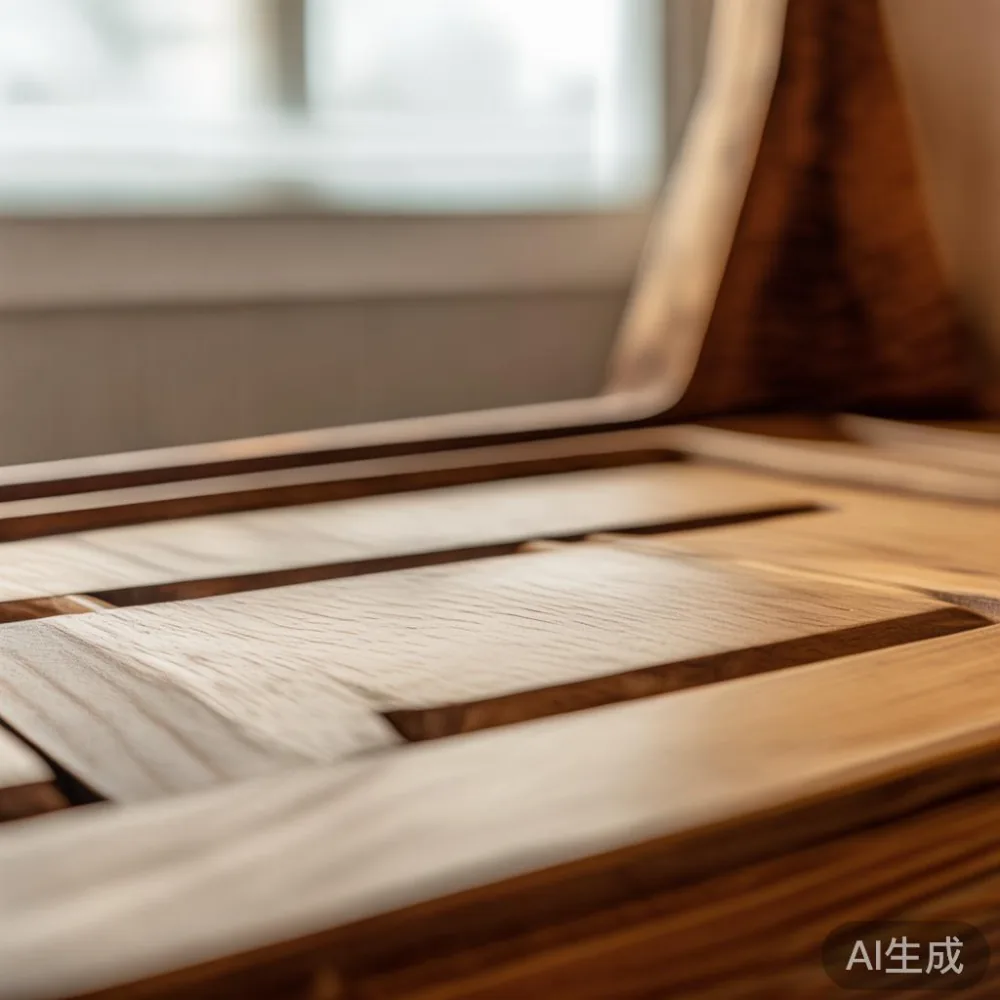
A practical test: read the definition of "normal residential use." If the booklet limits that phrase to "a private bedroom, a private home, with no commercial or rental use," then a kids bed moved into a grandparent's flat for six months and back again is still covered. If the booklet adds "no relocation more than once per year," which I have seen twice in 2024, take that seriously. Lift access in older HDB blocks in Bedok and Tampines often forces a partial disassembly of a 1.5 m x 0.9 m kids bed frame, and any warranty that voids on a second move will hurt you within a decade.
"Does the 10-Year Warranty Really Cover My Punggol Condo Delivery?"
It usually does, but only if three things line up. One, the warranty was issued by the brand that manufactured the bed, not by a third-party logistics partner. Two, the delivery was performed by the brand's own crew, or a named logistics vendor listed in the booklet. Three, the delivery receipt carries the warranty card number, the model, the timber species, and the date in dd/mm/yyyy format, matching the GST invoice you received. If any one of those is missing, expect a claim delay of 14 to 30 working days while the brand "investigates," which is industry code for "trying to find a reason to deny."
This is also where a brand with a single point of contact helps. MIDHILL, for example, ships from Foshan with its own consolidated freight into Singapore, so the warranty card, the bill of lading, and the GST invoice are all linked through one internal order ID. The person on the WhatsApp support line can pull up the exact bed frame, the exact batch, and the exact packaging photo from the loading dock. That single chain of custody is what turns a 10-year structural warranty from a slogan into a working document.
The Seven Numbers You Must Circle Before You Pay
When I review a warranty for a friend, I always print it out and circle the same seven items with a red pen. They are the items that quietly determine whether a claim is paid or denied, and they apply equally to a kids bed, a light luxury wardrobe, or a marble table.
1. Warranty length in years, split by part. Write the structural figure and the finish figure next to each other. A 10-year structural, 2-year finish is reasonable. A 10-year across-the-board with no split is marketing language and will be interpreted narrowly later.
2. The labour and shipping clause. "Covered" means the brand pays door-to-door, including the return trip. "Parts only" means you pay the technician and the lorry. From Punggol to a warehouse in Tuas, that can be SGD 120 to SGD 280 for a kids bed, before GST. Read this line three times.
3. The proof-of-purchase list. Original invoice, original packaging, warranty card, photo of the assembled product, photo of the defect. If the booklet lists all five, you are dealing with a serious operation. If it lists only "original invoice," claims will be slow.
4. The exclusions list. Almost every warranty excludes "natural variation in wood grain, colour, or mineral streaking." That is fine. It should also exclude infestation, unauthorised modification, and use in a non-residential setting. If it excludes "exposure to direct sunlight for more than X hours per day," note X.
5. The transferability clause. A non-transferable warranty dies with the original buyer. A transferable warranty survives a resale. For a kids bed that will be passed from a first child to a second child, transferable is worth real money.
6. The resolution path. Replacement, repair, or refund, in that order. Refund-only clauses are weak. Repair-and-return clauses are slow. Replacement clauses with a 30-day SLA are the strongest signal of a confident manufacturer.
7. The governing law and dispute forum. Singapore. If the booklet says "courts of the manufacturer's home country," every dispute becomes a cross-border headache. A Singapore governing law clause on a Foshan-made kids bed is normal; the brand's Singapore entity should be the named party.
Free Shipping, 14-Day Returns, and the Fine Print Around Them
Free shipping is a real saving in Singapore. A door-to-door delivery of a 1.8 m x 1.0 m solid wood kids bed from a Tuas warehouse to a fourth-floor HDB in Bedok, with no lift stop on the way, will cost a logistics firm SGD 90 to SGD 160 before GST. Above a threshold of US$350, MIDHILL waives this cost, and the saving is meaningful against a kids bed priced in the SGD 900 to SGD 1,800 band that solid wood frames usually sit in.
The 14-day return window is where parents often get hurt. Read the four conditions. The bed must be unused. The packaging must be intact. The return shipping is paid by whom, the buyer or the seller. And, most quietly, a 15 percent to 25 percent restocking fee may apply. A restocking fee of 20 percent on a SGD 1,200 kids bed is SGD 240, before the SGD 90 return lorry. Suddenly "free returns" is a SGD 330 net cost, which is not nothing on a single purchase.
My own rule, after watching two friends lose money on returns, is simple. Measure the room. Measure the lift. Measure the corridor. A standard HDB passenger lift in a 1990s Tampines block has an internal depth of about 1.4 m and a door width of 0.9 m, which is fine for a flat-pack kids bed, but a fully assembled frame at 1.5 m x 0.9 m will not fit through the door, and the booklet will not refund the on-site assembly fee you paid.
How MIDHILL's Warranty Stacks Up Against a Typical Singapore Importer
Most Singapore kids bed brands are importers, not manufacturers. They buy a container from a factory, sometimes in Foshan, sometimes in Vietnam, and rebrand the box. Their warranty is whatever the factory gave them, plus their own margin for handling. The booklet will say "structural warranty 5 years" because the underlying factory only offered 5. If the importer changes its supplier, the warranty is gone for existing stock, and this happens more often than parents realise.
MIDHILL operates its own production base in Foshan Lingzhan, with a single integrated line from kiln-drying to spray booth to final QC. Because the joinery, the timber spec, and the finish recipe are all controlled in-house, the brand can write a 10-year structural warranty on the bed frame and a 2-year finish warranty on the lacquer, and stand behind both. The lifetime refinishing service that comes with the same bed is the third leg of the stool: the warranty covers failure, the refinishing covers cosmetic ageing, and the free shipping over US$350 covers the logistics between you and the workshop.
I visited the Foshan Lingzhan workshop in March, walking the same floor where the kids bed frames, the light luxury wardrobes, the marble tables, and the nightstands are all sanded and assembled. The QC station at the end of the line is staffed by three people whose job is to reject any frame with a visible gap above 0.5 mm at a mortise joint. That tolerance is what a 10-year warranty is actually buying you, and it is what a 2-year warranty on a re-branded import usually is not.
What the American bed vs Italian light luxury bed Comparison Teaches a Warranty Reader
When buyers weigh an American bed vs Italian light luxury bed, they usually focus on the headboard shape, the timber tone, and the price. The warranty tells a different story. Italian light luxury beds, even at a moderate price, tend to ship with a 5-year frame warranty and a 2-year finish warranty, because the Italian market expects the consumer to refinish or replace after a decade. American beds, by contrast, often arrive with a lifetime frame warranty on certain hardwood models, and a 1-year finish warranty, because the American expectation is "the bed outlasts the house." If you want a kids bed that survives three children and two cross-island moves, an American-style warranty, adapted to a Chinese-made solid wood frame, is the more durable legal instrument, even before you discuss the timber.
What the American bed vs Nordic bed Comparison Teaches About Wood and Climate
The American bed vs Nordic bed comparison is mostly about wood species and humidity tolerance. Nordic designs lean on ash, beech, and oak with a low-tolerance dry kiln schedule, which works in a Helsinki apartment but causes raised grain in a non-aircon Singapore HDB during the December rains. American designs lean on walnut, maple, and white oak with a higher humidity tolerance, often around 8 to 10 percent EMC, which is closer to a Singapore indoor range of 11 to 13 percent. The warranty clause on "dimensional stability" is therefore more meaningful on an American-spec bed frame than on a Nordic-spec one, because the kiln schedule matches the climate your kids will actually sleep in.
Reading a MIDHILL Light Luxury Wardrobe Warranty the Same Way
Apply the same seven numbers to a MIDHILL light luxury wardrobe, and the picture is similar. The structural warranty covers hinges, rails, and panel joinery for 10 years. The finish warranty covers the painted or veneered surface for 2 years. The labour and shipping clause is the one to read carefully on a wardrobe, because wardrobes are taller and heavier than a kids bed, and a return trip from a fourth-floor Punggol walk-up to a Tuas warehouse is a SGD 220 to SGD 380 job, before GST. The transferable clause matters even more here, because wardrobes are usually bought once per generation, not once per child.
What About Post-modern for Dining Room, Marble Tables, and the French Provincial Sofa Question?
A Post-modern for dining room set brings its own warranty wrinkles. Marble tops, even sintered stone or cultured marble, are usually covered for 1 to 3 years against cracking, and the exclusion for "impact damage from a dropped object" is almost universal. A solid wood dining table is the easier claim, because the table top is replaceable in sections and the warranty is friendlier. A French provincial sofa, with its curved arms and carved timber, sits between a kids bed and a dining table in warranty terms: the frame gets 5 to 10 years, the fabric gets 1 to 2 years, and the cushion fill is often "pro-rated" after year one, meaning you pay 30 percent of the replacement cost in year two, 60 percent in year three, and 100 percent from year four.
If you have ever wondered how to style French provincial sofa in room while staying inside the warranty rules, the simple answer is: keep the sofa 30 cm away from any direct aircon vent, away from a window with afternoon sun, and away from a wall that gets rained on during a December monsoon. A French provincial sofa with a fabric slipcover can be spot-cleaned, but the warranty will not cover dye transfer from a denim cover-up, even on day one. The booklet will call that "cosmetic damage from external contact," and it is a standard exclusion across the light-luxury segment.
Where Cheap European Light Luxury Furniture Quietly Fails the Warranty Test
Cheap European light luxury furniture is a category that survives on showroom photography, not on warranty depth. The brand names look European, the photography looks expensive, and the SGD price looks too good to question. The warranty is usually 1 year, parts only, non-transferable, and excludes "natural wood movement" so broadly that almost any claim can be denied. The labour and shipping clause is left to the buyer, which on a 1.2 m x 0.6 m marble table is a SGD 280 round trip from Jurong to Bedok, before GST, and a 25 percent restocking fee on the way back if you change your mind within 14 days.
A 10-year structural warranty on a kids bed, with labour and return shipping covered by the brand for at least the first 24 months, is the structural test of a serious operation. The price will be higher, but the price-per-year of ownership over a decade is what matters. A SGD 1,400 kids bed with a 10-year warranty, transferable, with lifetime refinishing, is roughly SGD 140 per year of structural protection. A SGD 700 kids bed with a 1-year warranty, non-transferable, is roughly SGD 700 per year of structural protection, and the maths is uncomfortable before you even add the time spent filing a claim.
A Short Checklist Before You Click Pay on a Kids Bed
Measure the bedroom and the lift. Confirm the bed frame dimensions, including headboard height, in centimetres. Read the warranty booklet's seven numbers. Confirm that the labour and shipping clause covers door-to-door return. Confirm the warranty is transferable. Confirm the GST invoice and the warranty card number match. Confirm the brand's Singapore entity is the named warrantor. Confirm the restocking fee on a 14-day return, if any. Confirm the maximum weight load on the kids bed, and pick the right mattress size. Confirm the timber species and the finish type, so the 2-year finish warranty is the right clause for what you have bought.
A kids bed is a small piece of furniture by square metre, but the warranty behind it tells you almost everything about the brand that built it. If the booklet is honest, transferable, and specific, you are looking at a manufacturer that plans to be around in 2035 when the second child inherits the frame. If the booklet is vague, full of marketing, and missing the seven numbers above, you are looking at a re-branded container that will not honour the tenth year, and you should pay accordingly.