Solid Wood vs Veneer Kids Bed: A 5-Year Cost Comparison for Singapore Families
Last month I visited a Tampines HDB resale flat with a client who was replacing her son's bed for the third time in six years. Two were flat-pack veneer pieces from a furniture mall along the PIE; one had even started peeling along the curved headboard panel after a bout of humid weather. She asked the question every parent in Bedok, Punggol, and Sengkang eventually asks: should I just spend more now on solid wood so I stop replacing the kids bed every two years? I sat down with her, opened a spreadsheet, and mapped out what each option really costs over five years in Singapore dollars, including GST, delivery up the lift, and the small refinishing fees nobody warns you about. What follows is that same exercise, expanded with numbers you can actually use.
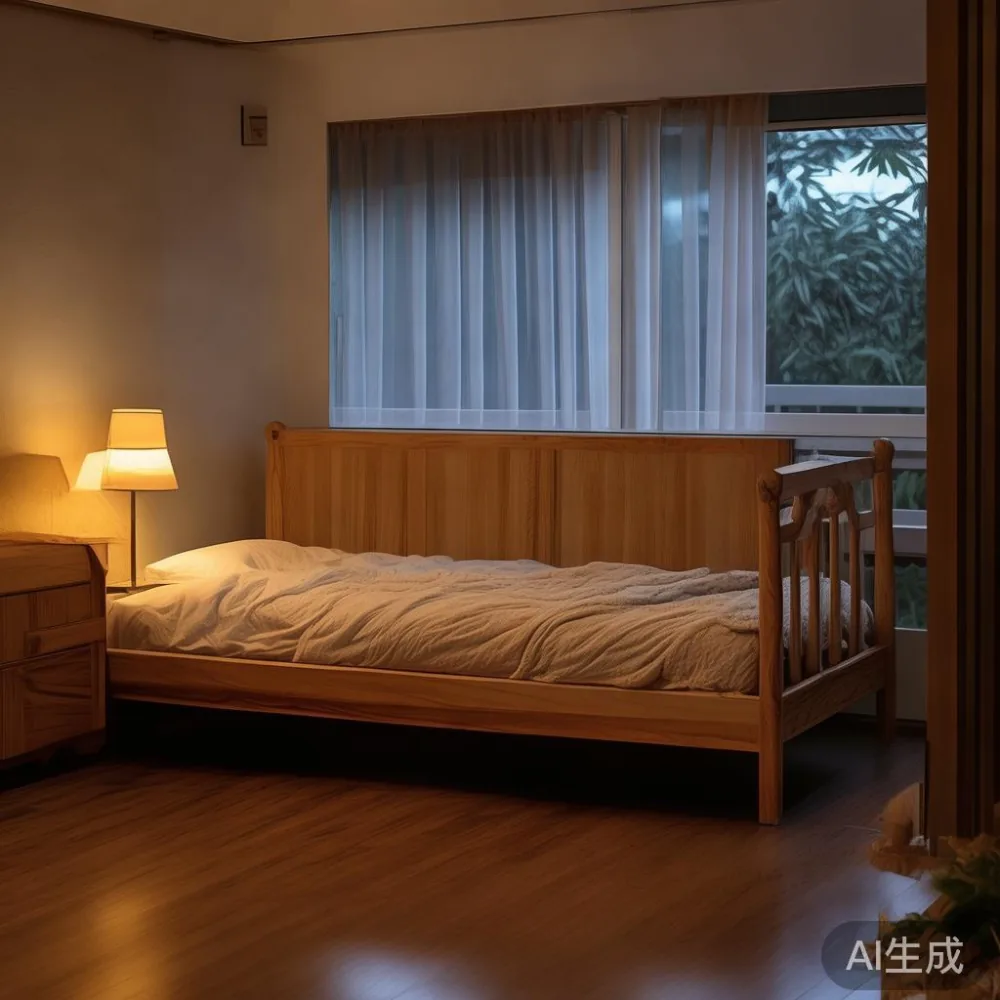
What is the real price difference between a veneer kids bed and a solid wood kids bed in Singapore?
The sticker shock is real, but smaller than most parents expect. A typical flat-pack veneer kids bed in Singapore retails between SGD 380 and SGD 720 after the 9-percent GST, depending on whether you pick up from a Jurong warehouse or have it delivered to a Punggol HDB. A comparable solid wood kids bed, sourced from a Foshan workshop and shipped through a Singapore consolidator, lands between SGD 950 and SGD 1,650 landed, including 9-percent GST, lift-up delivery, and a basic 12-month warranty. The headline gap looks like SGD 600 to SGD 900, yet that is only the opening move of the calculation.
For a fair comparison, anchor both options to the same dimensions: a 120 cm × 190 cm single kids bed frame in natural oak or beech finish, sized to clear a 90 cm HDB bedroom doorway and pivot inside a 2.8 m corridor without scratching the neighbour's bicycle. Veneer versions usually tip the scales at 22 to 28 kg, while a true solid wood kids bed with mortise-and-tenon joinery weighs 38 to 46 kg. That extra mass is what carries through the next decade of use.
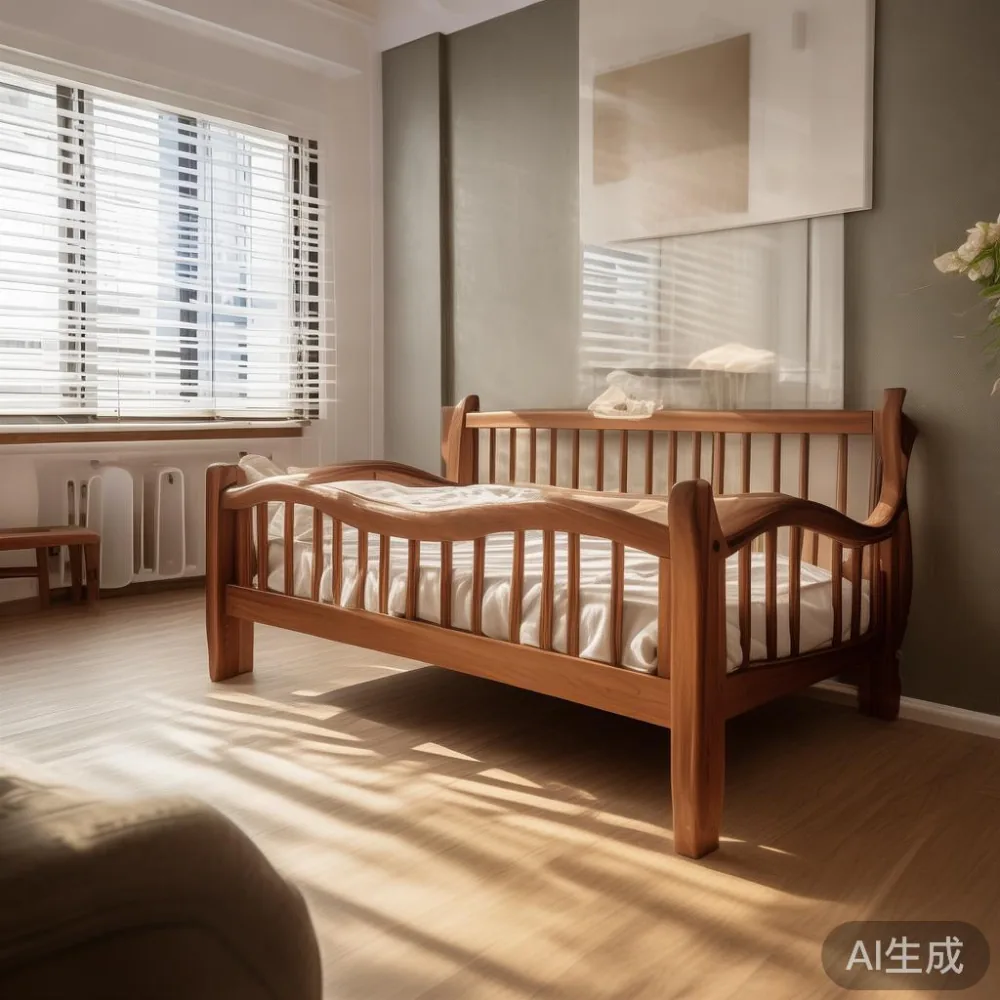
How much does humidity actually damage a veneer kids bed over five years?
Singapore sits at 78 to 92 percent relative humidity for most of the year, and that single fact decides the winner of this comparison more than any other. Veneer is a 0.6 mm to 2 mm layer of hardwood glued onto an engineered core, usually MDF or particleboard. The moment the air turns wetter, the core swells faster than the face layer, and you get bubbling at the corners of the kids bed headboard and flaking along the drawer runners of any matching nightstand. In my own flat, a SGD 420 veneer kids bed lasted 26 months before the front left rail started cracking along the glue line.
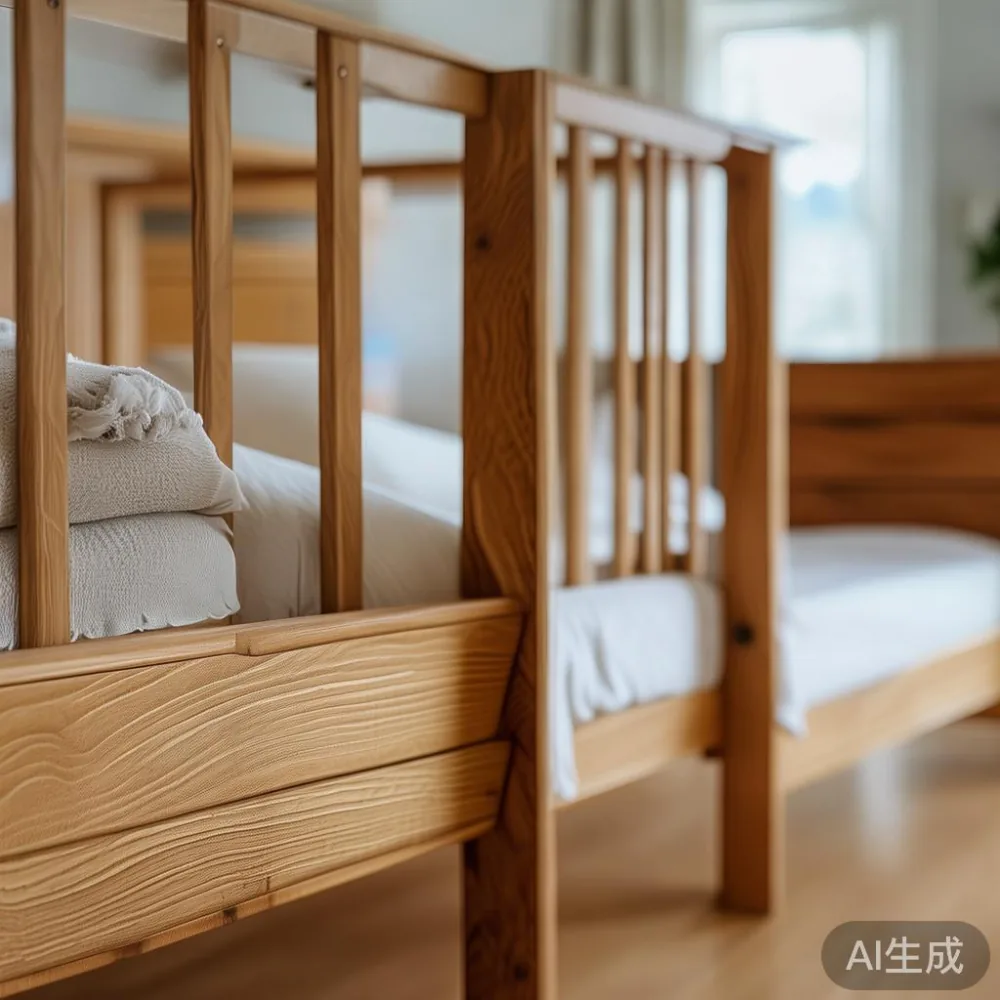
Solid wood breathes as a single piece, so it expands and contracts as one unit. With proper kiln-drying below 12 percent moisture content and a quarterly rub of beeswax or hard wax oil, a solid wood kids bed absorbs Singapore humidity without visible damage. Over a five-year window, expect to spend SGD 0 to SGD 80 on conditioning products for a solid bed, versus SGD 180 to SGD 350 on repair putty, edge banding, and one replacement drawer face for a veneer bed. The maths compounds quietly in the background.
What does a five-year cost comparison actually look like in Singapore dollars?
I built this table for my client, and it is the part of the article I would save if I were you. All figures include 9-percent GST, standard lift-up HDB delivery (SGD 60 to SGD 120 per trip), and the realistic repair or refinishing cost a Singapore parent will face between Year 1 and Year 5.
- Veneer kids bed, Year 0: bed SGD 480, mattress protector SGD 45, delivery SGD 80. Total: SGD 605.
- Veneer kids bed, Year 2: headboard bubbling repair SGD 90, drawer runner replacement SGD 40. Total: SGD 130.
- Veneer kids bed, Year 4: full replacement of the kids bed SGD 520, plus delivery SGD 80 and disposal of the old frame SGD 50. Total: SGD 650.
- Veneer 5-year total: SGD 1,385, with two bed frames and a tired parent.
- Solid wood kids bed, Year 0: bed SGD 1,180, mattress protector SGD 45, lift-up delivery SGD 90, optional white-glove assembly SGD 60. Total: SGD 1,375.
- Solid wood kids bed, Year 2: light sanding and one coat of hard wax oil SGD 70, tightening of two mortise joints SGD 30. Total: SGD 100.
- Solid wood kids bed, Year 4: refinishing of the headboard panel SGD 120, minor scratch repair SGD 25. Total: SGD 145.
- Solid wood 5-year total: SGD 1,620, with the same bed frame.
Spread over sixty months, the veneer path costs roughly SGD 277 per year, the solid wood path roughly SGD 324 per year. The gap closes to under SGD 50 per month, and the solid wood path ends with a bed frame your second child can inherit, while the veneer path ends with a chipped piece of engineered board heading for the Tuas incinerator.
Where can I buy a wardrobe in Singapore that pairs with a solid wood kids bed?
You can buy a wardrobe in Singapore through three reliable channels: a) dedicated solid wood furniture makers such as MIDHILL that ship directly from their Foshan workshop to your HDB or landed property with lift-up delivery and a 10-year structural warranty, b) local custom carpenters in Tai Seng or Balestier who quote SGD 1,800 to SGD 3,200 for a 2 m × 0.6 m × 2.4 m wardrobe using laminated plywood, and c) large retail chains where wardrobes arrive flat-packed and need on-site assembly. For parents who already chose a solid wood kids bed, the natural move is option a, because the same workshop can supply a matching wardrobe, nightstand, dining table, and bed frame in identical timber so the grain and tone line up across the whole room.
A practical note for HDB buyers: measure your corridor turn before you order. Most HDB door frames are 90 cm wide, lift doors are 80 cm to 90 cm, and the inside of a typical lift car is about 1.5 m deep by 1.2 m wide. A solid wood wardrobe taller than 2.1 m often has to ship flat-packed and be assembled inside the bedroom, which adds SGD 120 to SGD 200 to your bill but protects the piece and your corridor walls. Ask the supplier for a packed dimension sheet before paying the deposit.
How does solid wood fit into a French light luxury or American light luxury kids room?
Light luxury, the trend that swaps heavy ornament for warm timber, brass accents, and tactile fabrics, relies on materials that age into character rather than wear out. A solid wood kids bed in white oak or natural ash handles this brief naturally. French light luxury leans toward curved headboards, cabriole-style legs on the matching nightstand, and a soft chalk-wash finish that lets the timber grain read through. American light luxury pushes toward thicker posts, shaker-style panelling on the wardrobe, and a clear matte oil rather than a painted finish. Both styles work in a HDB master bedroom because the bed, the wardrobe, and the nightstand do not need to be heavy in footprint to feel considered.
If you want to extend the look beyond the kids room, the same solid oak or ash can carry into the living area as a solid wood sofa frame, a 1.6 m or 1.8 m dining table, and a small marble table for the entryway. A post-modern light luxury reading nook in the corner of the same room, with a walnut-finished solid wood bed frame repurposed as a daybed, ties the palette together without forcing one more furniture category into the cart. The point is not to buy more pieces, it is to let each piece age into the next stage of the family.
What about warranty, returns, and shipping for a solid wood kids bed?
Most flat-pack veneer sellers in Singapore offer a 6 to 12 month warranty on the kids bed frame, with returns limited to unused merchandise in original carton. Reading the fine print usually reveals that bubbling, flaking, and joint separation count as wear and tear, not defects. By contrast, established solid wood makers such as MIDHILL publish a 10-year structural warranty on joinery, lifetime refinishing service at cost, and free shipping above SGD 350. Their typical lead time from a Foshan workshop to a Singapore HDB is 28 to 45 days sea freight, plus 7 to 10 days for last-mile delivery and assembly booking.
For Singapore buyers, the practical flow looks like this: confirm the kids bed dimensions against your room and lift, place a SGD 200 to SGD 300 deposit, receive production photos at three checkpoints (frame dry-fit, sanding, finishing), and pay the balance before sea freight. Ask for the HS code and customs paperwork so you can claim the 9% input tax if you are GST-registered. If anything arrives damaged, the structural warranty covers a replacement slat or side rail shipped from a regional warehouse, usually within 14 working days. None of this protection is free, but it is built into the SGD 1,180 base price above, and it is the reason the five-year ledger tilts the way it does.
Is a solid wood kids bed really worth the extra SGD 235 over a veneer kids bed?
Yes, if your child will use the same bed for more than three years, if your HDB runs hot and humid for most of the calendar, and if you would rather refinish a bed than replace it twice. The numbers above show a five-year gap of roughly SGD 235 in favour of the veneer path, or about SGD 47 a year, the cost of two cups of kopi in a Tampines kopitiam. Against that, the solid wood path keeps the joinery tight, the finish breathable, and the option open for the next child, the next move to a Punggol condo, or the next reading nook by the window. That is what the SGD 47 a year actually buys, and on a five-year horizon it is a quiet win for the family ledger.
My Tampines client chose the solid oak kids bed, paired it with a 1.6 m solid wood dining table for the living area, and asked the same supplier to build a small marble table and a two-door wardrobe for the same room. Two months later she texted a photo of her son reading under the headboard with the cat asleep on the slats. The bed already looks like it belongs to the flat, not to a catalogue page. That is the part no spreadsheet can price, and it is the reason the five-year comparison still ends with solid wood for most Singapore families.