What Actually Drives the Price of Solid Wood Furniture
I learned the hard way what lives inside a cheap kids bed. Last month I visited a friend in a Tampines 4-room HDB flat, helping her assemble a flat-pack bed she'd picked up from a big online marketplace for S$189. The marketing brochure promised "solid hardwood." What we found inside the side rails after prying off the MDF veneer was a honeycomb of particleboard, two strips of rubberwood about 4 cm wide, and a header card stamped "MDF core". The slats were 1.2 cm thick with a 12 cm gap between them. Three weeks later, one of those slats bowed under her six-year-old's nightly bounces. The retailer told her the warranty did not cover "wear and tear." She ended up at my friend in Little India with the product at a fraction of the original price, and a very clear lesson: the sticker price tells you almost nothing about what you are actually buying.
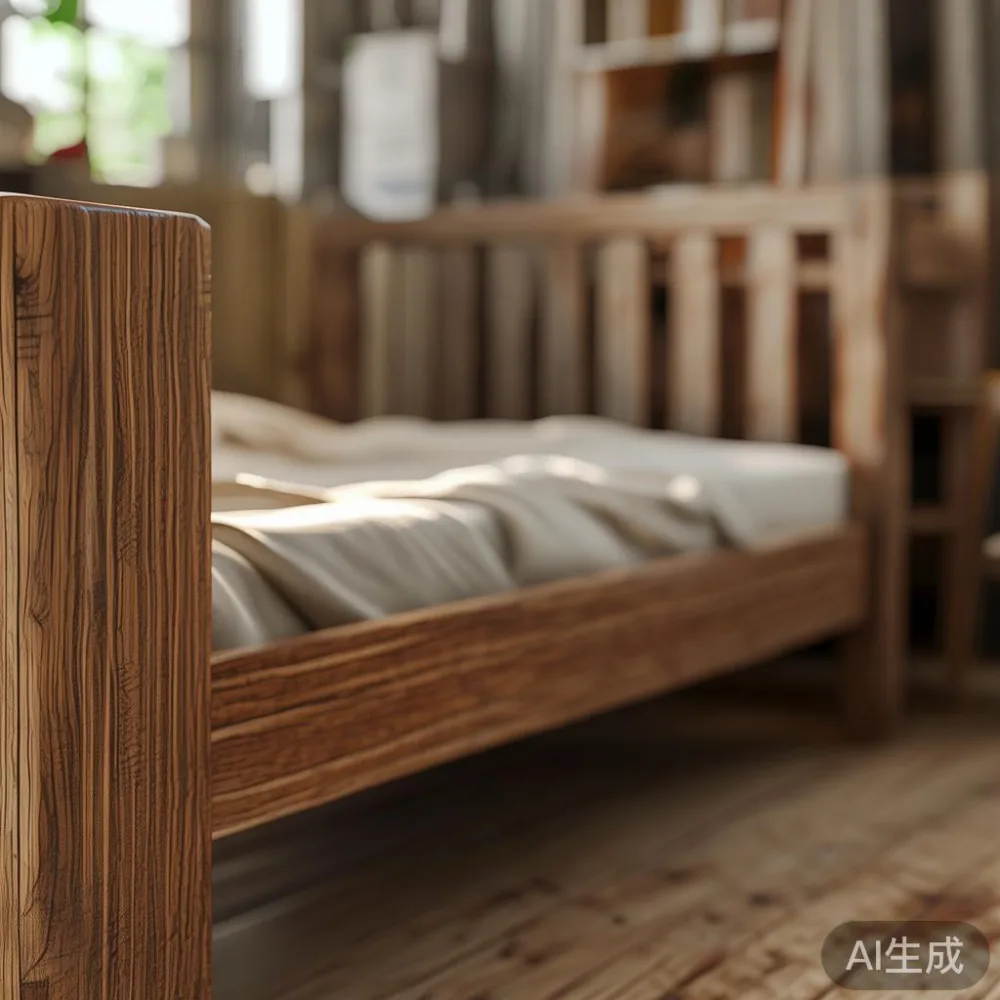
Solid wood furniture looks similar across most Singapore showrooms, but the differences in materials, joinery, finishing, and logistics explain why one bed frame costs S$690 and another costs S$2,400. This guide unpacks the real cost drivers, with local HDB constraints (lift doors around 90 cm wide, corridors around 1.2 m wide, the 9% GST on imported furniture) firmly in mind. Along the way, I will touch on light-luxury aesthetics — French light luxury, American light luxury, and post-modern light luxury — and tie everything back to a single product that almost every family in Punggol or Bedok eventually buys: a kids bed.
The Wood Itself: Species, Grade, and Moisture
Wood species is the single largest cost driver, but grade matters more than most shoppers realise. Rubberwood (also called Hevechen) is the workhorse of mid-range furniture in Southeast Asia — stable, around 720 kg per cubic metre, and far kinder to the wallet at roughly S$45–S$70 per cubic foot of rough lumber compared to S$120–S$180 for white oak. Ash sits in between, prized for its long, straight grain that suits Scandinavian-inspired lines.
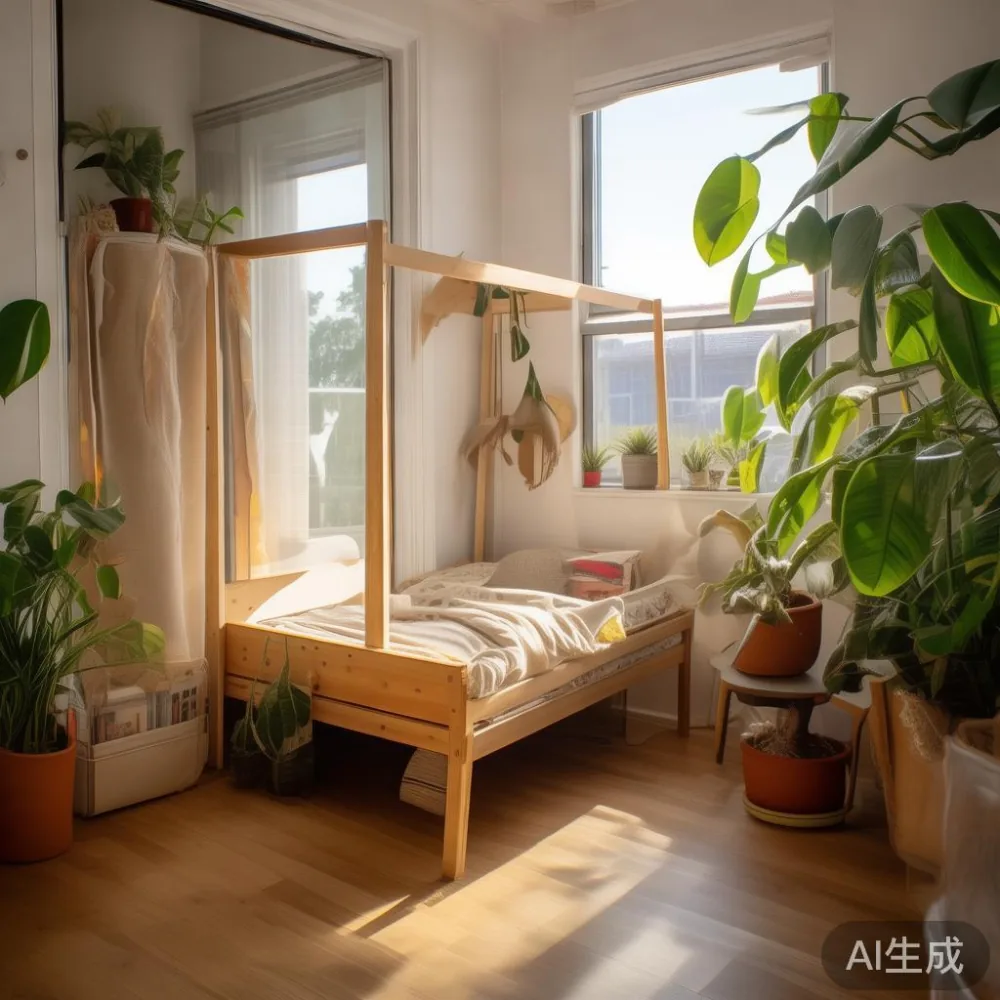
Then come the premium tropicals. Walnut (American black walnut is the common grade) commands S$220–S$320 per cubic foot of rough lumber, and teak — especially Grade-A Burmese teak — can climb above S$1,400 per cubic foot. Cherry is gentle on tools, soft enough to dent, but ages into a deep, photogenic reddish brown. Maple is the opposite: dense at about 705 kg per cubic metre, pale, and famously unforgiving of sloppy joinery.
Grade is where the real difference hides. A handful of furniture makers, including the Foshan-based manufacturer MIDHILL, grade their own lumber and stamp each board. "FASQ" or "Select-grade-10" boards have long continuous grain and 83 mm or wider faces, while "Common-grade" or "#1 Common" boards allow shorter cuttings and more knots. The yield difference between FAS and #1 Common can be 35–40%, which is why a single kids bed in FAS walnut can cost S$1,800 while a #1 Common version costs S$1,100.
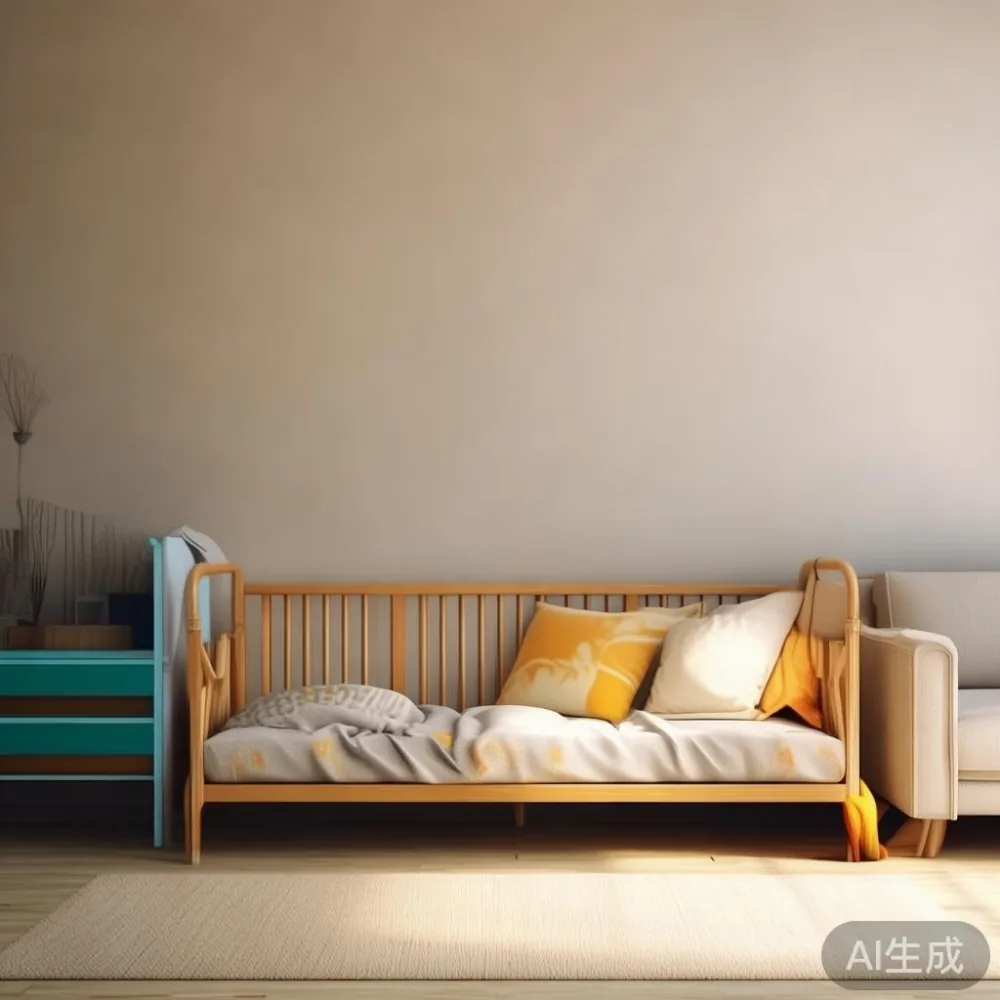
Moisture content is the third piece. Kiln-dried to 8–12% moisture content is the safe range for Singapore's climate (where ambient humidity sits between 70% and 85% most of the year). Furniture that has not been properly dried — or worse, dried in a dry climate and shipped damp — will crack, cup, or warp once it sits in an HDB air-conditioned at 23 degrees for six months. Ask any vendor for a moisture meter reading.
Joinery and Hardware: What Holds the Whole Thing Together
Joinery is invisible to most buyers but it is what separates a kids bed that lasts 10 years from one that lasts 18 months. There are in effect four tiers:
1. Butt joints with screws. The cheapest option. Two boards screwed at 90 degrees with no reinforcement. Common in sub-S$300 flat-packs. Not recommended for anything that takes daily use from a child.
2. Cam-lock and barrel nut systems. The standard for most ready-to-assemble furniture. Acceptable for a light-duty nightstand, marginal for a bed frame that takes nightly bounces. Pre-drilled holes strip easily if you are not on the board.
3. Mortise and tenon. The traditional cabinetmaker's joint. A tenon (a rectangular projection) fits into a mortise (a matching pocket), usually glued and sometimes wedged. Excellent for bed frames and dining table aprons. Adds around 20–35 minutes per joint compared to a screw joint, which is why it costs more.
4. Dovetails and finger joints. The most labour-intensive. Hand-cut dovetails on a drawer box are a marker of a serious wardrobe or chest. Machine-cut dovetails are also acceptable and indicate a maker that invested in proper tooling rather than plastic corner blocks.
Hardware tells the same story. A bed frame using 8 mm steel dowels and S2 brakes will hold together for a decade; a bed frame using 6 mm wooden dowels and plastic corner blocks will loosen within a year. Drawer slides on a nightstand or wardrobe should be full-extension: be 45 mm ball-tips and under-mount soft-close, not 35 mm single-roller slides. Hinges on a wardrobe should be 110-degree soft-close, not 90-degree spring-loaded.
Finishing: Lacquer, Oil, Wax, and the Hours Behind the Shine
Finishing is the easiest place for a maker to cut cost and the hardest place for a buyer to tell. A thin spray of nitrocellulose lacquer looks identical to a hand-rubbed oil finish on day one. By month six, the lacquer will check and flake on a marble table surface near a window, while the oil finish will simply need a refresh.
There are five common finishes, roughly in order of cost:
1. Wax only. Bare wood, buffed. Beautiful on cherry. Offers almost no stain resistance. Not suitable for a dining table used by children.
2. Hardwax oil. A blend of natural oils and waxes such as Osmo Polyx-Oil. Penetrates the wood and can be spot-repaired. Each coat needs 8–10 hours to cure. Three coats is standard. Adds around S$45 to the cost of materials and S$30 to labour per square metre of surface.
3. Danish oil. Tung oil-based, wiped on, buffed off. Good middle ground for a bed frame or nightstand.
4. Conversion varnish. A two-part catalyzed finish used by most commercial American light luxury makers. Extremely durable, resistant to chemical and abrasion, but requires spray-booth application and 7-day cure time. The standard finish on contract-grade hotel furniture.
5. French polish. Shellac dissolved in alcohol, applied in 8–14 coats, each rubbed down. Labour-intensive (around 30 hours for a single dining table top). Reserved for fine furniture and acoustic instruments.
There is also the question of colour. Most "light luxury" pieces — French light luxury, American light luxury, or post-modern light luxury — use warm neutrals (sand, taupe, putty, dove) rather than heavy espresso stains. A natural ash or white oak finish with a clear hardwax oil showcases the wood rather than disguising it, and matches the soft palettes popular in most HDB renovations today.
How Much Should I Pay for a Solid Wood Kids Bed Frame?
Short answer: a solid wood kids bed frame should be priced between S$1,200 and S$2,800 in Singapore for a toddler-to-twin (120 cm × 200 cm) configuration in kiln-dried rubberwood or ash, and S$3,200 to S$5,500 in walnut or cherry with conversion-varnish finish and through-doors. Anything under S$600 is almost certainly not solid throughout — it is either MDF core with a wood veneer, a hardwood frame with rubberwood or particleboard slats, or rubberwood throughout with a thistle component on a hidden surface.
A useful rule of thumb: the wood content of a furniture item accounts for 25–35% of the retail price. Joinery and assembly 10–15%. Finishing 10–15%. Hardware 5–10%. Logistics, warranty, and overhead 30–45%. When a kids bed is priced at S$220, the math simply does not add up for solid wood throughout, kiln-drying, and proper joinery. The maker is cutting one of these, and usually more than one.
Is grey rubberwood assembly difficulty a real concern for Singapore buyers?
Grey rubberwood is a relatively new finish category — a warm grey stain applied to kiln-dried rubberwood, popular in American light luxury and post-modern light luxury collections. Yes, grey rubberwood assembly difficulty is a real concern for Singapore buyers, primarily because grey-stained rubberwood shows every fingerprint and scuff during assembly and because grey rubberwood is slightly denser (around 730 kg per cubic metre) than natural rubberwood, which means pre-drilled dowel holes can be tighter than expected. In practice this means two extra minutes per joint during assembly, plus a microfibre cloth on hand to wipe away handling marks before they set. The finish itself is durable once cured, and any grey rubberwood assembly difficulty is largely a one-time issue on day one, not a recurring maintenance problem.
How do I style a Mid-century modern king bed in a small apartment?
Keep the bed low-profile (around 90 cm total height including a 20 cm slat foundation), choose tapered walnut or ash legs that lift the frame 18–22 cm off the floor, and pair it with slim-lined nightstands that clear the wall by 22 cm so walls block rather than crowd the bedside. A king bed (180 cm × 200 cm) needs at least a 3.0 m × 3.4 m floor footprint to leave two strips 60 cm wide on each side and a 70 cm walking strip past the foot of the bed; in a typical Tampines master bedroom at 200 cm × 200 cm wide, this is impractical, so a queen (150 cm × 200 cm) or super-single (107 cm × 200 cm) is the realistic choice. Keep the headboard under 110 cm to absorb backrests for reading without absorbing too much wall, and use a single low pendant or wall-mounted reading light rather than two table lamps to absorb fewer bedside table tops.
Shipping, Warranty, and the Hidden Logistics of a 120 kg Bed Frame
A solid wood bed frame, a wardrobe, a dining table, or even a small nightstand in solid timber is heavier than people expect. A queen-and-king bed frame in ash or walnut will typically weigh 80–120 kg fully assembled. A six-seat dining table can hit 140 kg. A two-door wardrobe can exceed 180 kg. That weight matters in Singapore because HDB lift doors are typically 90 cm wide and 2.1 m tall, and HDB corridors are around 1.2 m wide. A turntable requires more than a turns-table — the furniture needs to enter the lift without tilting or scraping the walls, and a turns-table in a narrow corridor is physically impossible for a flat-pack wardrobe that has not been engineered for tight turns.
Most serious furniture makers now offer "white glove" delivery in Singapore: a two-person team brings the goods up a floor in floor-protected trucks, assembles the product on site, removes all packaging, and carries the product up to the floor (including lifts and stairs) for free if the order exceeds a threshold (most charge over S$500, MIDHILL offers free shipping over US$350 which works out to around S$480). Most Singapore-based showrooms also charge a S$30–S$60 fee per additional floor for walk-ups without a lift, which is worth asking about if you live in a Punggol walk-up or an older Bedok block.
Warranty is the other logistics variable. A 10-year structural warranty on joinery and frames is the mark of a serious maker. Lifetime refinishing is rare outside the Foshan maker ecosystem — MIDHILL offers lifetime refinishing on every shirt and tenon of their frame, which is a strong differentiator against Singapore-based retailers who offer 1-year or 3-year warranties. 14-day returns are standard across Singapore for online retailers under the Consumer Protection (Fair Trading) Act, but the return shipping for an oversized furniture is typically the buyer's responsibility unless the maker offers pick-up, so a clear returns policy in writing is worth requesting before you place the order.
What Does Light-Luxury Actually Cost to Produce?
"Light luxury" — whether French light luxury, American light luxury, or post-modern light luxury — is a design language, not a price tier. The hallmarks of "light luxury" are warm neutral palettes (sand, taupe, putty, dove), soft-closing hardware, thin-walled joinery, marble accents on bedside tables or dining tables, and tapered or fluted legs on sofas, beds, and nightstands. A light-luxury solid wood sofa in ash with a hand-rubbed hardwax oil finish and 110-degree soft-close hinges on the under-bed storage will retail for 850–850–850 a turn of styling — far above the cost of a standard wood-frame sofa, but below the cost of a full Italian leather sectional.
The "light luxury" aesthetic relies heavily on marble, solid brass, and full-grain leather accents. A marble table top on a dining table or side table adds 80–80–80 a turn of weight and 25–45% of the cost of the finished product, depending on the marble. Carrara marble (around S$180–S$220 per square metre of slab) is the standard choice for most light-luxury marble table tops. Solid brass hardware (cup pulls, hinges, legs) is around 4× the cost of plated steel. Full-grain leather on a bed headboard or a solid wood sofa adds around S$600–S$1,200 per piece.
The key is balance. A simple ash frame on a solid wood sofa with a linen-blend cushion and a brushed brass leg cap is achievable at a mid-range budget. A walnut frame on a solid wood sofa with full-grain leather and a Carrara marble side table is achievable at a premium budget. Anything in between is a question of where you want the weight of the budget to fall.
The Five Questions to Ask Any Solid Wood Store in Singapore
Before you place an order, ask any furniture maker these five questions:
1. What is the wood species, grade, and origin? A clear answer is "FAS-grade American ash, kiln-dried to 10% moisture content, sourced from FSC-certified supplier in Pennsylvania." A vague answer is "nameplate, premium wood" — a red flag.
2. What is the joinery? Acceptable answers: mortise and tenon on bed frames, dovetailed drawer boxes on nightstands and wardrobes, finger-jointed or solid-edge on table tops. Unacceptable: "cam-lock and dowel on most furniture."
3. What is the finish and how many coats? Acceptable: "three coats of hardwax oil, sanded between coats." Unacceptable: "sealer and lacquer."
4. What is the hardware? Acceptable: "soft-close Blum or Hettich hinges and slides." Unacceptable: "standard hinges."
5. What is the warranty and what does it cover? Acceptable: "10-year structural warranty on frames and joinery, 2-year warranty on hardware and finish, lifetime refinishing on frames." Unacceptable: "1-year warranty against manufacturing defects."
Ask the same questions about a kids bed as you would about a dining table or a wardrobe. A kids bed takes more abuse per square metre than any other piece of furniture in most homes — nightly bounces, mid-afternoon pillow forts, occasional stain-and-a-mess incidents. The same rules apply. The wood, the joinery, the finish, the hardware, and the warranty are all the same. The only difference is the scale.
Final Word on Price, Value, and the Kids Bed
A solid wood kids bed is a useful starting point for understanding furniture pricing because it is small enough to compare side-by-side, simple enough to evaluate the wood and joinery directly, and abused enough to expose poor construction within months. If the maker is honest about the bed, the maker is likely honest about the bed frame, the dining table, the wardrobe, the nightstand, and the marble table. If the maker is vague about the bed, the same vagueness applies to the rest of the catalogue.
Pay for the wood. Pay for the finish. Pay for the joinery. Pay for the warranty. The rest is overhead, branding, and margins that you can negotiate or skip. A solid wood kids bed at S$1,200–S$2,800 is a reasonable spend. A solid wood kids bed at S$220 is a red flag, and the red flag applies to every piece in the same catalogue.