Warm Minimal Kids Bed Pairings: A Singapore Guide to Light-Luxury Furniture Matching
Last month I visited a 95 sqm Punggol condo with my colleague, a young father renovating his three-room BTO for his wife and a five-year-old daughter. The brief was specific: warm minimal interior, no plastic-looking finishes, no cold gallery vibe. He had one drawer of warm-white linen samples, a 1.8m x 2.0m master bedroom wall, and a hard rule that any kids bed had to feel like it belonged in the same room as a parents' bed frame, not like a toy-store afterthought. I watched him spend forty minutes holding wood swatches against the floor tile at 10 a.m. light, and by the end of the morning he had a clear hierarchy: solid wood sofa in the living room, solid teak dining table for four, and one consistent oak tone carried through every piece of furniture, including the small wardrobe in the kids room. That single rule, one wood, one undertone, solved ninety percent of the room.
If you are working with the same constraints in Tampines, Bedok, or a new Punggol walk-up, this guide is for you. We will go room by room, talk centimetres, lift access, SGD budgets, and the kind of light-luxury moves that make a HDB interior feel curated rather than contractor-grade. Everything below has been stress-tested against real Singapore conditions: 2.4 m ceiling height in newer BTOs, 900 mm-wide corridor turns, lifts rated to about 800 kg, and the 9% GST you will see on the final invoice.
What does "warm minimal" actually mean when you are buying a kids bed?
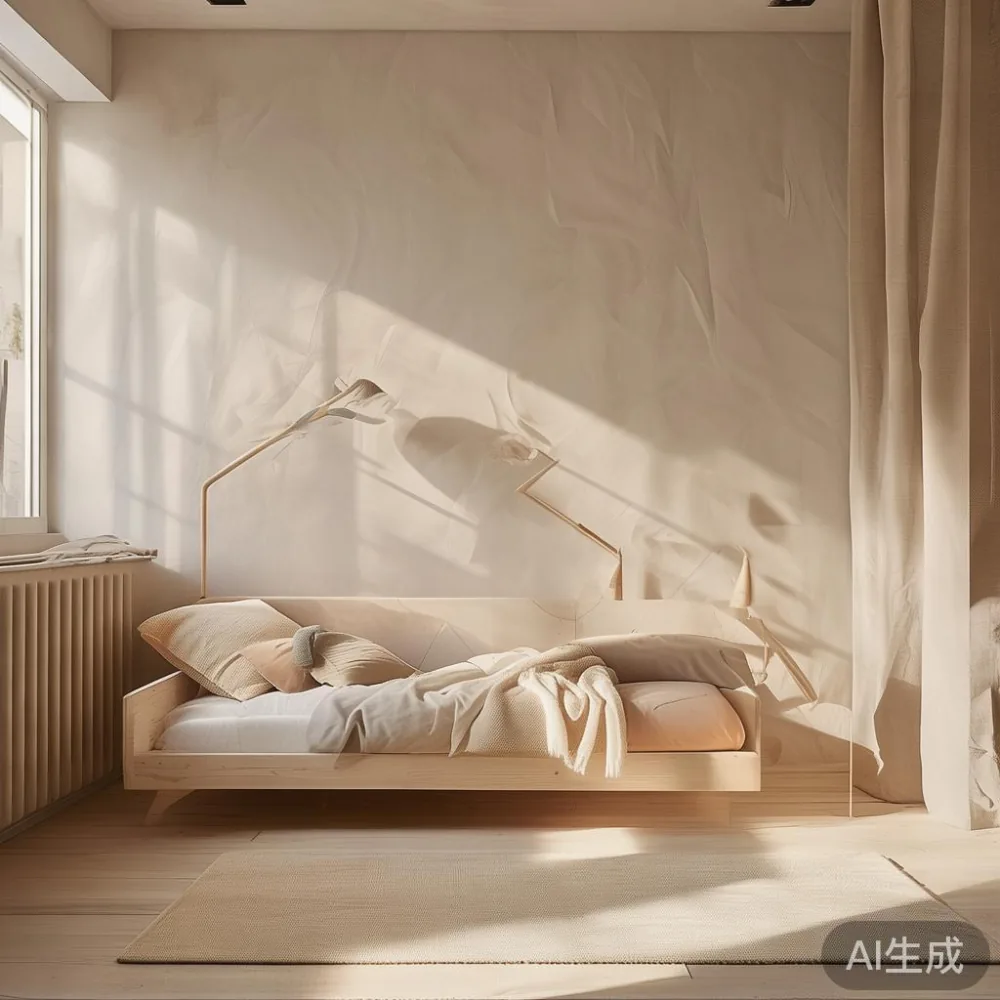
Warm minimal is a Scandinavian-influenced style softened by wood grain, brushed brass, and off-white walls, rather than the high-contrast black-and-white minimalism popular in design magazines. For a kids bed specifically, it means: visible solid wood (not veneer over chipboard), no cartoon motifs, rounded corners so a sleeping toddler does not bruise a forehead, and a colour palette anchored on oak, ash, or walnut with one accent such as muted clay or sage green. Parents in Punggol and Sengkang often send me reference boards where the kids bed sits next to a parents' bed frame in the same wood species, sometimes even sharing the same leg profile, which gives the bedroom suite a quiet, grown-up feeling.
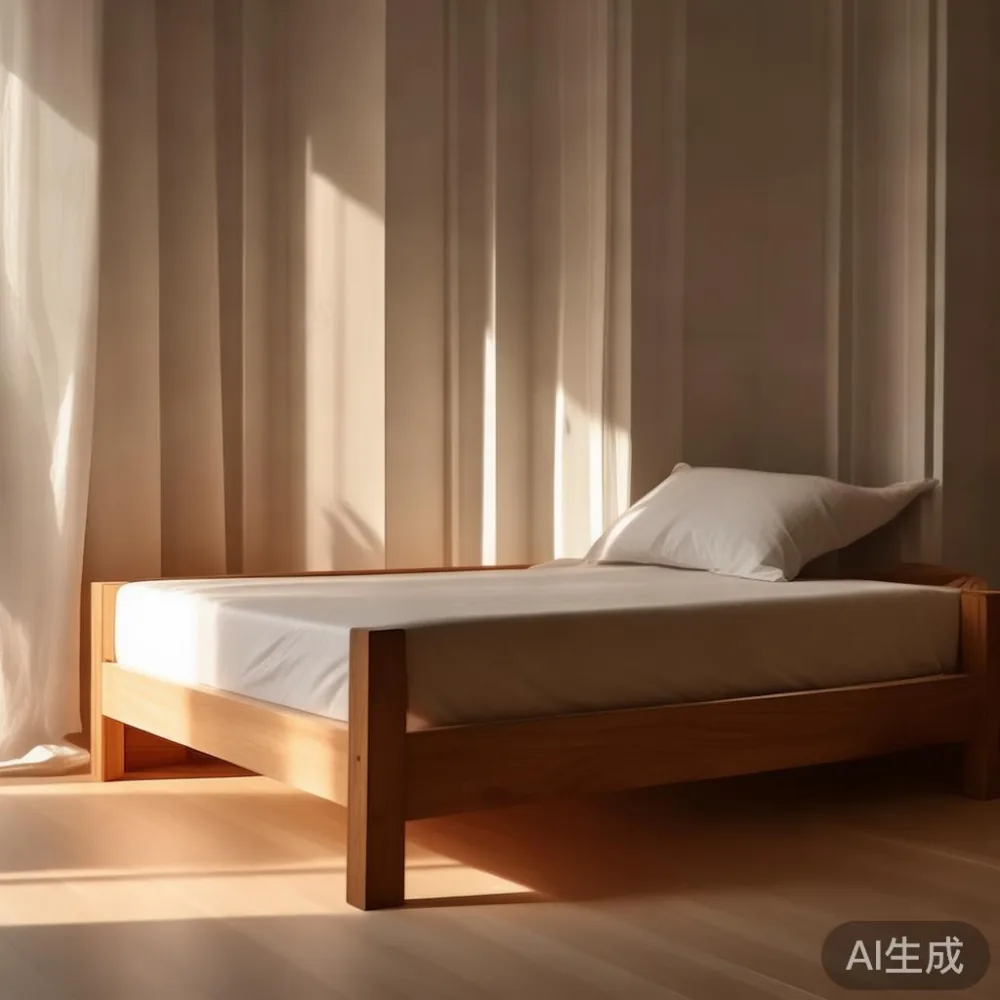
The mistake I see in many HDB renovations is the kids bed being bought as an isolated piece from a different brand than the wardrobe and nightstand. The grain clashes under the window, and the room ends up looking like a sample sale. Fixing this is usually cheaper than people expect: keep the bed and wardrobe in one wood species, and let textiles (curtains, mattress cover, rug) absorb the small colour shifts between pieces.
How do I style a Nordic dressing table in a small apartment?
A Nordic dressing table works in a small Singapore apartment by choosing a 90 cm to 100 cm-wide solid oak model with two slim drawers, placing it against a wall that already receives morning light, and limiting the surface to one ceramic tray, one brass-framed mirror under 60 cm tall, and one linen stool that can slide fully underneath to recover 0.4 sqm of floor space when the room doubles as a study area.
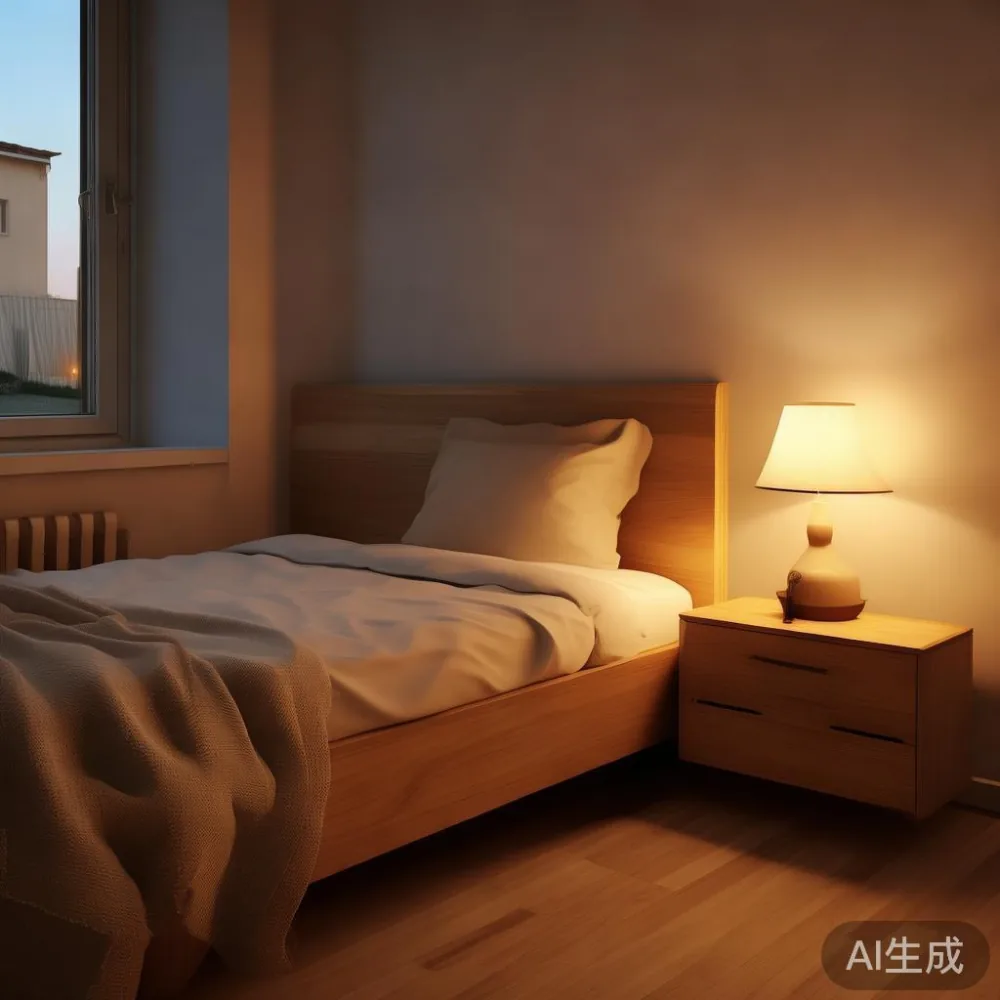
In a typical 12 sqm secondary bedroom in a Bedok resale flat, this dressing table sits between a 1.2 m-wide kids bed and a 60 cm-deep two-door wardrobe. The trick is depth: anything deeper than 45 cm will eat into the walkway and force you to side-step around it. I have measured more than thirty HDB bedrooms, and the average usable walkway beside a bed is 55 cm to 65 cm once skirting boards and power sockets are accounted for. A Nordic dressing table at 40 cm deep keeps that walkway intact.
For parents sharing a room with a baby, the dressing table can double as a changing station during the first eighteen months. Add a 60 cm x 40 cm padded mat, store nappies in the top drawer, and the piece earns its 1,200 SGD to 1,800 SGD price tag instead of gathering rings and lipsticks. A nightstand in the same oak, sized around 45 cm x 40 cm x 55 cm, keeps the bedside reading lamp within reach without overloading the wall.
Which solid wood pieces survive Singapore humidity and lift landings?
Solid wood pieces that survive Singapore humidity and HDB logistics are kiln-dried oak, ash, teak, and walnut with moisture content stabilised between 8% and 12%, finished with a water-based matte lacquer, and ideally shipped flat-packed in sub-25 kg cartons so they clear lift doors of 800 mm to 900 mm and corridor turns of about 1.2 m radius without scratch damage.
Two practical numbers worth memorising. First, a standard HDB passenger lift cargo footprint is roughly 1.2 m deep x 1.5 m wide, and the door opening is about 0.9 m wide. A flat-packed solid wood dining table for four, 1.4 m long, will fit through the door and down a 1.2 m-wide corridor if the longest carton dimension stays under 1.6 m. Second, a fully assembled queen-size bed frame in solid oak can weigh 55 kg to 70 kg, which is manageable for two deliverymen but not for one parent and a Cor van. Ask your retailer whether the bed breaks down into headboard, side rails, and slats under 18 kg each.
For the dining table, a 1.4 m x 0.8 m solid teak version seats four comfortably and weighs around 32 kg flat-packed. Add a marble table option only if your unit is on a low floor and you have a service lift; a 1.2 m marble slab can hit 95 kg and is not a fun surprise on the fifth storey. MIDHILL, a Foshan factory I have followed for several years, publishes flat-pack weights and carton dimensions on every product page, which is rare in this category and saves a lot of guesswork when you are scheduling delivery into a Punggol tower.
How should the kids bed relate to the parents' bed frame and wardrobe?
The kids bed should share the same wood species, same leg height (within 1 cm to 2 cm), and same slat-to-floor clearance as the parents' bed frame and wardrobe, so the three pieces read as one family rather than three separate purchases, and the kids bed can later be repurposed as a daybed or guest bed without looking out of place in a teenage bedroom.
Concretely, that means: if your master bed frame is a 1.8 m x 2.0 m oak platform on 20 cm legs with 18 cm of under-bed clearance, the kids bed should be a 1.2 m x 1.9 m or 1.5 m x 1.9 m single in the same oak, on 18 cm to 22 cm legs, with a 15 cm to 20 cm under-bed gap. Matching the leg height by even 2 cm makes the room feel composed. Where parents often go wrong is buying a 1.5 m x 1.9 m kids bed with a low 8 cm platform base to "save space", which then sits awkwardly 12 cm below the adult bed frame across the room.
For the wardrobe, a two-door model around 120 cm wide x 55 cm deep x 180 cm tall fits the typical kids room wall in a Singapore HDB without crowding the door swing. If the wardrobe is white-laminated with oak handles, and the kids bed is full oak, you create a controlled contrast that reads intentional rather than mismatched. A 60 cm-wide nightstand in the same oak finish, with one drawer and one open shelf, completes the trio and gives a permanent home for the bedside lamp, a glass of water, and the book your child will not admit to reading.
What is a realistic budget for a warm minimal HDB furniture set in 2026?
A realistic budget for a warm minimal HDB furniture set in 2026 is between SGD 6,800 and SGD 11,500 before GST for the core pieces (one solid wood sofa, one dining table for four, one queen bed frame, one kids bed, one two-door wardrobe, and two nightstands), assuming flat-packed delivery and assembly in a single day, with the upper end reflecting solid walnut or thick marble table options.
Breakdown that I see most often in client quotes from Tampines and Punggol projects in the past six months: solid wood sofa in oak or ash, 2.2 m three-seater, around SGD 2,400 to SGD 3,600; dining table for four in solid teak, 1.4 m, around SGD 1,400 to SGD 2,200; queen-size bed frame in solid oak, around SGD 1,800 to SGD 2,800; kids bed in solid oak, 1.2 m or 1.5 m, around SGD 980 to SGD 1,500; two-door wardrobe, around SGD 1,200 to SGD 2,000; two nightstands, around SGD 380 to SGD 600 each. Add 9% GST on the total, plus a typical SGD 80 to SGD 150 delivery fee waived by most retailers above SGD 350 order value.
The place where budgets quietly inflate is the marble table. A 1.0 m round marble dining or coffee table with a sintered stone top starts at SGD 1,400 and climbs past SGD 3,800 for full Italian Carrara. If you want the light-luxury feel without the price tag, limit marble to a 60 cm x 40 cm side table or a single bathroom counter, and keep the main dining surface in solid teak or oak. That single substitution can save SGD 1,500 without changing the visual language of the room.
Why does light luxury work so well with warm minimal in Singapore flats?
Light luxury works with warm minimal in Singapore flats because it relies on texture, brass hardware, and one or two statement pieces (a marble table, a curved sofa back, a fluted wardrobe front) rather than on square footage or ceiling height, which are fixed constraints in a 90 sqm to 110 sqm HDB or condo, and because French light luxury in particular leans on pale oak and linen that flatter the warm-white walls typical of BTO paint schemes.
Three light-luxury directions to consider. French light luxury tends toward pale oak, cane-back dining chairs, and brushed champagne brass on handles and lamp bases; it pairs beautifully with a 2.2 m solid wood sofa in oat-coloured boucle and a marble table lamp. American light luxury goes warmer and slightly larger in scale: walnut bed frames, oversized upholstered headboards, and a chunkier solid wood sofa at 2.4 m. Post-modern light luxury pushes curves and contrast: a rounded-corner kids bed in ash with a blackened-steel reading lamp and a single arched floor mirror. All three respect the warm minimal foundation; none demand a 30 sqm master suite to land.
For a Singapore HDB, the safest cross-over is the French light luxury path, because pale oak reflects the abundant indirect daylight from typical east-facing windows and does not fight the off-white, light-grey, or greige wall tones popular in local renovations. The post-modern version is more dramatic and works well if the kids room has a feature wall in clay or muted forest green; in that case, match the kids bed wood to the floor rather than to the wall, so the room does not feel themed.
How do I coordinate the living room, dining area, and kids room without hiring a designer?
You coordinate the living room, dining area, and kids room without a designer by picking one wood species (oak is the most forgiving), one metal finish (brushed brass or matte black, never both), one textile tone (oat, off-white, or stone grey), and repeating that combination across every solid wood sofa, dining table, bed frame, wardrobe, nightstand, and kids bed you buy, so the apartment reads as one home rather than three rented rooms.
A simple checklist I give friends renovating in Bedok or Sengkang. Step one: pick the wood and order one large and one small sample of each shortlisted piece. Step two: hold the samples together under your actual window light at 11 a.m., 3 p.m., and 7 p.m.; the colour that wins two out of three is your wood. Step three: choose the metal finish before you buy the light fittings, because brass drawer pulls and black picture frames in the same room will fight each other for attention. Step four: keep the kids bed in the same wood as the parents' bed frame, even if it means waiting two extra weeks for backorder.
One example from a recent Punggol project: a four-room flat of about 93 sqm, 2.4 m ceilings, east-facing windows. The owners chose pale oak across a 2.2 m solid wood sofa, a 1.4 m solid teak dining table, a queen oak bed frame, and a 1.5 m oak kids bed. Brushed brass on the wardrobe handles, dining pendant, and bedside reading lamps. One stone-grey rug under the dining table, one oat linen curtain panel in the kids room, and one clay-coloured accent wall behind the bed frame. Total furniture spend before GST: SGD 9,400. The same brief executed with mixed-species pieces would have run SGD 10,200 and looked worse, because the human eye picks up on grain mismatches within forty seconds of entering a room.
What about delivery, assembly, warranty, and returns in Singapore?
Delivery, assembly, warranty, and returns in Singapore usually mean flat-packed delivery in 7 to 14 working days from order, optional on-site assembly at SGD 80 to SGD 200 per room, a 10-year structural warranty on solid wood frames, lifetime refinishing on wood surfaces offered by some manufacturers, free shipping above about SGD 350, and a 14-day return window for unused pieces in original packaging.
Confirm four things before you pay the deposit. One, the warranty must be written and state what counts as structural failure (joints, slats, frame warping). Two, the return policy must specify who pays return shipping if the piece is not defective; in Singapore, the buyer typically absorbs the SGD 60 to SGD 120 courier fee for non-defective returns. Three, ask whether the kids bed slats are included or sold separately; some retailers price the slat set at SGD 80 to SGD 160. Four, confirm the carton dimensions and total weight in kilograms, and check against your block's lift and service-lift access, especially if you live above the 15th floor.
For parents who expect to refinish the kids bed once the child outgrows the toddler phase, lifetime refinishing is a genuine value-add rather than a marketing line. Oak and ash sand back to bare wood cleanly and accept a new stain in two to three coats, which means the same kids bed can move from pale oak to walnut to driftwood grey over fifteen years. MIDHILL's lifetime refinishing service, available on structural solid wood pieces, is the kind of offer that turns a one-off purchase into a piece of furniture your younger child will inherit.
Where does the kids bed fit in a five- to ten-year family plan?
The kids bed fits in a five- to ten-year family plan as the longest-tenure piece in the home after the wardrobe, because a well-chosen 1.5 m x 1.9 m solid oak platform can carry a child from age two through teenage sleepovers, convert into a daybed for a grandparent's visits around year eight, and finally move into a guest room or study when the child upgrades to a queen at eighteen, with only a light sanding and re-stain needed along the way.
Three forward-looking tips. First, choose a kids bed length of at least 1.9 m, not the cute 1.6 m toddler size, because children grow in spurts and a 1.6 m bed becomes obsolete by age seven. Second, skip built-in drawers under the bed if your room allows a separate 120 cm-wide wardrobe; under-bed drawers limit airflow in Singapore's humidity and can trap mildew around stored linen. Third, pick a headboard height of 90 cm to 100 cm, which reads proportional in a kids room today and proportional in a guest room ten years from now, while a 60 cm toddler headboard will look stunted in any adult context.
One note for parents furnishing a Modern color mismatch saudi arabia-style brief, where the palette deliberately plays warm wood against cooler greys, you can extend that same logic to the kids room by keeping the kids bed oak and introducing a single dusty-blue or sage linen on the headboard panel and matching curtains. The contrast is intentional, the wood stays constant, and the room ages well. A warm minimal interior is not a static mood board; it is a set of rules, applied patiently, room by room, until the apartment feels like one quiet, well-made object.