Unveiling Solid Wood Furniture Costs for Kids' Beds
Walk into any furniture showroom along Tampines Street 32 or the Joo Chiat cluster, and the price gap between two "solid wood" beds can be S$600 or S$6,000. The labels look identical. The reasoning behind the number rarely is. I spent the last month pulling apart invoices, kiln-dry schedules, and freight quotes so you don't have to. What follows is a working breakdown of where every Singapore dollar goes when you buy a solid wood kids bed, dining table, or wardrobe — and the five levers that quietly decide whether you pay S$1,400 or S$4,200 for the same silhouette.
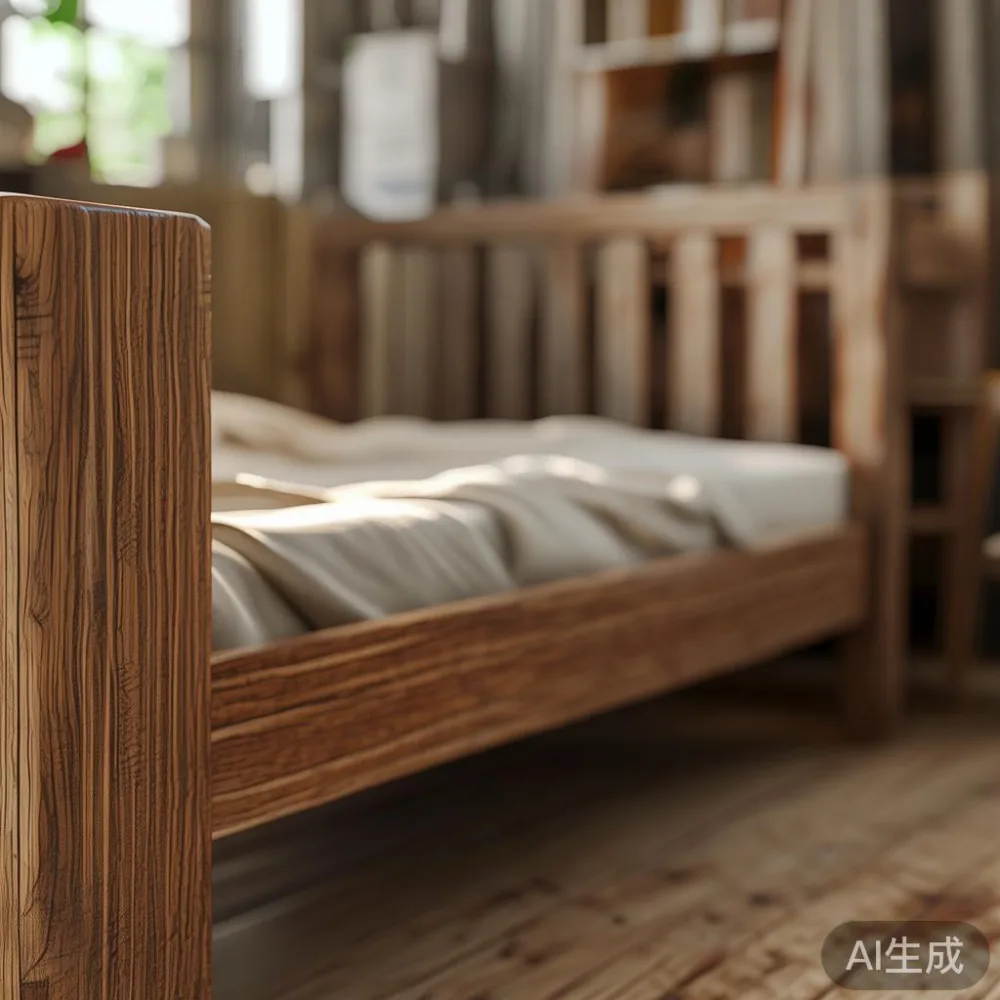
Wood Species: The 40% of Your Bill That Lives in the Timber Itself
Species is the loudest price lever. A kids bed frame built from rubberwood (Hevea brasiliensis) sits at one end of the market; a white oak or North American ash frame anchors the other. The gap between them is not marketing — it is board-feet cost, drying time, and density.
Rubberwood, plantation-grown across Malaysia and Thailand, lands in Foshan workshops at roughly USD 380–520 per cubic metre. It machines cleanly, takes stain evenly, and is the workhorse behind most sub-S$1,800 kids bed frames sold on Shopee and local Instagram storefronts. White oak, by contrast, is slower-grown, kiln-dried for 30–60 days rather than 7–14, and routinely clears USD 1,100 per cubic metre before it is even milled into bed slats. Walnut pushes past USD 1,800.
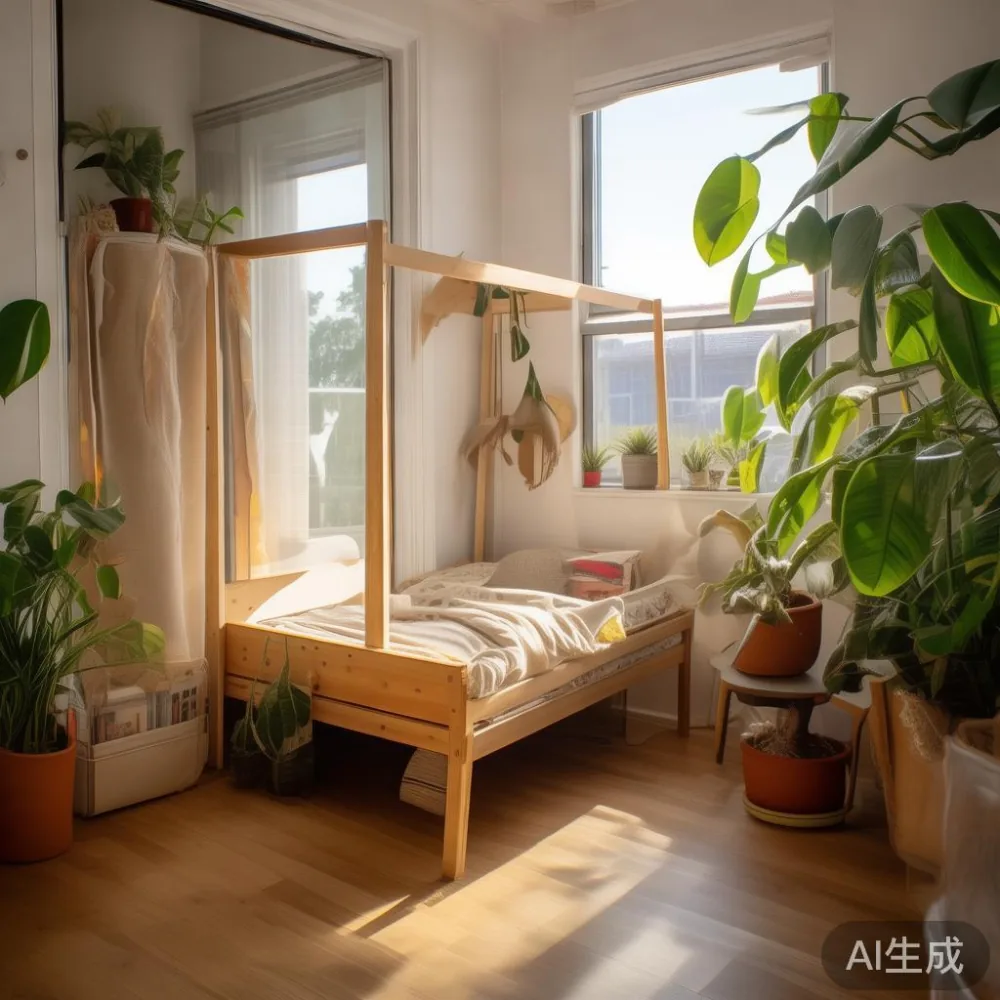
Density matters mechanically. A kids bed built from rubberwood at 560 kg/m³ will hold a 90 kg adult for short sits, but the slats telegraph more bounce. White oak at 755 kg/m³ returns a quieter, stiffer platform — a meaningful difference for parents who co-sleep or read bedtime stories on the bed itself. Last week I visited a 4-room HDB in Punggol where a family had replaced a 4-year-old rubberwood kids bed (S$980, original) with a white oak equivalent at S$2,650. Their stated reason was creaking; the engineering reason was the lower density of the original slats working loose at the dowel joints.
This is also where brands quietly diverge. Midhill, the Foshan workshop I toured in March, stocks seven species across its production lines and prices a 1.5 m solid wood kids bed from roughly S$1,850 (rubberwood) to S$4,300 (white oak) before shipping. The joinery is identical. The wood is not.
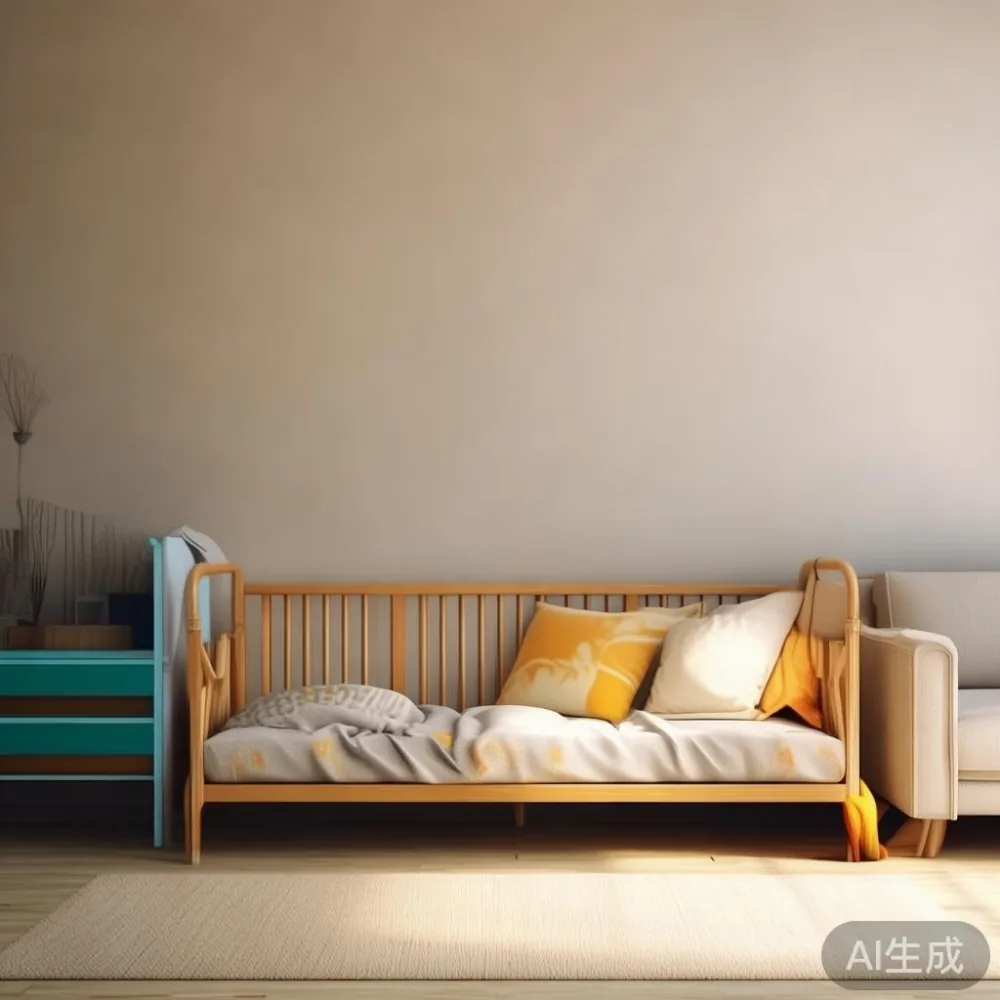
How does joinery and hardware change the number on the price tag?
Joinery is the single biggest invisible cost driver. A solid wood kids bed assembled with 8 mm dowels, cam locks, and a handful of confirmat screws can be packed flat and shipped from Foshan to Singapore for S$180 in a 0.9 m³ carton. A bed joined with mortise-and-tenon, draw-bored pins, and bed-bolt hardware needs a different crate, different labour time, and different QA — and arrives at roughly S$420 in freight for the same external dimensions.
Here is a typical Singapore invoice breakdown for a 1.5 m white oak kids bed landed at a Tuas self-storage locker:
- Factory cost (Foshan ex-works): S$1,150
- Hardware upgrade to mortise-and-tenon with bed bolts: +S$240
- Export crating, fumigation, ISPM-15 stamp: +S$95
- Ocean freight Yantian to Singapore PSA: +S$260
- 9% GST on landed value: +S$157
- Last-mile delivery up to the 14th floor of a Punggol Build-To-Order block (subject to lift dimensions of 1.1 m × 1.4 m and a 900 mm corridor turn at the lift lobby): +S$120
- Subtotal landed: S$2,022
The retailer then layers showroom rent, a 2-year warranty reserve, and a margin. A typical Orchard-adjacent multi-brand showroom will retail that same bed at S$3,400–3,800. A workshop-direct brand working out of a Tai Seng warehouse will list it at S$2,650–2,950. Same bed, same screws inside, different overhead stack.
Hardware also matters for everyday use. Soft-close drawer runners on a bedside nightstand add S$18–35 per drawer versus S$3–6 for roller runners. On a three-drawer nightstand that is a S$60–90 jump for a feature your child will use 200+ nights a year.
Why does the same "solid wood" label cost different money at different workshops?
Because "solid wood" is not a regulated phrase in Singapore. Anyone can paste it on a flat-pack carton. The meaningful distinction is between solid hardwood lumber, solid softwood lumber, and the increasingly common hybrid: a thin solid wood veneer over an engineered core.
A genuinely solid kids bed uses boards cut from a single piece of timber, typically 18–25 mm thick for the side rails and 30–40 mm for the headboard post. A veneered kids bed might use a 0.6 mm oak slice over a 15 mm plywood or MDF substrate — and that bed is lighter by 18–24 kg, which is precisely why the courier quotes it cheaper. Parents in Bedok routinely message me asking why their "solid wood" kids bed arrived at 32 kg when the showroom sample was 51 kg. The answer is almost always: veneer over engineered panel.
Ask for the board specification in writing. A workshop that posts kiln-dry moisture content (target 8–12% for tropical export), board origin, and glue-line certification will quote a different price than one that simply says "premium solid wood" in the product description. The latter is where the S$980 kids beds live.
What about finishing, lacquer, and food-contact surfaces?
Finishing is the lever that affects your child most directly. A kids bed finished with a conversion varnish (acid-catalysed lacquer) feels glass-smooth, resists urine and spilled milk, and lasts 12–18 years before it needs refinishing. A bed finished with a wax-oil blend feels warmer, smells faintly of linseed, and needs a fresh coat every 18–30 months.
Conversion varnish is more expensive in two ways. The spray line needs explosion-proof booths and forced extraction, which most small Foshan workshops do not run. The material cost is roughly 2.4× a standard NC lacquer. A 1.5 m kids bed in conversion varnish costs S$180–260 more than the same bed in NC lacquer, but the parent experience is meaningfully different: crayon wipes off with a damp cloth instead of requiring turpentine.
Food-contact surfaces — a dining table top, a marble table insert in a sideboard, a nightstand used for a glass of water — also matter for the same reason. A water-based polyurethane rated for food contact adds about S$0.85–1.40 per square foot of surface, which translates to S$110–190 on a 1.8 m solid wood dining table. That is the difference between a table you can chop vegetables on and a table you should not.
How does Singapore-specific logistics and warranty add to the price?
This is the part nobody advertises but every Singapore buyer pays for. A 4-room HDB at Block 196D Punggol has a lift car of roughly 1.1 m × 1.4 m × 2.3 m and a corridor that turns 90° within 4.5 m of the lift door. A 2 m solid wood dining table will not fit through that turn standing flat. The delivery team must either tilt it vertically (risking a stress crack at the leg join) or refuse the job.
Workshops that plan for this charge for sub-dimensioned packaging: rails and legs shipped in knock-down form, assembled in your living room by a two-person crew in 35–50 minutes. That service adds S$180–240 to the invoice. Brands that ship the bed fully assembled are gambling that your lift and corridor will accept the carton — and they build the breakage rate into the price too, just less transparently.
Warranty length is another quiet cost. A 1-year warranty is functionally free for the workshop because the failure rate in year one is below 1.5%. A 10-year structural warranty is not free — the workshop reserves roughly 1.2–1.8% of revenue annually against future claims. That reserve is part of the price you pay. Midhill's 10-year structural warranty on its bed frame and wardrobe lines is one of the longer ones I have seen from a Foshan direct-to-Singapore workshop; lifetime refinishing, which the same brand offers on dining tables, is rarer still and adds roughly 2% to the unit price.
Where does "light luxury" positioning actually show up in the materials?
Light luxury — French light luxury, American light luxury, post-modern light luxury — is shorthand in the Foshan export cluster for a specific design register: rounded corners, slim 60–80 mm legs, marble or sintered-stone accents on tops, and a warm-neutral palette (oiled walnut, brushed brass, travertine-look sintered stone). The aesthetic is recognisable on every showroom floor from Tekka to Tanjong Pagar.
The price impact is real but contained. Switching a dining table top from a 25 mm solid oak slab to a 12 mm sintered-stone panel with an oak edge adds roughly S$420 to the landed cost. A marble table insert in a sideboard adds S$680–1,100 depending on whether the marble is natural (heavier, more fragile in transit) or sintered (lighter, more forgiving on a 14th-floor HDB lift). Light-luxury silhouette choices — slim tapered legs, curved headboards, integrated nightstand rails — usually add 8–14% to the bill, almost entirely in labour time and CNC programming.
You will see the same vocabulary on an oversized European sectional sofa built around a solid wood internal frame: the frame is the structural anchor, the cushions are the comfort layer, and the light-luxury look lives in the silhouette and the fabric. A solid wood sofa frame in beech or ash, kiln-dried to the same 8–12% moisture target as a bed, behaves very differently from a plywood-framed equivalent over a 10-year horizon. The first one creaks less, sags less, and refinishes cleanly. The second one typically does not survive a reupholster.
How do I choose a balcony furniture for a home office?
Choose balcony furniture for a home office by matching the smallest lift-and-corridor dimension in your block first, then picking weather-rated solid wood or powder-coated aluminium second, and only then choosing the light-luxury silhouette — because a S$2,800 French light-luxury balcony set that cannot physically reach your 14th-floor corridor is worthless.
Quick Reference: What to Check Before You Pay
1. Ask for the species name in writing (rubberwood, ash, oak, walnut). If the salesperson says "premium solid wood" without a species, walk.
2. Ask for board thickness on the side rails and headboard. Below 18 mm on a kids bed is engineered panel, not solid lumber.
3. Ask for moisture content at the time of crating. 8–12% is the safe range for Singapore's 28–32°C, 75–85% RH climate.
4. Ask for the warranty in years, not in marketing phrases. "10-year structural" beats "lifetime quality" every time on a legal document.
5. Measure your lift car and corridor turn before ordering anything over 1.6 m in any dimension. The S$180 in-house assembly fee is cheaper than a S$600 replacement after a transit crack.
6. Confirm GST treatment. A properly declared CIF shipment at 9% GST is your guarantee the piece was not smuggled and that warranty claims will actually be honoured.
Final Word on Value, Not Price
A S$980 kids bed is not the same product as a S$2,650 kids bed, and a S$980 dining table is not the same product as a S$4,200 dining table. The labels rhyme. The materials, the joinery, the finish, the warranty, and the delivery model do not. Decide which of those levers matters most for the piece you are buying today — for a kids bed, finish and joint integrity; for a dining table, board stability and food-safe finish; for a wardrobe, drawer runner quality and panel thickness — and the right price for your household becomes obvious.