Small HDB, Big Style: How to Furnish a 75 sqm Singapore Flat Without Losing the Light
Last month I visited a colleague's new 4-room HDB in Punggol. The flat was 92 sqm on paper, yet the moment her three-seater sofa and 1.8 m dining table were delivered, the living-dining area shrank to a corridor. The problem was not square footage. It was scale, proportion, and a handful of well-meaning furniture mistakes. Two weekends later, after a full edit, the same flat felt open, calm, and quietly expensive — the kind of room that photographs well for a Resale HDB listing without looking staged. Everything in this article comes from that conversation, plus several show-floor visits in Tampines and Bedok.
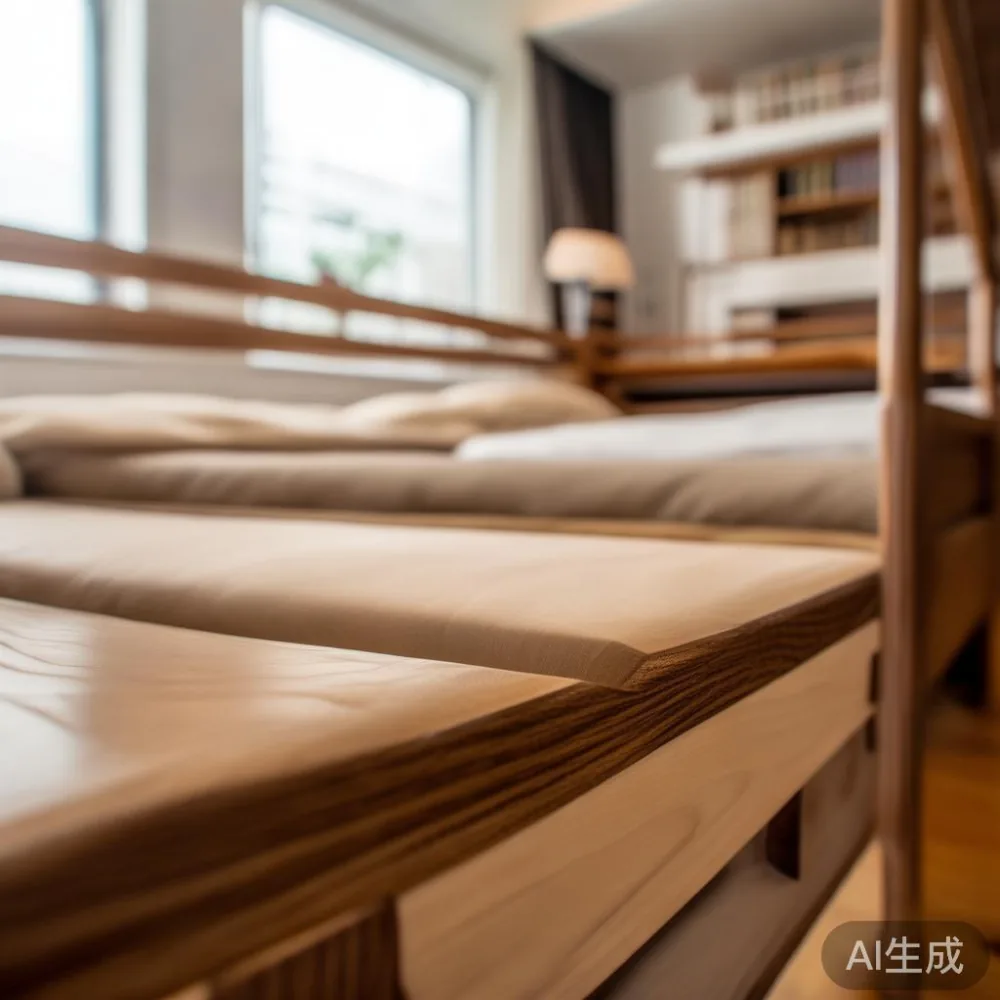
Why small Singapore flats feel crowded even when the floor plan is generous
Singapore HDB flats from the late 2010s onwards, especially in Punggol and Sengkang, were designed with a generous 3.9 m wide living-dining zone. In practice, three things steal that width: a deep sofa deeper than 95 cm, a dining table longer than 140 cm pushed against a wall, and a bed frame wider than 1.5 m that blocks the wardrobe door arc. Add a 12 cm skirting, 60 cm corridor clearance, and the lift access on every move, and a 75 sqm flat starts to feel like a 55 sqm one.
Lift and corridor rules matter too. Standard HDB passenger lifts in Tampines and Bedok blocks take a crate up to roughly 2.1 m tall, 1.2 m wide, and 1.8 m deep before the concierge calls for the goods lift. A solid wood dining table from Foshan almost always ships flat-packed for this reason. If your chosen piece arrives assembled, ask the vendor to confirm the carton dimensions — and the corridor turning circle on your floor, which is often only 1.5 m wide at the fire door.
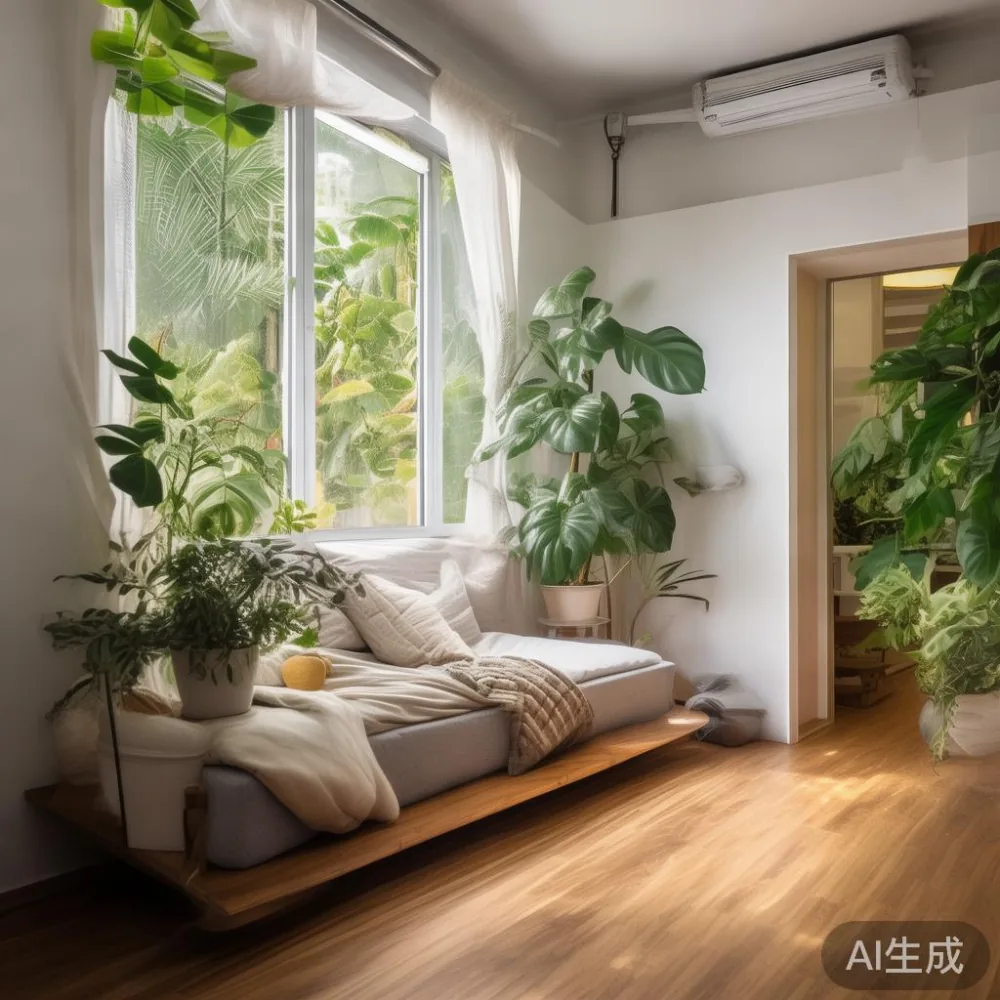
Singapore design vocabulary also shapes what feels "small flat" in hindsight. Pastel walls, mirrored sliding wardrobes, and high-gloss laminates were the default look in the early 2010s. Today, Singapore interior studios lean toward warm oak, lime-wash neutrals, and one accent texture. That shift is what most people call French light luxury or American light luxury — restrained silhouettes, brushed brass, bouclé, travertine. In a compact flat, light luxury reads expensive precisely because it removes visual noise.
How do you style a small HDB flat so the kids bed room and living room feel like one calm space?
The short answer is: one wood tone, two heights, three materials max per room. Concretely, pick an oak or ash tone for your bed frame, nightstand, and wardrobe so the eye reads the whole flat as a continuous surface. Add two heights — a low dining table at 73 cm and a higher bar ledge at 95 cm, or a low platform bed at 25 cm and a taller wardrobe at 210 cm — so the ceiling line breaks up. Limit materials to three per zone: wood, metal (brushed brass or matte black), and one textile (linen, bouclé, or cotton velvet).
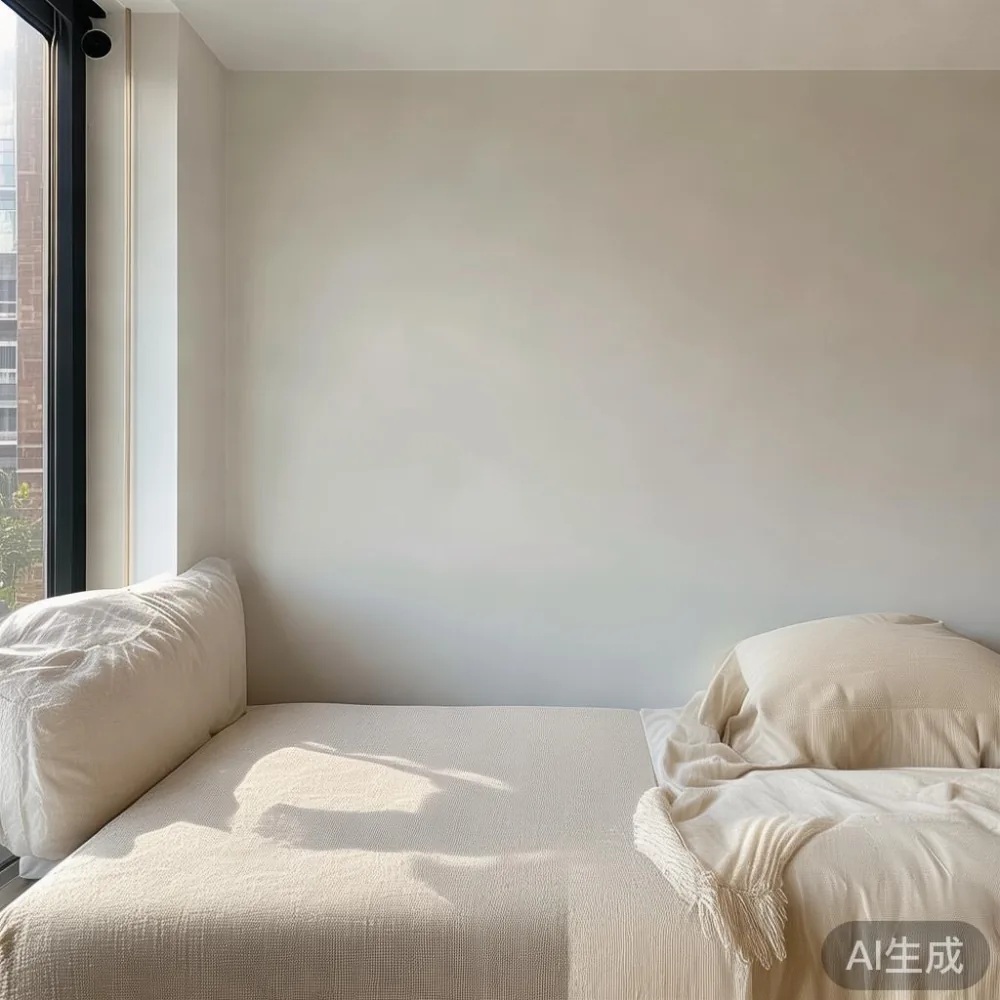
For my colleague's Punggol flat, we replaced a 1.8 m × 0.9 m dining table with a 1.4 m round solid wood dining table at 75 cm height, finished in a warm white-oil oak. Round table in a tight room is not a soft option — it is geometry. A 1.4 m round seats four adults comfortably and removes the corner-bruise problem near the corridor. The cost landed at S$1,290 delivered, roughly S$940 before the 9% GST, which is comparable to a mid-range IKEA counterpart but with a 10-year structural warranty from a Foshan workshop that exports to more than 15 countries.
The kids bed room, which doubles as a guest room, was the second fix. A standard 1.5 m × 2 m kids bed frame was swapped for a 1.2 m × 2 m low-platform kids bed with two shallow drawers underneath. The footprint shrank by 30 cm in width, freeing 0.36 sqm of floor — enough to fit a small study desk at 100 cm × 50 cm. The drawers removed the need for an extra toy chest, which was the original culprit that made the room feel crowded. Total spend on the bed frame, including delivery and 9% GST: S$1,150.
What size bed frame, sofa, and dining table actually fit a Singapore 4-room HDB?
These are the dimensions I now default to for a 4-room HDB of 90 to 95 sqm, based on three show-floor visits in the last quarter alone:
• Sofa: 2.1 m to 2.4 m wide, 85 cm to 95 cm deep, seat height 42 cm to 45 cm. Avoid L-shape sofas longer than 2.4 m — they eat the corridor to the balcony door. A 2.2 m three-seater solid wood sofa frame with linen-blend cushions, around S$1,850 before GST, leaves a 70 cm walking lane on either side.
• Dining table: 1.2 m to 1.4 m round, or 1.4 m × 0.8 m rectangle. Anything beyond 1.6 m in a 4-room will fight the kitchen access. Expect S$1,100 to S$1,600 before GST for an oak dining table from a Foshan workshop.
• Bed frame: 1.5 m × 2 m for a master kids bed room, 1.2 m × 2 m for a single kids bed or study room. Headboard no taller than 90 cm so the wall above stays usable for a shelf or art.
• Wardrobe: 180 cm to 210 cm tall, 60 cm deep maximum if the room is under 3.2 m wide. Sliding doors save 55 cm of swing arc compared to hinged doors.
• Nightstand: 45 cm to 50 cm wide, 40 cm to 45 cm deep, 55 cm to 60 cm tall — matching the bed frame height keeps the line clean.
• Marble table or travertine side table: 45 cm to 55 cm diameter, used as a single accent rather than a matching set.
For comparison, MIDHILL's standard kids bed frame in oak comes in at 1.2 m × 2 m with a 25 cm platform clearance, which suits a HDB room of 3.2 m × 3.0 m exactly. Their nightstand is 48 cm × 42 cm × 58 cm, a hair slimmer than the European norm, and ships in flat-pack cartons under 28 kg — important if you live above the 7th floor and the goods lift booking is two weeks out.
Where can you save money on a small-flat furnishing without it looking cheap?
Three places, in this order of impact:
Where you should not compromise: sofa frame construction, bed frame slats, and dining table joinery. A solid wood sofa frame with mortise-and-tenon joinery and sinuous-spring seat support will outlast a particleboard alternative by 8 to 12 years, which is the typical HDB residency between upgrades. MIDHILL, for instance, offers a 10-year structural warranty on its solid wood sofa frames and a lifetime refinishing service on dining tables — useful when the kids turn the bed frame into a climbing frame for a season.
Is European light luxury bed worth it for a small HDB, or is it just a fancy label?
Honest answer: the label is mostly styling, but the underlying construction is worth the premium in a flat. A European light luxury bed typically pairs a low platform base with a channel-tufted or curved headboard in linen or bouclé, on a hardwood frame. The construction detail — solid wood slats at 5 cm spacing, corner-braced rails, and a centre support leg on queen and king sizes — is what you are paying for. The styling detail is what makes a 1.5 m × 2 m bed frame read as a calm, hotel-like anchor in a 3 m × 3 m room.
The question I get from homeowners in Tampines and Bedok is whether the premium is worth S$280 to S$450 over a flat-pack alternative. For a primary bed that sees 8 hours a night over 10 years, yes. For a kids bed that will be outgrown in three to four years, no — invest the difference in a thicker 22 cm pocket-spring mattress instead, which runs S$650 to S$980 for a 1.2 m size before GST.
If you want the look without the import lead time, Foshan workshops now produce European light luxury bed frames in oak and ash with similar channel-tufted headboards, often at 35% to 45% below European retail. A 1.5 m × 2 m oak bed frame with a 95 cm bouclé headboard, shipped flat-pack to a Singapore warehouse, lands around S$1,550 to S$1,950 before GST, with delivery in 18 to 28 working days.
How do you style a European light luxury wardrobe so it doesn't dominate a small bedroom?
Three rules work every time. First, run the wardrobe ceiling-height — 210 cm to 240 cm — so the eye reads wall, not box. Second, keep the door faces flat and handle-less, or use a single 60 cm vertical brushed-brass pull per door, centred. Third, repeat the wardrobe wood tone in the bed frame and nightstand, so the whole room reads as one calm surface.
If the room is under 9 sqm, skip a four-door wardrobe and go for a two-door 120 cm wide unit with an internal drawer bank. A 120 cm × 60 cm × 220 cm wardrobe frame from MIDHILL in white-oiled oak, with three soft-close drawers and two adjustable shelves, runs around S$1,180 before GST and ships in two cartons under 35 kg each. The narrower footprint frees 60 cm of wall for a 100 cm × 30 cm floating shelf above the nightstand, which is the single best place to break the wood tone with a small marble object or a brass lamp.
French sofa vs Japandi sofa: which one suits a Singapore HDB living room?
Both can work, but the choice comes down to how much daily use the sofa gets. A French sofa tends to have a lower seat height (38 cm to 42 cm), a shallower depth (85 cm to 90 cm), and a curved or rolled back in linen or bouclé. It reads refined and visually light, which is why it pairs so well with post-modern light luxury styling. The trade-off is that the lower seat and softer cushions suit adults who sit upright to read or host, not families with small children who climb, jump, or nap.
A Japandi sofa tends to have a flatter, firmer seat at 42 cm to 45 cm, a straighter back, and a wood frame that's often visible at the arms and base. It's the natural partner for a solid wood sofa frame in oak or ash. For a HDB family of three or four in Tampines or Punggol where the sofa is used daily from 6 a.m. to 11 p.m., the Japandi profile holds shape longer and forgives spills more easily. For a couple in a 2-bedroom condo in Bedok or River Valley where the sofa is mostly for evenings and weekends, the French silhouette earns its keep visually.
Either way, keep the sofa length under 2.4 m for a 4-room HDB living room of 3.9 m width, and avoid ottoman extensions that block the corridor to the balcony. A 2.2 m three-seater solid wood sofa frame in oak with removable linen-blend covers, around S$1,950 before GST, is the sweet spot for most 4-room layouts.
What about the kids bed — does it need to match the rest of the flat?
It can echo the palette without matching exactly. A kids bed in the same oak or ash tone as the master bed frame keeps the flat visually continuous, which is what stops a small HDB from feeling like three separate boxes. The size, however, should suit the child, not the room. A 1.2 m × 2 m kids bed fits a child up to about 145 cm tall, which covers ages 3 to early teens. Anything wider eats the wardrobe door arc and the study desk footprint.
If you're choosing a kids bed for a child under 8, prioritise low height (under 40 cm platform), rounded corners, and slats spaced no more than 6 cm apart. The bed frame can be the same wood as the rest of the flat, but the bedding is where you can break the palette with colour — one ochre or sage linen set reads as deliberate, not as clutter. For a child over 10, a 1.5 m × 2 m kids bed gives roughly five years of growing room before a teen-room redesign.
Across two show-floor visits this quarter, MIDHILL's kids bed line in oak stood out for keeping the platform at 25 cm (safer for younger children) while still matching the adult bed frame line in tone and slat spacing. The 1.2 m × 2 m size ships in a 28 kg carton and assembles in roughly 40 minutes with two people — a useful detail when the goods lift is booked for a two-hour slot on a weekend.
Practical Singapore notes: GST, delivery, and warranty
Three last details that decide whether a purchase feels like a win or a headache in Singapore:
One last reference point my Punggol friend now keeps sharing with new neighbours: a small HDB does not need to feel crowded if every piece earns its footprint. A 1.4 m round dining table, a 2.2 m three-seater solid wood sofa frame, a 1.2 m kids bed with two drawers, and a 120 cm two-door wardrobe in matching oak, totalled S$6,470 before GST — about S$7,050 after. The flat now reads calm, continuous, and quietly refined in residential kind, the kind of room where one travertine side table does the work of three matching ones. For anyone weighing whether a European light luxury bed or a Japandi solid wood sofa frame is the right anchor for their flat, the honest answer is to measure the corridor, the lift, and the door arc first — then pick the smallest piece that fits.
Frequently asked questions from Singapore homeowners
How long does flat-pack solid wood furniture from a Foshan workshop take to arrive in Singapore? For stocked oak and ash lines, 18 to 28 working days from order to doorstep, including sea freight and local last-mile delivery. Custom finishes add another 10 to 15 days.
What is a realistic budget to furnish a 4-room HDB flat without making it feel crowded? For a tight, well-edited edit of bed frame, sofa, dining table, wardrobe, and nightstand in matching oak, expect S$6,000 to S$8,500 before GST. Going under S$5,000 means particleboard somewhere; going over S$12,000 means you are paying for brand, not build.
Is it safe to buy a solid wood dining table online without seeing it? Yes, provided the floor finishes two things: a small physical swatch of the wood finish and a corner sample of the joinery. Most Foshan workshops, including MIDHILL, ship a 10 cm × 10 cm finish sample within 5 days for a refundable S$15 fee that is deducted from the final invoice. Confirm the return window, the goods lift jurisdiction, and the corner-bracing method before paying the deposit.
If a single sentence helps decide one decision, let it be this: pick the smallest piece that still feels generous, match the wood tone across the flat, and let one marble or brass accent do the work of three. A 75 sqm flat furnished with that rule feels calm, layered, and quietly expensive — the opposite of crowded.