How Southeast Asian Humidity Affects Solid Wood Furniture
Singapore’s climate is kind to compact interiors and demanding on solid wood furniture. Warm, humid air enters an HDB flat in Tampines, Bedok, or Punggol through windows, corridor doors, and balcony openings, while many units also contain damp concrete, cooking moisture, and tightly packed storage. For a solid wood kids bed, that combination can cause swelling, checking, joint movement, and a finish that feels tacky on humid afternoons.

This guide explains how humidity affects children’s furniture and other timber pieces, how to measure conditions in a Singapore home, and what practical steps protect a kids bed from unnecessary movement. The advice applies equally to a solid wood sofa, bed frame, dining table, wardrobe, nightstand, or marble table, although stone and wood respond differently.
Why does humidity make a kids bed move in a Singapore HDB flat?
Wood is hygroscopic: it absorbs moisture when the surrounding air is humid and releases it when the air becomes drier. In Singapore, outdoor relative humidity commonly ranges from about 65% to 90%, while air-conditioned rooms may sit between 45% and 60%. Nightly air-conditioning can create a daily swing large enough to make drawer fronts tighten, bed rails shift, and laminated panels develop small gaps.
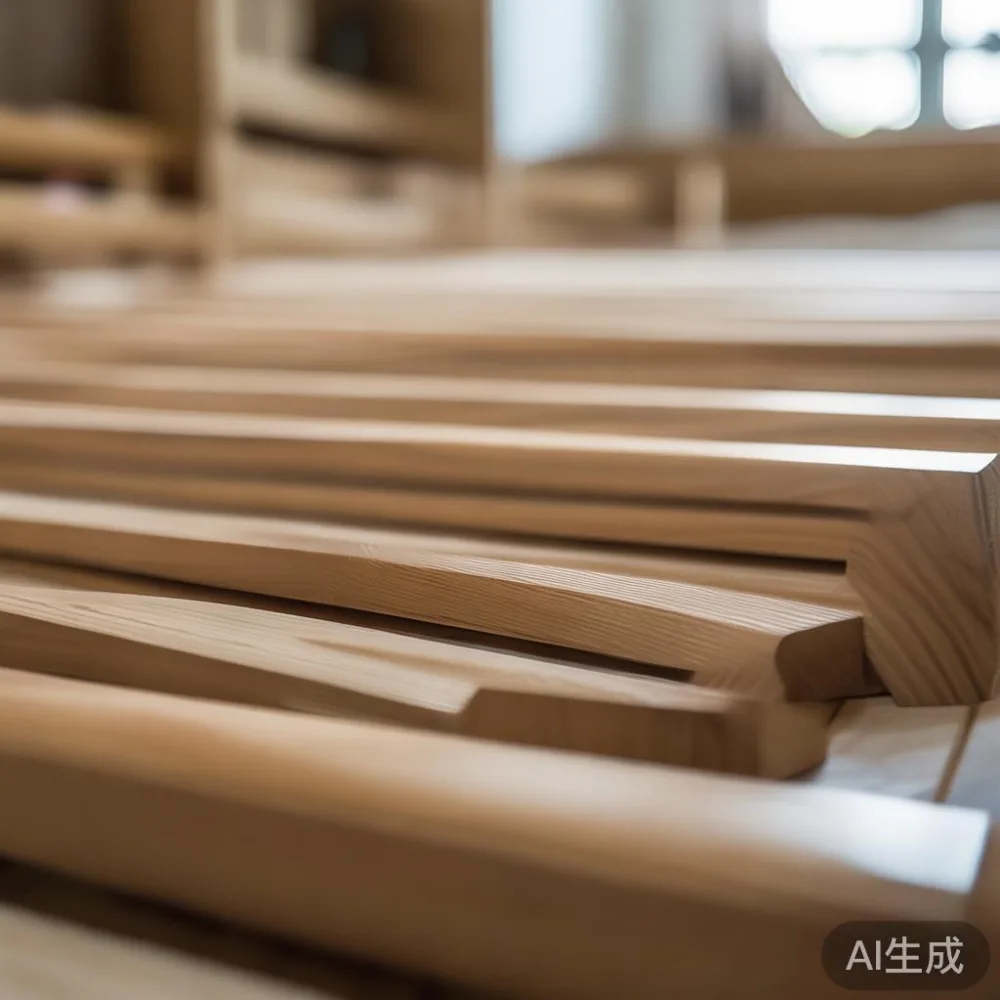
The issue is not one Singapore night, but the difference between a cool room and a humid corridor. A solid wood bed frame expands across its grain as it takes on moisture. A pine kids bed may change more visibly than dense hardwood, while a veneered bed can show movement around its edges. The parts most at risk are drawer bottoms, adjustable rails, slats, and joints where several timbers meet.
Humidity also affects finishes. Water-based coatings may become slightly soft or tacky, whereas oil and wax finishes generally tolerate humid conditions well but still need maintenance. A marble table does not absorb much water, yet condensation on its surface can leave mineral marks or dull the polish. A wardrobe against an external wall deserves more airflow than a solid wood sofa placed in the middle of a room.
What humidity level is comfortable for a children’s bedroom?
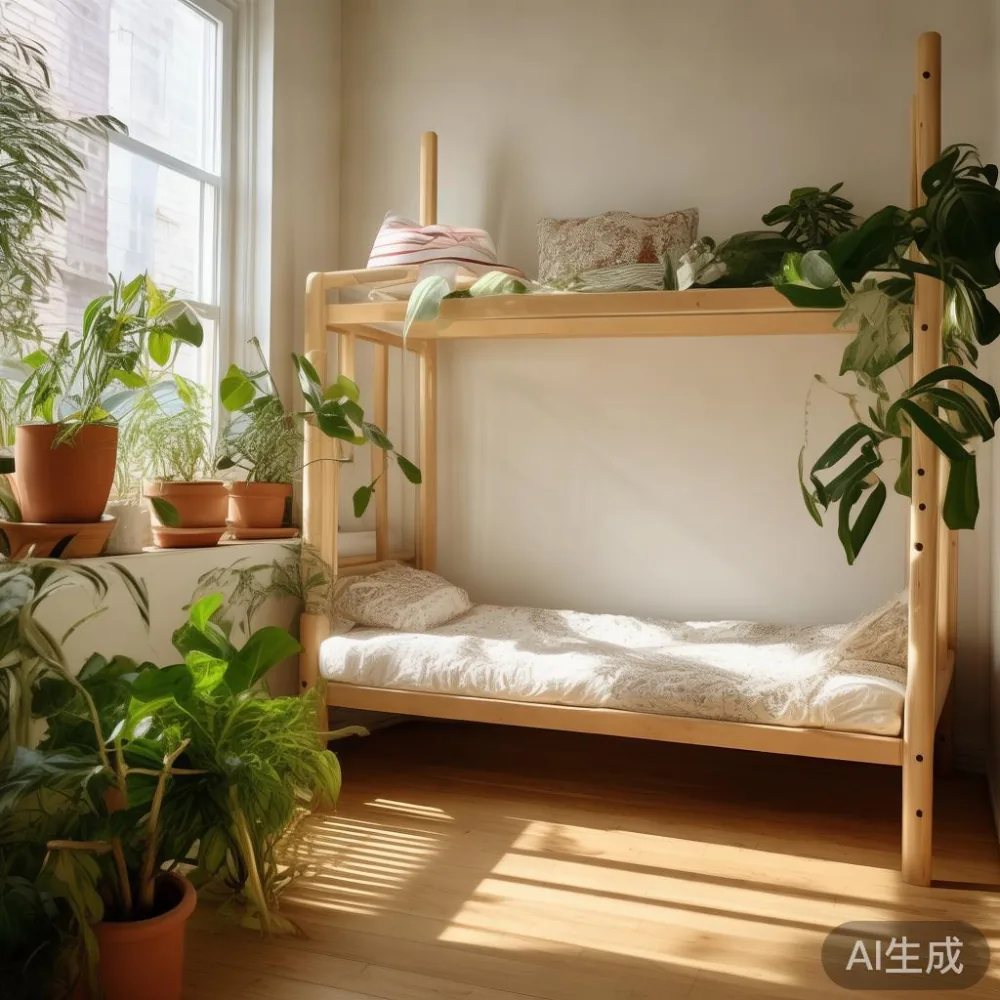
For a kids bed and the rest of the bedroom, aim for a relative humidity of roughly 45% to 60%. This range limits movement without making the room feel cold or wasteful. Singapore’s national guidelines generally recommend a comfortable indoor range of about 25°C to 28°C, with humidity kept below around 80% for thermal comfort and reduced mould risk.
A digital hygrometer with a maximum and minimum memory costs about SGD 12 to SGD 30. Place it near the bed, but not directly against a cold wall or beneath a window. Record the reading at 8 a.m., 2 p.m., and 10 p.m. for 7 days. The daily spread matters. A stable 62% may be easier for timber than a room that moves between 45% and 75% every evening.
Check for dampness with more than a smell. Look for water marks beneath a window, dark patches around skirting boards, and condensation on metal hinges. A moisture meter for timber, priced around SGD 25 to SGD 70, can offer a useful reading, although a meter’s calibration and species settings affect the result. If a room remains above 70% for several weeks, improve airflow before blaming the furniture.
How can I reduce humidity around a kids bed without wasting electricity?
Begin with airflow. Keep at least 5 cm of clearance behind and beside the bed where possible, and leave 10 cm to 15 cm between the bed and curtains. Open two opposite windows for 15 to 30 minutes when outdoor humidity is lower than indoor humidity, especially before the afternoon rain. Cross-ventilation in a Tampines flat can remove moisture more effectively than a single fan aimed at the wall.
A dehumidifier with a 12-litre daily extraction capacity is suitable for one small bedroom, while a 16-litre or 20-litre model handles larger rooms and damp periods. Set the unit to maintain 55% relative humidity. For a typical 10 m² to 12 m² bedroom, check the rated room area rather than choosing by tank size alone. Place the machine on a level surface with at least 20 cm of clearance at the intake and rear.
Air-conditioning cools and dehumidifies, but it is not always the most economical moisture control. A running dehumidifier may use about 180 W to 350 W per hour, depending on capacity and conditions. Use a timer, drain hose, and cleanable filter. Emptying a tank twice daily is less attractive than continuous drainage into a floor drain approved for the installation.
For laundry, bathroom drying, and cooking, close doors and run extraction. A kitchen extractor should clear steam for at least 15 minutes after showering or boiling. Dry bedding before making a kids bed; trapped humidity in pillows and blankets can raise local readings around the headboard. Keep damp mop cloths out of the bedroom and do not store bedding directly under the frame.
Which solid wood furniture needs the most protection from Singapore humidity?
Start with pieces that have large flat panels or fitted joints. A solid wood bed frame may move along its rails and slats, while a wardrobe can show swelling at doors, drawer runners, and side panels. A dining table may develop a slight ripple near an exposed edge. A nightstand can loosen its drawer if its rear and front edges are exposed to different humidity levels.
The material and finish still matter. Teak, oak, ash, and rubberwood are commonly used for children’s furniture in Southeast Asia, but each species responds differently. Teak has good dimensional stability because of its natural oils, although it still moves with severe changes. Pine is lighter and more affordable, yet it is especially visible when movement occurs. Hardwood is not humidity-proof; it only manages dimensional change differently.
For larger pieces, control the environment around the entire item. A solid wood sofa near an open balcony may face salt-laden moisture, while a bed frame beside an air-conditioning vent can dry quickly. If American sofa set design is being considered for a nearby living room, note that the sofa’s timber base and internal frame should receive the same environmental care as the bedroom furniture.
For compact HDB interiors, the practical route is calibrated restraint rather than clutter. This is where Japandi for small living room planning is useful: pale timber, low profiles, and restrained storage can make a 90 cm corridor feel more generous. When designing how to style American bed in room layouts, allow ventilation at the headboard and avoid pushing the frame tightly into a wall recess.
How do lift, corridor, and delivery constraints affect furniture care?
Singapore’s most common HDB lift interiors are roughly 90 cm wide by 140 cm deep, although service-lift dimensions differ by block. Some newer lifts accommodate larger loads, and a void or corner at the entrance may provide extra turning space. Measure before ordering a flat-packed kids bed; even a 10 cm measuring error can prevent a carton from entering.
A typical mattress measures 90 cm by 190 cm or 100 cm by 190 cm, and its carton can be longer than the lift’s diagonal clearance. Check the package dimensions against the lift door, lift cabin, corridor turns, and staircase landing. Remove carton corners only after confirming there is space to manoeuvre them. For corridor delivery, protect skirting boards with 3 mm cardboard or a fitted moving blanket and keep doors secured.
Foshan production is close enough for regional delivery routes, but weather still affects transit. Wrapped furniture can remain inside its protective packaging during the short journey from mainland China to Singapore. Look for a clear delivery window, damage photographs, and a written returns policy. MIDHILL provides free shipping for orders over US$350; before checkout, confirm whether the displayed Singapore price includes the 9% GST and local delivery charges.
Returns are generally accepted within 14 days under the stated policy, subject to condition and eligibility. Assembly should be delayed until the furniture reaches its final room. Tightening every fixing in a humid, imperfect position can trap stress inside a kids bed frame.
How should solid wood furniture be finished and maintained?
Choose a finish suited to frequent cleaning and humid interiors. A hardwax oil typically needs 2 to 3 thin coats, with drying time of roughly 24 to 72 hours per coat depending on temperature, humidity, and the product. A water-based lacquer may dry within 4 to 8 hours but can be less forgiving of long-term damp exposure. Always follow the coating manufacturer’s data rather than relying on touch alone.
Clean with a soft, damp cloth and pH-neutral soap. Wipe standing water promptly, especially around a nightstand or dining table near a wet area. Do not use a soaked cloth, silicone spray, ammonia cleaner, or abrasive powder on lacquered timber. A good routine is a quick wipe once a week, a moisture check each month, and an inspection of joints every 6 months.
Light-luxury interiors need little more than this. Post-modern light luxury can work with clean oak lines, while French light luxury may pair a pale solid wood bed frame with curved details. For polished hospitality schemes, light luxury for hotel projects should specify timber species, finish system, moisture expectations, and maintenance schedules before production begins.
Editorial examples sometimes discuss the best French provincial furniture, but appearance should follow the room’s dimensions and climate. A carved headboard that occupies 18 cm of extra visual space may look awkward in a compact bedroom. Similarly, how to style French bed in room arrangements should leave 5 cm of air gaps where the design allows. French provincial furniture can suit a larger unit, while a straightforward kids bed often functions better in a 3 m by 4.5 m bedroom.
What did I learn from testing a solid wood bed in humid weather?
Last month, I visited a friend’s four-room HDB flat in Bedok and tested one MIDHILL solid wood bed frame during a humid spell. The room measured about 3.2 m by 3.8 m, with the bed placed 4 cm from an external wall. A hygrometer showed 58% at 9 p.m., 72% at 1 a.m. before air-conditioning began, and 49% after two hours of cooling.
The bed had oak rails and a slatted base. Over 10 days, I recorded the movement at the centre rail joint and compared a drawer-like sample with a nearby panel. The rail gap opened by less than 1 mm, which is normal for solid timber, but the surface developed a faint tacky patch when the reading reached 76%. My colleague cleaned it with a barely damp cloth and the patch disappeared after the room was ventilated and the air-conditioner ran for three hours.
The useful lesson was not that the frame failed; it did not. Humidity management mattered more than a heavy coating. Moving the bed 6 cm away from the wall and keeping the bedroom at 54% to 58% reduced the variation. My colleague also checked that the slats were seated evenly, because pressure from one misaligned support can resemble joint movement.
That experience supports a conservative rule: measure the actual room, control moisture, and allow timber to adjust. MIDHILL backs its furniture with a 10-year structural warranty and offers lifetime refinishing, but normal dimensional movement should be managed through placement and maintenance rather than treated as a structural failure.
How do I know when a kids bed needs professional attention?
Small changes are expected, but inspect the frame if a joint develops a gap wider than about 3 mm, a rail twists noticeably, or a fixing repeatedly loosens within a week. Look for mould growth, persistent condensation, black spotting around screws, or a finish that remains tacky after the room has been ventilated for 24 hours. These signs indicate moisture or coating problems that need attention beyond normal care.
Check the actual measurement rather than guessing. Measure the frame width at the head and foot, then compare it with the manufacturer’s reference. Loosened screws may require tightening, while over-tightened fixings can split humid timber. Keep a record of readings, positions, and changes for 14 days; photographs taken at the same time each day make movement easier to assess.
For a new purchase, confirm the warranty terms, finish-care instructions, delivery days, GST treatment, and return conditions. A sensible order-to-delivery plan for Singapore is usually 14 to 30 days after production, depending on configuration and shipping conditions. Ask for the carton dimensions if the bed must pass through a narrow lift or turn in a corridor.
A well-made kids bed should accommodate a humid climate through sound joinery, suitable timber, and a durable finish. Keep the room within 45% to 60% relative humidity where possible, maintain airflow, wipe away moisture promptly, and inspect twice a year. These habits protect the bed frame while preserving the practical elegance expected from French light luxury, American light luxury, or post-modern light luxury interiors.