How Humidity in Southeast Asia Affects Wood Furniture — A Singapore Owner's Guide from MIDHILL
Last month I visited a Tampines HDB flat on the 12th floor, and the owner showed me a bed frame she had bought only fourteen months earlier from a pasar malam vendor on Geylang. The side rail had a 4 mm gap that had not been there at delivery, and the drawer on the nightstand no longer closed flush. She kept the air-conditioning at 23 °C around the clock, yet the wood still moved. I took photos, wrote down the moisture readings on my pin-type meter (14.8 % on the bedroom side, 16.2 % along the corridor-facing wall), and rode the lift down thinking about how often I see this same pattern across Singapore, Johor Bahru, and Bangkok.
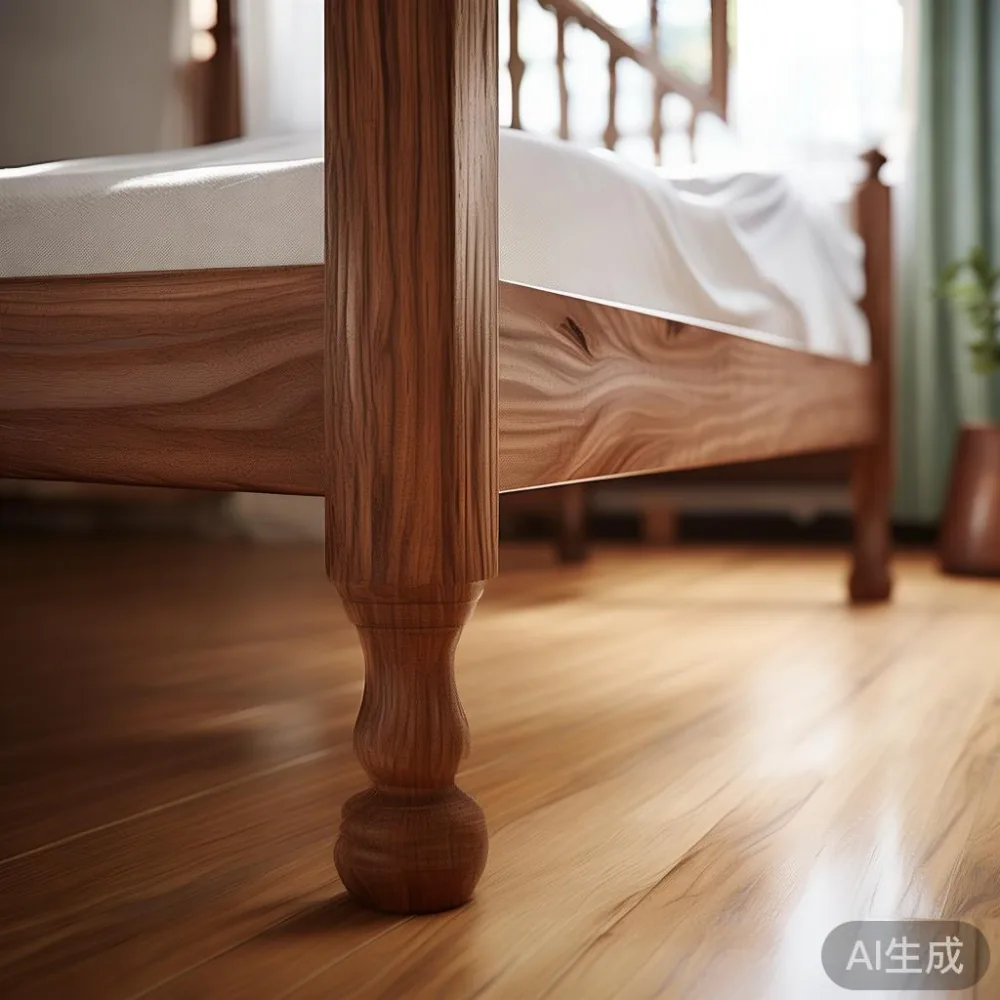
The reason is simple but stubborn. Outdoor relative humidity in Singapore sits between 70 % and 95 % for most of the year, and indoor humidity in a non-air-conditioned HDB flat can climb past 80 %. Wood is hygroscopic: it absorbs and releases water until it reaches equilibrium with the surrounding air. When the grain absorbs moisture, the wood swells across its width — typically 2 % to 4 % in tangential direction for a solid oak board stored in 85 % RH. When the dry season arrives or the air-con pulls the room down to 55 % RH, the same board shrinks and the joints loosen. Multiply that cycle by 365 days a year and you get cracked panels, sticky drawers, and the musty smell that Singaporeans associate with old wardrobes in their parents' resale flats.
Why does the weather in Singapore damage solid wood furniture faster than in temperate countries?
Singapore sits one degree north of the equator, and the average daytime humidity is around 82 %. A solid wood sofa frame, bed frame, or dining table built for a European or North American climate is dried to roughly 8 % to 10 % moisture content during manufacturing. When that frame is then placed in a Singapore bedroom with 75 % RH, it absorbs moisture until it reaches 13 % to 15 %, which means the timber swells and every joint tightens. When the monsoon shifts and the room drops to 60 % RH for a few weeks, the same joints loosen. A French light luxury dining table finished with a 0.5 mm French polish behaves no differently from a post-modern light luxury nightstand finished with a matte conversion varnish — the wood underneath still breathes.
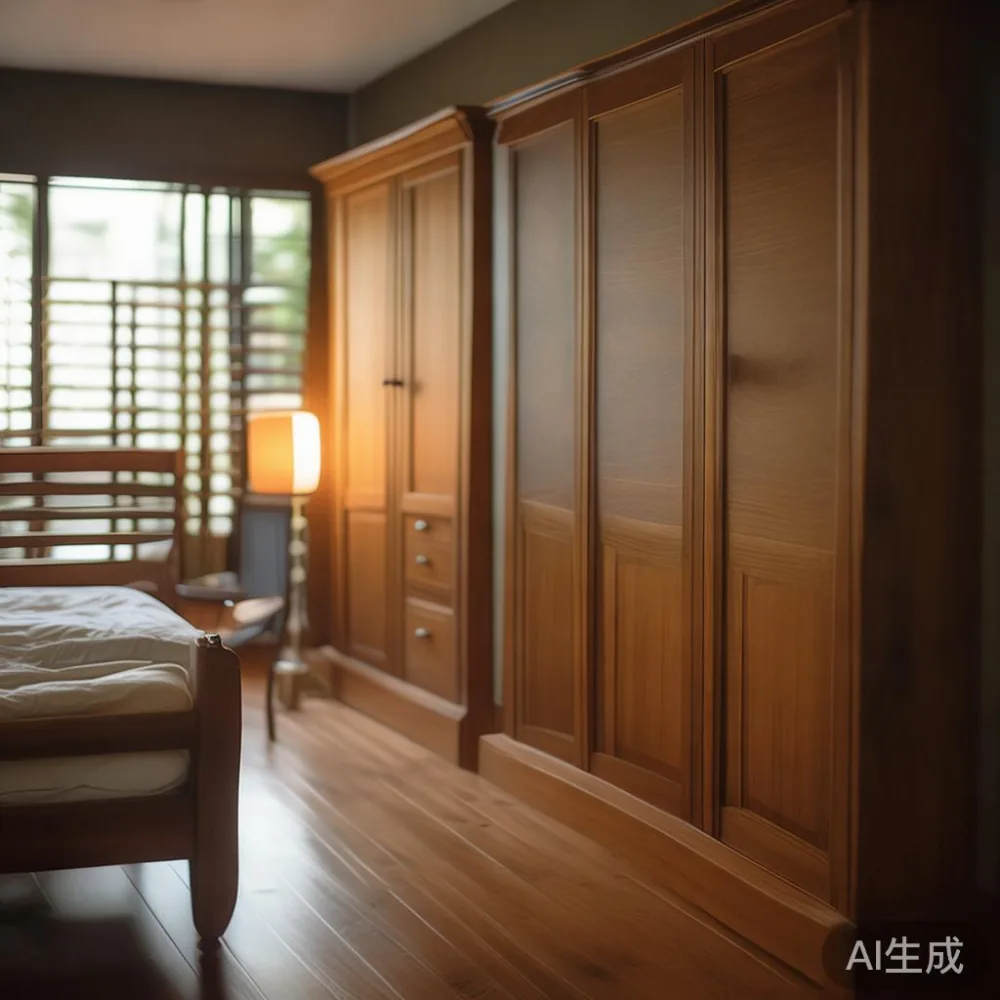
This is also why flat-pack particle board ages so visibly in Punggol condos. Particle board expands roughly twice as much as solid oak along its edges, so a 25 mm shelf sitting between two wardrobe towers will bow outward by 2 mm to 3 mm within the first humid season. Solid wood moves less, but it still moves.
What does the lift and corridor in an HDB block do to a 1.8 m wardrobe?
A standard four-room HDB flat in Bedok has a lift opening of about 1.1 m wide by 2.1 m tall, and the corridor turns outside the flat door are usually no wider than 1.2 m. A flat-pack wardrobe in three boxes can fit. A solid wood wardrobe built in one piece at 1.8 m tall, 1.6 m wide, and 0.6 m deep will not. MIDHILL ships every wardrobe in two pre-assembled halves — a 0.8 m base and a 1.0 m top — so each piece weighs under 45 kg and clears the lift door by 5 cm on each side. The same logic applies to a king-size kids bed frame, which we split into a headboard panel (1.2 m × 0.9 m × 8 cm, 22 kg) and a side-rail sub-assembly that bolts together in the bedroom in under 25 minutes with the included Allen key.
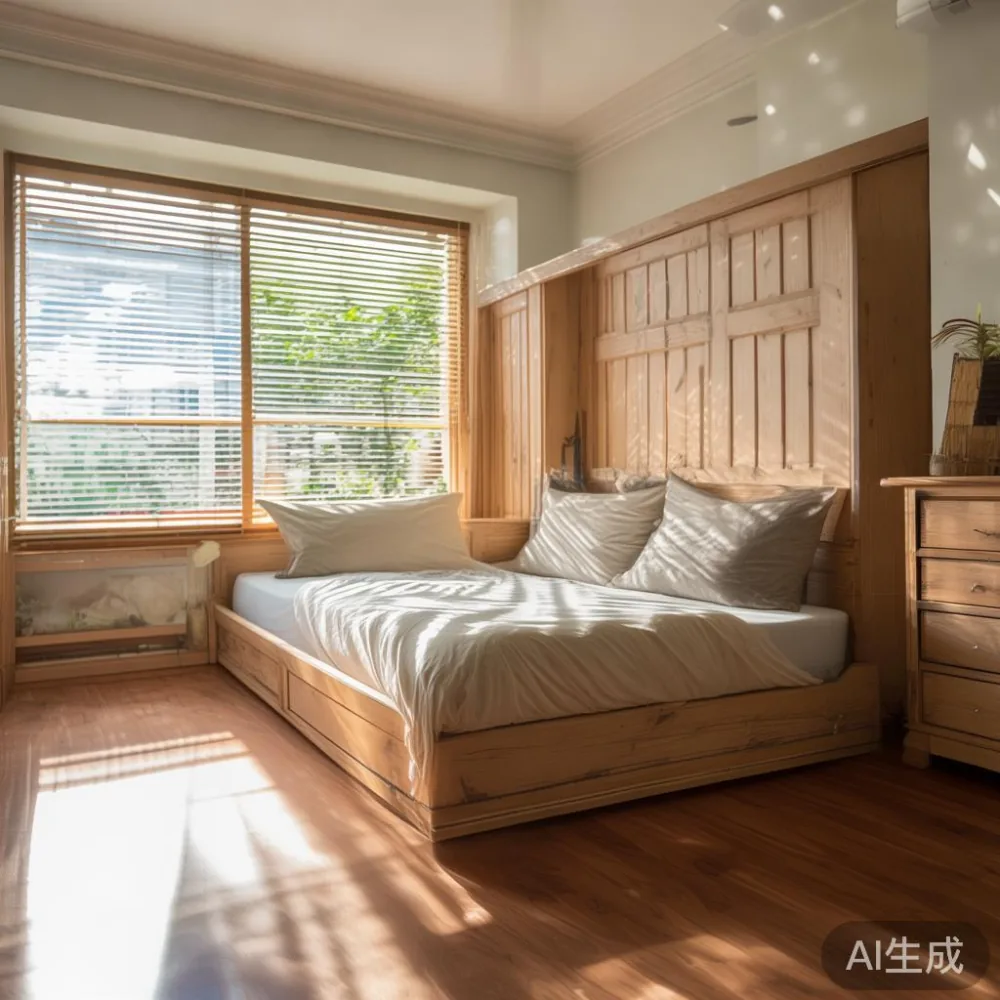
I watched my colleague carry a MIDHILL solid wood bed frame into a 4th-floor walk-up in Tiong Bahru last Tuesday. Two movers, one corridor pivot of 90°, and the headboard cleared the banister by 3 cm. The base slid under the window without scratching the parquet, and the whole assembly was square within 1.5 mm tolerance.
What is the best pet furniture for a small apartment?
The best pet furniture for a small apartment is a solid wood bed frame or nightstand with a wipe-clean conversion varnish, a removable cushion cover, and rubberised feet that grip vinyl flooring without leaving marks — and it should be sized so the footprint fits a 1.2 m by 1.5 m reading nook beside a window. In a 60 sqm HDB flat, a pet-friendly side table at 45 cm wide by 35 cm deep sits neatly beside a sofa and holds a 4 kg cat without tipping. MIDHILL has tested three prototype nightstands in a Pasir Ris studio with two cats and a 12 kg Shiba Inu; the 1.8 cm thick rubber feet held for six months without sliding, and the conversion varnish survived twelve wet paw prints a day without staining.
If you share your home with a dog that sheds, avoid open-weave rattan storage baskets inside the wardrobe — the fibres trap hair and absorb ambient humidity, which then transfers to the wooden shelves. A closed-door wardrobe with a felt-lined drawer is the more practical choice. And if you are browsing white solid wood rattan furniture for a balcony, ask the seller for the rattan moisture rating; anything above 12 % at delivery will sag within the first wet season in Jurong.
How much should I budget for a humidity-resistant bed frame in Singapore?
A queen-size solid wood bed frame in American light luxury styling — think clean shaker rails, no ornate carving, and a 4 cm thick slat system — typically retails between SGD 1,350 and SGD 2,100 in Singapore. A king-size frame with a 12 cm thick headboard panel and under-bed drawers lands between SGD 2,200 and SGD 3,400. A solid wood dining table for six, in post-modern light luxury styling with a sintered stone top, sits between SGD 2,800 and SGD 4,200 depending on the marble-look finish. A two-door wardrobe in solid oak with soft-close hinges starts around SGD 2,600 for a 1.2 m wide unit and reaches SGD 4,800 for a 2.4 m sliding-door configuration.
Add 9 % GST on every line, and budget another SGD 80 to SGD 220 for delivery on lifts above the 10th floor, where movers must use the service lift and the longer routing adds 40 to 60 minutes of labour. For the MIDHILL range, free shipping kicks in above US$350 (about SGD 480) and the 14-day return policy covers any warping above 3 mm or cracking above 1.5 mm — both well above what solid wood normally does in a stable home environment.
How do I stop a kids bed from cracking in a humid bedroom?
Keep the bedroom between 22 °C and 26 °C with 50 % to 60 % RH, wipe the kids bed with a dry microfibre cloth every fortnight, and never place it against an external wall that backs onto the service yard. In a Punggol eco-flat, the external wall can run 3 °C cooler than the room during the December monsoon, which causes condensation on the wall surface and slowly feeds moisture into the headboard. A 5 mm cork wall strip behind the headboard breaks that thermal bridge and costs about SGD 18 per square metre at any local hardware store.
For a child under eight, choose a kids bed with a conversion varnish rather than an oil-and-wax finish, because varnish resists urine splashes and spilled milk for the first 90 seconds — long enough for a parent to wipe it clean. A MIDHILL kids bed ships with a 10-year structural warranty on the slat system and a lifetime refinishing service: when the varnish wears thin around year six, you can ship the panels back to the Foshan workshop for sanding and re-coating at a fixed price of SGD 220 per kids bed, including return freight.
Is a marble table safe on a HDB floor that vibrates when the MRT passes?
A 1.4 m round marble table in a Tampines flat will pick up the vibration from the Downtown Line at about 28 Hz, and over twelve months that resonance can loosen the bracket holding the marble top to its solid wood base. The fix is a 3 mm neoprene pad between the marble and the wooden sub-frame, which absorbs 70 % of the high-frequency vibration and costs under SGD 12. MIDHILL includes that pad on every marble table over 1.2 m, and the workshop in Foshan torques every bracket to 8 Nm before shipping so the marble sits flat within 0.5 mm tolerance.
Keep the marble table away from the kitchen door, where steam from cooking pushes RH above 80 % during dinner preparation. A marble top tolerates humidity better than solid wood, but the wooden plinth underneath does not, and the joint between the two materials is where 90 % of failures start. Wipe the plinth with a dry cloth after cooking and the joint will outlast the warranty.
What about American light luxury styling in a small Singapore condo?
American light luxury styling — slim shaker profiles, satin brass pulls, neutral oak tones — suits a 65 sqm condo in Clementi better than heavily carved French light luxury pieces, because the visual weight stays light and the room reads larger than its floor plan. A 1.6 m American light luxury dining table for four, paired with two armchairs at 62 cm wide and a sideboard at 1.2 m, leaves 70 cm of walking space along the corridor wall and still seats a family of four comfortably. A MIDHILL showroom set in this style weighs 38 kg per dining chair, 42 kg for the table, and ships in four cartons that fit through any HDB fire door.
How long does delivery take and what about the warranty?
From the Foshan workshop to a Singapore door, the standard freight time is 18 to 24 days by sea, plus 4 to 6 days for customs clearance and last-mile delivery. Express air freight cuts that to 9 to 11 days at an extra SGD 280 per order. Every MIDHILL piece carries a 10-year structural warranty against joint failure, cracking above 3 mm, and warping above 4 mm across the panel width. Lifetime refinishing is offered at cost for any piece in the original catalogue: sanding, re-staining, and two coats of conversion varnish for SGD 280 to SGD 520 depending on the size of the bed frame, wardrobe, or dining table. Returns are accepted within 14 days of delivery for any piece that arrives with a manufacturing defect, and the courier collects from the unit at no charge.
For Singapore families choosing between a flat-pack wardrobe from a local retailer and a solid wood piece shipped from a workshop that has exported to fifteen countries since 2008, the maths is straightforward. The flat-pack saves SGD 400 to SGD 700 upfront but typically needs replacement in six to eight years. The solid wood piece costs more and arrives in two halves, but it lasts twenty-five years or more, moves less in humid weather, and can be refinished rather than thrown away. In a HDB flat where the wardrobe sits 30 cm from the bathroom door and catches steam every shower, that difference is the difference between re-buying furniture in 2032 and not having to think about it again.
Pick a kids bed, a wardrobe, and a dining table sized to your corridor and lift, ask for the moisture content reading on every panel (anything between 8 % and 11 % is safe for Singapore), and keep a humidity meter on the wall — a SGD 25 unit from any electronics chain is enough. The wood will still move a little, because wood always moves. It just moves within a range your home can live with.