How Southeast Asian Humidity Affects Solid Wood Furniture — Especially Your Kids Bed
If you live in a Tampines HDB, a Punggol condo, or a landed house in Bukit Timah, you already know the air never really dries out. The meter on the wall swings between 65% and 92% relative humidity for most of the year, and that invisible moisture is quietly working on every piece of solid wood in your home — your kids bed, your dining table, your wardrobe, your nightstand, and yes, even your marble table with its wooden base. After 16 years of shipping furniture from Foshan to more than fifteen countries, including hundreds of family homes across Singapore, Malaysia, and Thailand, we have watched humidity behave like a slow, patient sculptor. It does not break the furniture in one dramatic moment. It teaches it new shapes over many months.
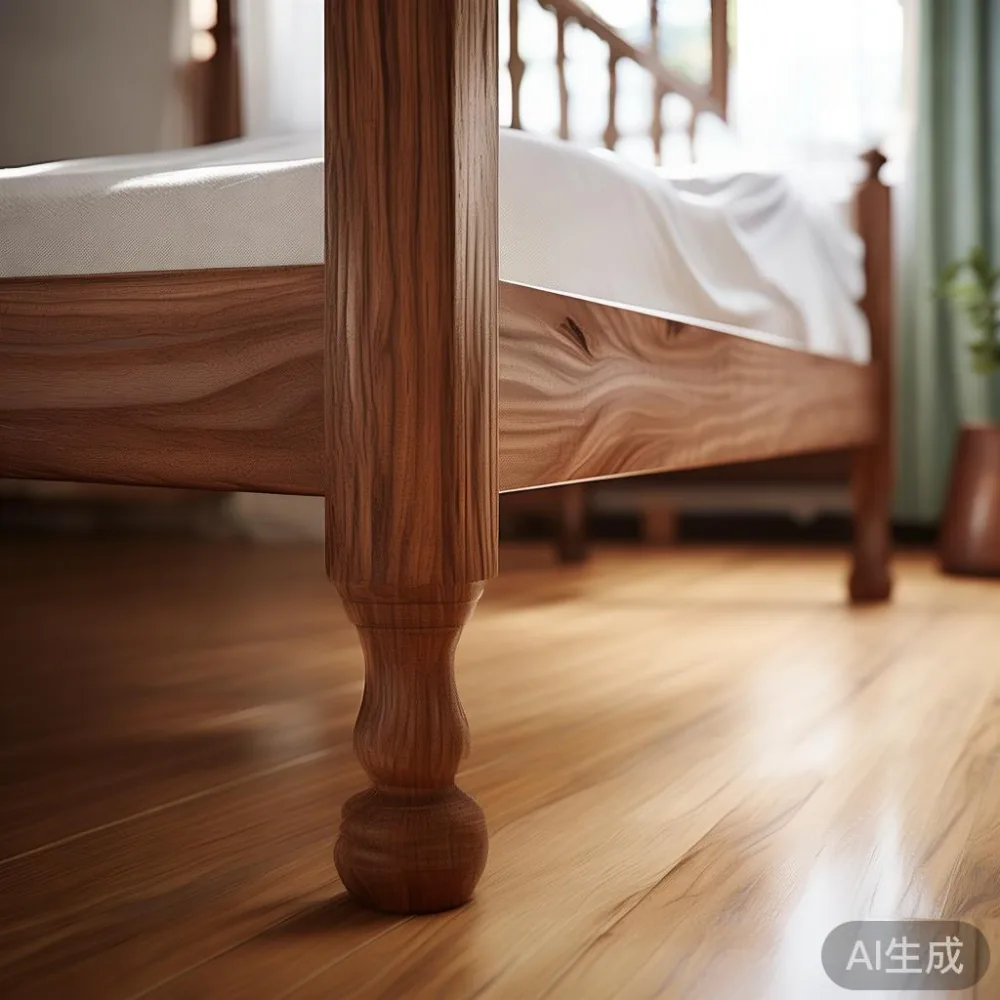
This guide is written for parents, new homeowners, and interior refreshers who want their wood pieces — including a child's bed frame they plan to keep for ten or fifteen years — to stay flat, tight, quiet, and pretty through every rainy monsoon and every dry week of a Singapore heatwave.
Why does Southeast Asian humidity feel different from the moisture a European or American factory tests for?
Most factories in northern China, Germany, or North America kiln-dry their boards to an equilibrium moisture content between 6% and 9%, because their typical indoor climate is around 45–55% relative humidity at 20–22°C. Singapore sits much closer to 75% relative humidity, often 80% at night and 90% during a thunderstorm. Wood is hygroscopic — it always tries to match its surroundings — so a board dried to 8% MC arriving here will quietly absorb moisture until it climbs to roughly 15% MC within its first three to six months.
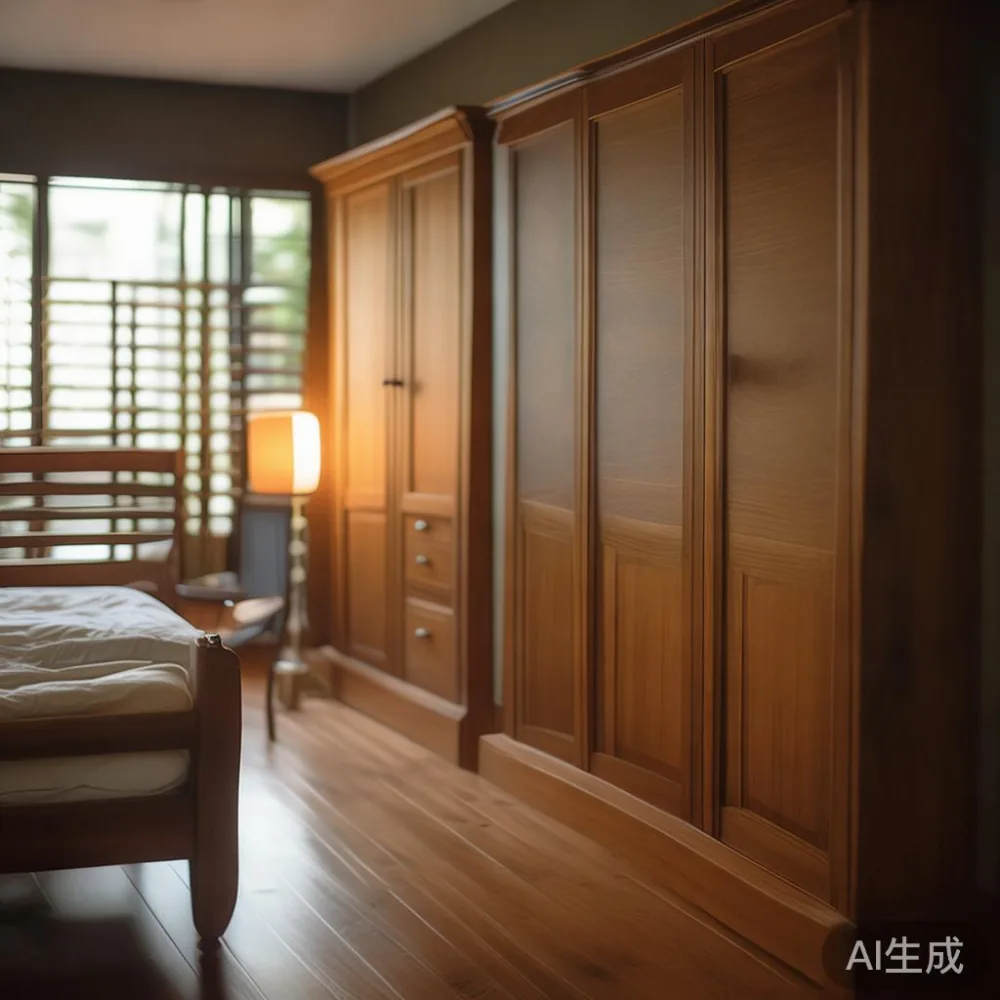
That 7% swing sounds small on paper. In a 200 cm long side rail of a kids bed, however, it translates into roughly 3–5 mm of dimensional change across the grain. Multiply that across twelve planks and you get a drawer that sticks in July and rattles in January, a wardrobe door that rubs the frame in March, and a bed slat that pops out of its housing in October. The piece is not defective. It is responding honestly to physics.
Last month I visited a Punggol condo with a client who had placed a beautiful oak kids bed under a north-facing window. The HDB corridor was air-conditioned, but the bedroom itself was not. Within nine months the headboard had bowed roughly 6 mm forward and one slat had twisted. We diagnosed it in fifteen minutes with a pin moisture meter: the bedroom read 78% RH, while the corridor outside the door read 58% RH. The bed was simply doing what the room told it to do.
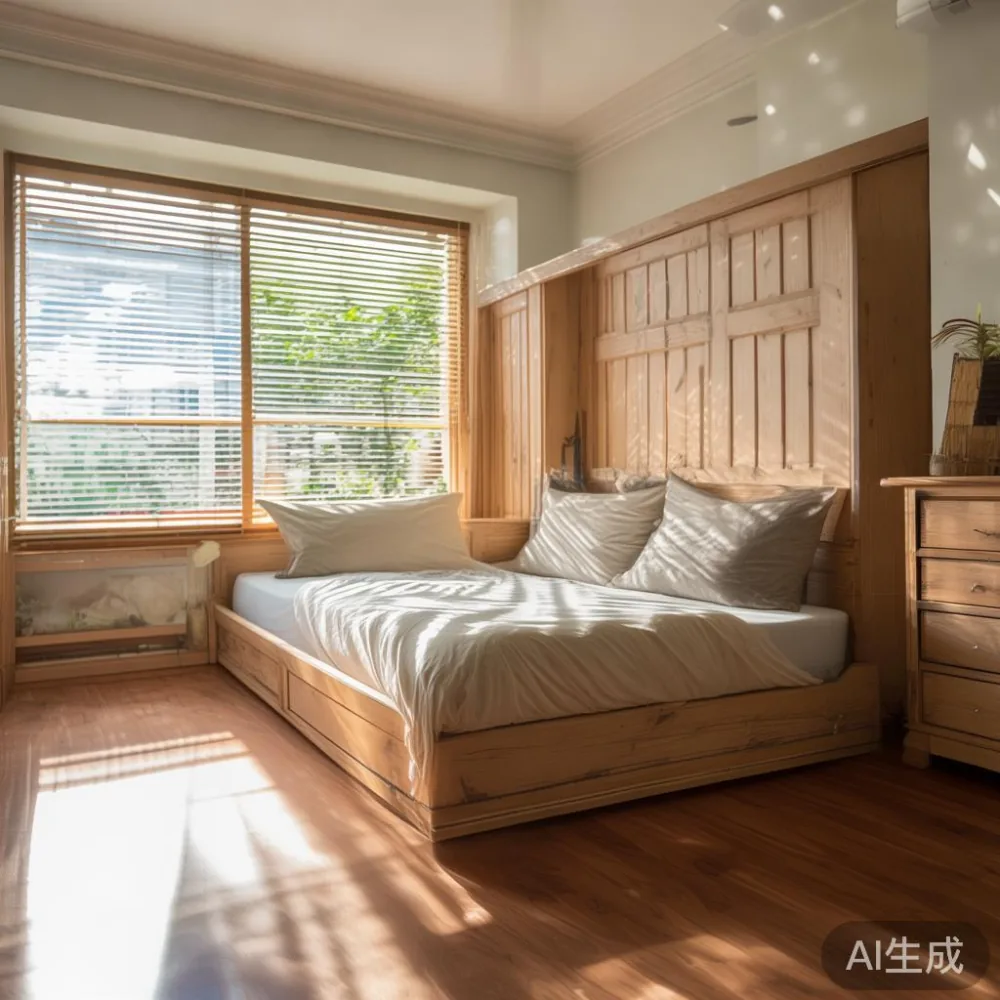
How does humidity actually damage a solid wood kids bed over twelve months?
Wood fails in three main ways when humidity is unmanaged. Each one shows up at predictable stages and on predictable surfaces.
1. Cupping and crowning of wide planks. A 38 mm thick dining table top or a 90 cm wide headboard panel is the most exposed surface in the room. When the upper face absorbs moisture faster than the underside, the board cups with the edges turning up. On a kids bed, this usually appears on the footboard or the headboard panel within the first wet season.
2. Cracking at joinery and through slats. Solid wood moves across the grain, not along it. A mortise-and-tenon joint that was perfectly tight at 8% MC will loosen by 0.5–1.0 mm once the wood swells. On a bed frame, this shows up as a faint creak every time your child climbs in. On a solid wood sofa frame, it shows up as a wobble at the armrest. On a dining table, the breadboard ends will start to telegraph a hairline crack.
3. Finish checking and surface haze. Lacquer and hardwax oil are flexible but not infinitely flexible. When wood expands faster than the finish can stretch, you see a fine web of cracks in the sheen, or a milky bloom on the surface. I have seen a S$4,200 wardrobe in a Bedok flat develop micro-checks in its matte finish after a single six-week monsoon stretch with windows left open.
Notice that none of these failures are caused by poor craftsmanship. They are caused by a 30-percentage-point gap between the factory climate and the home climate. The same bed built to the same standard will look almost untouched after five years in a Tampines HDB that runs a 24°C dehumidifier, and visibly tired after five years in a Storage-Only condo corridor where the door stays open for cross-ventilation.
What humidity range should a Singapore home actually aim for?
For solid wood furniture — kids bed, bed frame, dining table, wardrobe, nightstand — the sweet spot sits between 45% and 60% relative humidity, which translates to roughly 9% to 12% wood moisture content. The kicker is consistency. Wood handles a constant 55% RH much better than it handles swinging between 55% and 85% RH every other week.
Two practical tools help most families:
• A S$18 digital hygrometer placed at bed-head height, ideally the Eulos or the ThermoPro TP50. One unit, three second reading, no calibration drama.
• A compressor dehumidifier rated at 8–12 litres per day for a standard 12 sqm bedroom. A reliable Mitsubishi or Midea 10L unit costs around S$280–S$420 and pays for itself in the first year by protecting the wood you already own.
Run the dehumidifier with the bedroom door closed for six to eight hours overnight. Target 55% RH. In the kitchen and corridor, a passive bamboo charcoal refill (S$12 every two months, two 1 kg bags) absorbs enough dampness to slow the daily swing. Avoid placing a solid wood sofa or kids bed directly against an exterior wall — a 5 cm gap behind the headboard lets air move and keeps the back panel from sweating.
Is French light luxury furniture actually resistant to tropical humidity?
French provincial for dining room settings is built around European beech, walnut, and cherry — woods that respond more dramatically to humidity swings than tropical hardwoods like teak, nyatoh, or rubberwood do. A French-style dining chair with a hand-carved cabriole leg, a king-post bed frame, or a king-size solid wood sofa with turned spindles will show humidity stress earlier and louder than a minimalist Scandi piece of the same price.
That does not mean you should avoid French light luxury pieces in Singapore — many of the best pieces in Punggol and Bukit Timah condos are exactly that — but it does mean you should treat them like a leather handbag in monsoon season: respect them, condition them, and never leave them in the rain. If you are comparing an American bed vs Italian light luxury bed for a master room that already struggles with humidity, the American solid oak or hard maple builds tend to hold their dimensions more predictably over a five-year window, simply because the species are denser and the joinery tends to be heavier.
Midhill — a Foshan manufacturer working in solid wood since 2008 — finishes its French provincial and post-modern light luxury collections with a flexible, moisture-tolerant lacquer system rated for 35–80% RH environments. That factory-side preparation is one of the quiet reasons a S$2,100 dining set can survive a five-year Tampines HDB test where a comparable S$1,800 flat-pack set from another maker would already be in the bin.
How do you style a Japanese sofa — or any low-platform wood piece — in a humid apartment?
The question of how to style Japanese sofa in apartment settings usually comes up after the buyer realises their new floor-hugging frame sits only 18 cm off the floor, and air circulation underneath suddenly matters. Here is the trick: every Japanese-style sofa, tatami platform, or low kids bed wants 25–35 cm of breathing room on three sides. That is the height of a slim console table, the depth of a hallway, or the width of a bedside gap between two nightstands.
The thinking is the same when you compare a Japanese sofa vs Nordic sofa for the same room. A Nordic piece usually lifts 28–32 cm off the floor on visible wooden legs; a Japanese sofa sits at 16–20 cm. In a Tampines HDB with 80% RH and no dehumidifier, the lower frame traps more moisture underneath and ages twice as quickly as the taller one. If your heart is set on the lower profile, raise it 5 cm with discreet stainless steel risers (S$32 for a set of four), and the air-flow problem is solved.
Midhill's catalog — browseable at midhillco — shows both silhouettes, and the spec sheet on each product lists the recommended minimum RH window. That kind of technical transparency is rarer than you would think in the cheap Modern light luxury furniture segment, where many pieces still ship with a kiln-dried target of 8% MC and no mention of what happens at 15% MC.
What should a Singapore parent check before buying a kids bed that will last a decade?
Parents ask me this almost every week, and the short answer has six parts.
1. Species and density. Rubberwood, beech, and ash all work. Avoid MDF cores inside a kids bed that markets itself as solid wood — the MDF will swell at the first wet season while the hardwood cap stays stable, and the joint will tear.
">2. Joinery over dowels. Mortise-and-tenon, dowel-and-glue, or dovetail joints handle moisture swings far better than cam-lock hardware. Lift a kids bed corner in the showroom; a good one is heavy, and the joint has no visible metal.
">3. Slat spacing. For a child under 25 kg, slats should sit 5–7 cm apart. Tighter spacing prevents mattress sag; wider spacing lets humid air move and keeps the slats from cupping.
">4. Finish flexibility. Hardwax oil breathes. Lacquer seals. For a Singapore kids bed, a matte lacquer with a 2–3% elasticity additive ages more gracefully than a high-gloss seven-coat piano finish.
">5. Height and clearance. A platform under 15 cm tall invites mould below. A platform at 30 cm with a 5 cm gap to the wall keeps air moving and makes cleaning simpler.
">6. Warranty and after-sales. A 10-year structural warranty plus lifetime refinishing means the factory plans to keep that piece alive in your home for two decades. Midhill stands behind its kids beds with exactly that package, plus free shipping above US$350 and a 14-day return window if the room and the bed do not get along.
Do dehumidifiers really extend the life of a S$2,000 bed frame?
Yes, and the math is easy. A typical solid wood bed frame in Singapore costs between S$1,600 and S$3,800. A mid-range dehumidifier costs S$280 plus roughly S$15 a month in electricity over the wet season. Run the dehumidifier correctly for ten years and you have spent about S$2,080 — less than the price of one replacement frame. The bed itself, meanwhile, still looks like it did in the delivery photos.
I unpacked a S$2,400 oak kids bed in a Yishun HDB last quarter. The homeowner already owned a 12L Midea dehumidifier and had been running it at 55% RH for two years before the new bed arrived. Her previous kids bed — a different brand, same price band — had lasted six years. She credited the dehumidifier for the fact that none of her chairs, dining table, or wardrobe pieces had any of the cracks or sticking drawers her Bedok sister complained about in an identical flat layout without a dehumidifier. Sometimes the most expensive piece of furniture in the house is the one you do not have to replace.
Which furniture styles hold up best in high-humidity HDB and condo bedrooms?
If you want a decade of quiet service from your pieces, lean toward designs with more wood mass and less thin moulding. Post-modern light luxury pieces, mid-century frames with thick tapered legs, and Scandinavian-influenced solid wood platform beds all share one trait: every visible element is at least 25 mm thick. That thickness resists cupping and crowning, and the simpler silhouettes leave more airflow around each piece.
Among the top 10 Post-modern furniture shapes that survive a Singapore HDB, you will find boxy nightstands, low dressers with through-tenon handles, tapered four-poster bed frames, and Parsons-style dining chairs. What you will not find are delicate turned spindles, paper-thin panels, or floating drawer fronts — these are humidity casualties waiting to happen.
Midhill's showroom range, accessible through midhillco, includes several of these forgiving silhouettes across kids beds, wardrobes, dining tables, and nightstands. The pieces look restrained, but the engineering underneath is built for the same tropical climate your HDB or condo lives in every single day of the year.
What daily habits protect a kids bed from Singapore humidity year after year?
Five habits cover about 90% of the protection any solid wood piece needs in a tropical home.
• Wipe the headboard and footboard once a week with a barely-damp cotton cloth, then dry with a second cloth. Never soak the surface.
• Keep the bedroom door closed while the air-conditioner or dehumidifier runs, so the climate inside is stable and not fighting the climate in the corridor.
• Lift, do not drag, the kids bed when rearranging the room. Sliding it across tile scratches the legs and shakes the joinery loose at the same time.
• Rotate the mattress 180° every three months so the slats underneath wear evenly and the humidity gradient through the bed stays balanced.
• Book a refinishing check every five to six years. A S$180–S$240 re-oiling service in Singapore adds ten years to most lacquer and hardwax finishes.
Stick to those five habits and the kids bed your child sleeps in tonight can become the guest bed your teenager uses at twenty-two, with nothing more than a S$300 re-finish in between.
Can a single dehumidifier protect a whole HDB flat full of solid wood furniture?
Yes, provided the flat is under 90 sqm, the doors stay closed most of the day, and the unit has enough capacity. Run a 12L unit for eight to ten hours overnight in the bedroom, and move it to the living room during the day. The wardrobe, dining table, and kids bed all benefit from that single machine. In a 110 sqm Punggol condo, a second 8L unit in the dining area keeps the dining table and solid wood sofa from drifting outside the safe humidity window.
A simple check at the end of each month: walk through every room with the hygrometer. Any room reading above 62% RH gets a charcoal bag refilled or a second dehumidifier session. Any room under 42% RH — rare in Singapore, but possible during a dry February week — gets a shallow water bowl on the console to nudge the air back up. This ten-minute monthly walkthrough is the cheapest insurance you can buy for every piece of wood you own.
Where can a Singapore shopper see humidity-tested kids beds, dining tables, and wardrobes before buying?
Midhill displays its solid wood collections in partner showrooms across Tampines, Bedok, and Punggol, with product specs that list the kiln-dry target (8% MC), the recommended RH range (40–65%), and the species of every visible panel. The 10-year structural warranty, lifetime refinishing, free shipping over US$350, and 14-day returns all apply to Singapore orders. Pieces ship from Foshan in protective, kiln-stable wrapping designed for the seven-day journey through tropical ports.
Bring your tape measure to the showroom. A standard 4-room HDB bedroom is usually 3.6 m x 3.2 m with a 90 cm door opening, and the corridor elevator in most blocks accepts a 2.1 m x 1.0 m x 1.2 m package. A flat-packed S$1,900 kids bed from this catalog fits through both, with 8 cm to spare. That geometry is not an accident. It is the result of fifteen years of measuring what Singapore buildings will actually let through.