Kids Bed Showdown: Veneer vs Solid Wood — A 5-Year Cost Breakdown for Singapore Families
Last month I visited a friend's resale 4-room HDB flat in Tampines to help her pick out a kids bed for her six-year-old. We measured the common bedroom, walked past the lift lobby (her building's lift is 1.6 m wide, by the way, and the corridor bends 90 degrees just before her door), and spent an entire Saturday at two furniture showrooms in the East. One salesman pushed a glossy veneer kids bed at S$899; another quietly showed us a solid wood frame at S$1,650. Same size, similar look — but the price tags told only a sliver of the story. Over five years, those two kids beds could easily swing S$1,800 apart once you add delivery, GST, repairs, and one inevitable "Mummy, I broke it" moment.
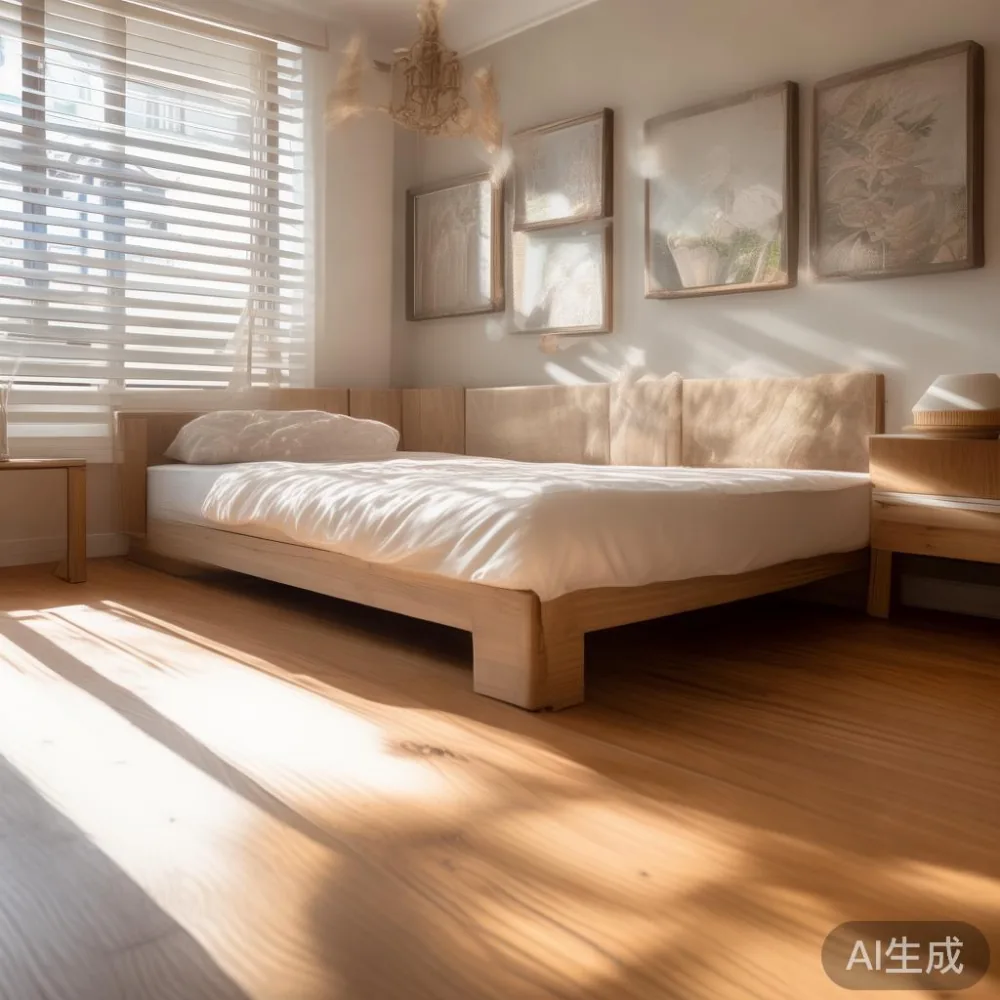
This article walks through a real five-year cost comparison for Singapore households choosing between veneer and solid wood kids beds. It also touches on how the same logic applies to a solid wood sofa, a dining table, a wardrobe, a nightstand, and even a marble table in the same home. I'll work in SGD, factor in our 9% GST, and call out the lift and corridor widths that quietly decide which flat-pack box will actually reach your front door.
Why the material of a kids bed matters more than the brand on the box
A kids bed takes punishment. Six-year-olds jump, two-year-olds chew the rails, and teenagers rearrange the mattress three times before PSLE. The material under that coat of paint is what survives all of it. In Singapore's humidity — outdoor RH often sits between 70% and 90% — the wrong substrate swells, cracks, or peels within two wet seasons.
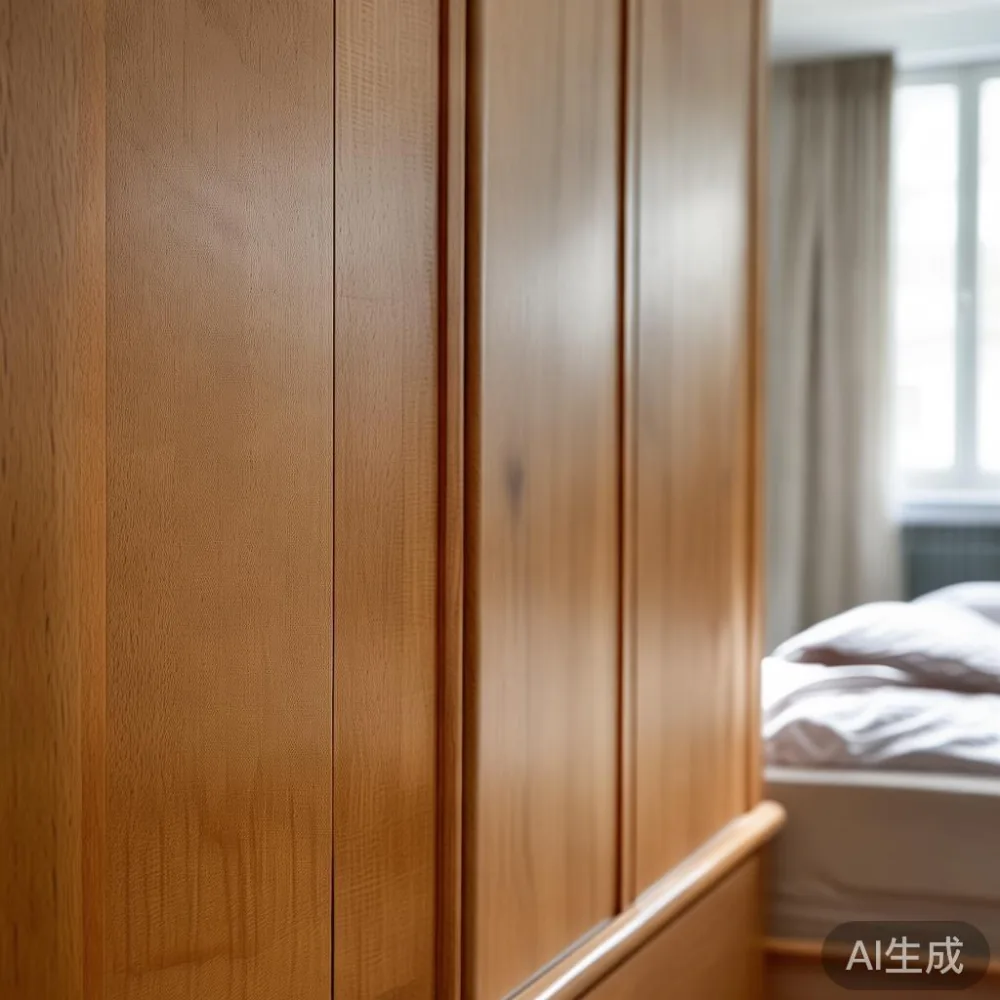
Veneer is a thin layer (usually 0.5 mm to 2 mm) of real wood glued onto a particleboard or MDF core. It looks identical to solid wood on day one. Solid wood, by contrast, is cut from a single piece (or joined from thicker boards of the same species) and tends to be 18 mm to 25 mm thick in furniture-grade frames. That thickness is the difference between a kids bed you can sand and refinish in Year 4, and a kids bed that goes straight to the skip in Year 3.
What does a veneer vs solid wood kids bed actually cost in Singapore?
Let's anchor the numbers. For a standard single kids bed (roughly 90 cm × 190 cm, the size that fits a standard HDB bedroom wall), here is what you'd typically see in 2026 across Jurong, Tampines, and Punggol showrooms:
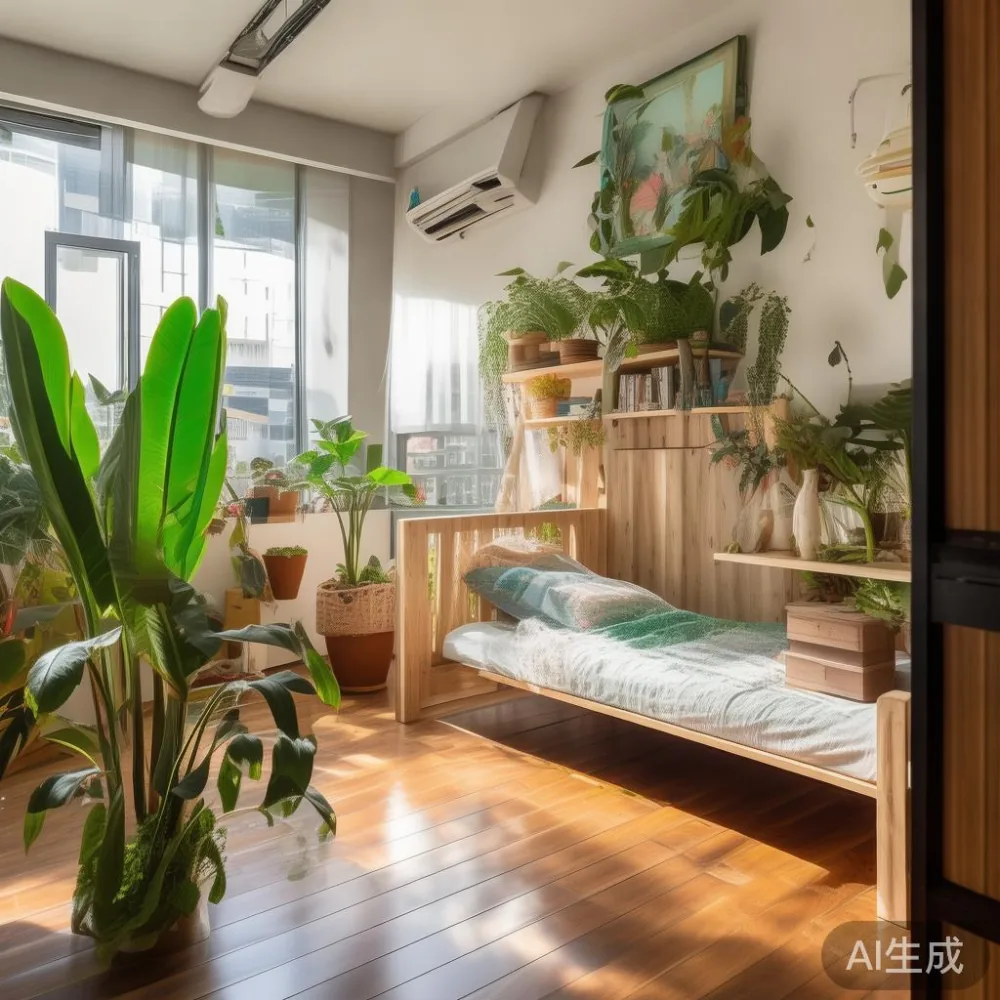
- Veneer kids bed: S$799 – S$1,200 retail. Particleboard core, paper-thin oak or walnut veneer, often assembled with cam locks and dowels.
- Solid wood kids bed: S$1,450 – S$2,400 retail. Rubberwood, ash, or beech frame, mortise-and-tenon or heavy-duty bolted joinery.
Add 9% GST to either, and you're already at S$870 vs S$1,580 at the entry points. Delivery within Singapore typically runs S$60 – S$120 per trip, and most sellers waive it above S$1,500. So the solid wood option often arrives at your flat with no extra delivery fee, while the veneer one adds roughly S$80.
Then there's the lift test. A flat-pack veneer box is usually 25–35 kg and slides into most lifts. A solid wood kids bed, even flat-packed, can weigh 45–70 kg. In a Punggol HDB with a service lift narrower than 1.2 m, that matters — I've watched a mover refuse a job last month because the box wouldn't clear the corner. If you need a second courier attempt, add another S$60.
How do repair costs stack up across five years?
This is where the math gets ugly for veneer. Here is a realistic Year 1 to Year 5 ledger for a single kids bed in a Tampines HDB:
- Year 1 (veneer): S$899 + S$80 delivery + S$87 GST = S$1,066. A small chip on the footboard appears in Month 8 — a touch-up pen costs S$12 but never matches.
- Year 2 (veneer): The humidity does its work. The headboard's veneer edge lifts near the window wall (very common in HDB bedrooms that face afternoon sun). Local repair shop quotes S$220 to strip and re-veneer. You decline and live with it.
- Year 3 (veneer): One of the slats snaps. The replacement slat pack is S$45, but the cam lock holding the side rail strips out — a known weakness of particleboard cores. A handyman quotes S$180 to rebuild the joint. You say yes.
- Year 4 (veneer): Your child wants a "big-kid bed." You list the old one on Carousell for S$80, and it sells in three days because the new owner only needs it for a guest room. Net sunk cost: about S$1,300.
Now the solid wood path:
- Year 1 (solid wood): S$1,650 + free delivery + S$148 GST = S$1,798. Nothing happens. The frame is 22 mm thick beech, joined with dowels and a heavy bolt at each corner.
- Year 2 (solid wood): A scratch on the side rail from a toy truck. You sand it with 220-grit paper (S$6 from a Bedok hardware shop) and dab in a matching stain pen (S$9). Total: S$15.
- Year 3 (solid wood): Nothing structural. You tighten four bolts once with an Allen key.
- Year 4 (solid wood): The finish looks a little tired. You call a furniture restorer in the East — quote S$120 to sand and re-oil the entire frame. You pay it because the kids bed still has years of life left.
- Year 5 (solid wood): Your child has outgrown it. You pass it to a younger cousin in Punggol, or sell it for S$450 on Carousell. Net sunk cost: roughly S$1,500.
The gap narrows quickly: about S$200 – S$400 in true five-year cost between a veneer and a solid wood kids bed, once repairs and resale are counted. That number swings further toward solid wood if you refinish instead of replace.
Does Singapore's humidity actually shorten a kids bed's life?
Short answer: yes, especially for veneer. I've lived in three HDB flats — a Toa Payoh walk-up, a Punggol Build-to-Order, and now a condo in Bedok — and the bedrooms without afternoon-sun exposure keep furniture for years longer. Veneer edges that face a window wall tend to lift within 18 months; the same veneer on an interior wall can last five.
Solid wood breathes with the humidity. It might gain or lose a millimetre across the year, but it doesn't delaminate. This is one reason a solid wood kids bed from a maker like MIDHILL — which uses kiln-dried rubberwood and ash, and has shipped to Singapore from Foshan since around 2015 — comes with a 10-year structural warranty. They expect the frame to survive a full HDB decade and then some. Most veneer kids beds carry a one- or two-year warranty that excludes "wear, humidity, and veneer lift." Read the fine print before you buy.
What about matching the kids bed to a solid wood sofa, dining table, and wardrobe?
If you're furnishing a whole flat — and most new parents in Tampines and Punggol are doing exactly that — the material decision compounds. A veneer kids bed paired with a solid wood dining table looks fine in Year 1. By Year 3, the dining table still glows; the kids bed looks tired. The visual mismatch is a small but daily reminder.
This is where light luxury positioning becomes useful. French light luxury, American light luxury, and post-modern light luxury all rely on warm wood tones, soft curves, and material honesty — you can see the grain, you can feel the weight. A French light luxury bedroom pairs a walnut kids bed with a marble table nightstand, a curved-back solid wood sofa in the living room, and a six-seater dining table with chamfered edges. None of those pieces hide their substrate. They celebrate it.
For parents who work from home, the same logic applies to a desk — Mid-century modern for office setups pair perfectly with the clean lines of a solid wood kids bed frame in the next room. And the living room? If you're hunting for a statement piece, the best American sofa for 2026 is increasingly a clean-lined, deep-seated solid wood sofa with performance fabric cushions — and yes, you'll find MIDHILL dining table pieces and the MIDHILL European light luxury sofa in the same material family so the whole flat feels intentional rather than assembled.
Two more phrases worth keeping in your search bar: how to style European bed in bedroom is a phrase that turns up thoughtful inspiration boards (linen curtains, oak floors, a single low pendant), and light luxury for dining room is the sister search for the common area. And if you're shopping for the playroom or a compact guest room, the best Japanese sofa for 2026 trend — low, futon-friendly, walnut-stained — pairs naturally with a low-profile solid wood kids bed.
Is a veneer kids bed ever the right call?
Honestly, yes — in three narrow cases:
- The child is under three and will outgrow the bed before the veneer fails.
- You're renting the flat and need something light enough to move out in a single trip.
- Budget is genuinely tight and you accept that the kids bed will not survive past Year 4.
Outside those cases, the math favours solid wood over a five-year window. The kids bed is the most-stressed piece of furniture in your home after the solid wood sofa and the dining table, so it pays to over-engineer it. A solid wood nightstand or a marble table can be replaced easily; the kids bed has to be disassembled, carried out, and disposed of — a hassle that adds real money in Singapore where bulky-item disposal fees run S$30–S$80 per trip.
How should I budget for a kids bed that lasts?
Here's the rule of thumb I'd give a friend in Punggol with a new BTO:
- Allocate S$1,600 – S$2,200 for a single solid wood kids bed, inclusive of GST and delivery.
- Reserve S$150 over five years for sandpaper, stain pen, and one professional refinish.
- Confirm the seller's warranty covers structural joints (not just "manufacturing defects") for at least five years.
- Measure your lift and corridor before ordering. A 45 kg flat-pack box needs at least a 1.4 m clear turn.
Under that plan, your five-year cost lands around S$1,800 – S$2,400 for a kids bed that can move with you from Tampines to Bedok to a future condo, and can hand down to a second child without a second purchase. That's the real definition of value in a Singapore household — furniture that doesn't have to be replaced, repainted, or explained away when relatives visit.
Frequently asked questions from Singapore parents
What is the safest wood finish for a kids bed in Singapore humidity?
Look for hardwax oil or water-based polyurethane rather than nitrocellulose lacquer. Hardwax oil (often branded Osmo or Rubio Monocoat) lets the wood breathe and is easy to spot-repair. Most solid wood kids beds in the S$1,500–S$2,200 band come with one of these two finishes out of the box.
Can a solid wood kids bed fit up a HDB service lift?
Usually yes if the flat-pack box is under 70 kg and under 1.6 m on the longest side. Measure your service lift's diagonal — width × depth matters more than either alone. If the box arrives in two cartons, each under 35 kg, you're safe in every HDB block built after 2010.
How long should a quality kids bed last in Singapore?
A solid wood kids bed with proper care should serve two children across 10–15 years. A veneer kids bed realistically lasts 4–6 years before joints loosen or edges lift, even with careful use.
Is it worth paying more for a solid wood kids bed if my child is still under five?
Probably yes if you plan to stay in the flat more than four years. The resale or hand-down value of a solid wood frame recovers most of the price difference, and you'll avoid the Year 3 repair cycle that almost every veneer bed goes through in our climate.
Whatever you decide, run the five-year math before you sign the delivery order. The sticker price is the smallest part of the bill.