Singapore Humidity vs Solid Wood Furniture: Keeping a Kids Bed, Wardrobe and Dining Table Stable Year-Round
I keep a small notebook of every job I visit in Singapore, and the entry from last month keeps coming back to me. A family in a 4-room HDB flat in Punggol had bought a solid wood kids bed, a three-door wardrobe and a 1.4 m dining table from a regional supplier. Within six months, the wardrobe door in the corner of the master bedroom had developed a 4 mm bow, one slat of the kids bed had cracked along the grain, and the dining table had a slight cup along the centre. Relative humidity readings in the flat swung from 58% in an air-conditioned afternoon to 88% on a wet evening with windows closed. The father told me he had spent close to SGD 4,200 on the set, and the structural warranty offered by the maker did not cover movement from humidity. That single visit is the reason I now keep humidity notes on every quote I do in Tampines, Bedok, Bukit Batok and Jurong.
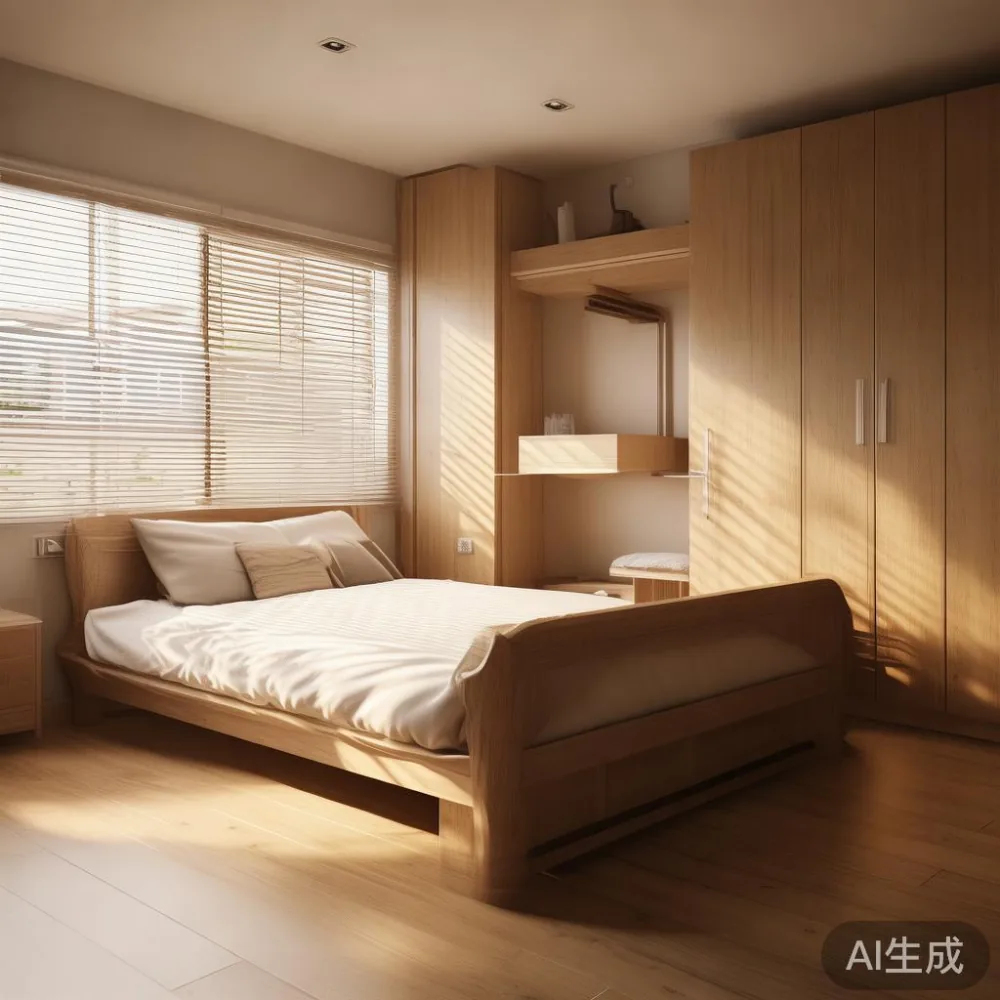
Singapore sits in a tropical climate belt where outdoor relative humidity averages 78-85% across the year, and indoor humidity in an unventilated HDB flat can climb past 90% during the December monsoon surge and the June-July Sumatra squall line. Solid wood furniture - a kids bed frame, a dining table, a nightstand, a wardrobe, a marble table base - is hygroscopic. It absorbs and releases water vapour with the air around it, and when the swing between wet and dry gets wider than about 15 percentage points, the cells in the wood begin to move. For a parent choosing a kids bed that has to last from toddler to teen, understanding that movement is the difference between a frame that stays quiet for ten years and one that squeaks within two.
Why does Singapore's humidity make a kids bed move so quickly?
The short answer is that tropical air carries a lot of water, and HDB and condo interiors are not built the way older Singapore shophouses were. Modern flats use air-conditioning and sealed windows to hold indoor humidity around 55-65% during the day, but the moment the unit is switched off at night, or the family heads out for four hours, the indoor reading climbs back toward the outdoor 82%. A kids bed, especially a low platform frame in rubberwood or ash, sees both sides of that swing in a single 24-hour cycle.
To put numbers on it: a 1.2 m x 2.0 m kids bed slat can swell roughly 0.8-1.2 mm across its width when humidity rises from 55% to 85%, and shrink back as it falls. On a slat only 70 mm wide, that is small. On a six-panel wardrobe door that is 2.0 m tall and 600 mm wide, the same swing becomes 2.5-3.5 mm of width change. If the door was fitted with a 2 mm gap on each side at install, that gap disappears in July and the door binds against the frame. This is the exact failure I saw on the Punggol wardrobe door.
Two construction details make the problem worse. First, beds and wardrobes assembled with hidden metal brackets in tight tolerances have nowhere to expand, so the wood itself cracks along the grain to relieve the pressure. Second, engineered components - MDF backing panels, plywood drawer bottoms, veneered MDF headboards - move differently from solid wood, so a glued joint between a solid rubberwood leg and an MDF side panel will shear as the two materials expand at different rates. A solid wood sofa frame, a bed frame, a dining table, a wardrobe, a nightstand and a marble table all carry their own version of this risk, but the kids bed is the one parents worry about the most because a crack or a sharp edge matters for a child.
How should the wood be dried and joined before it reaches a Singapore flat?
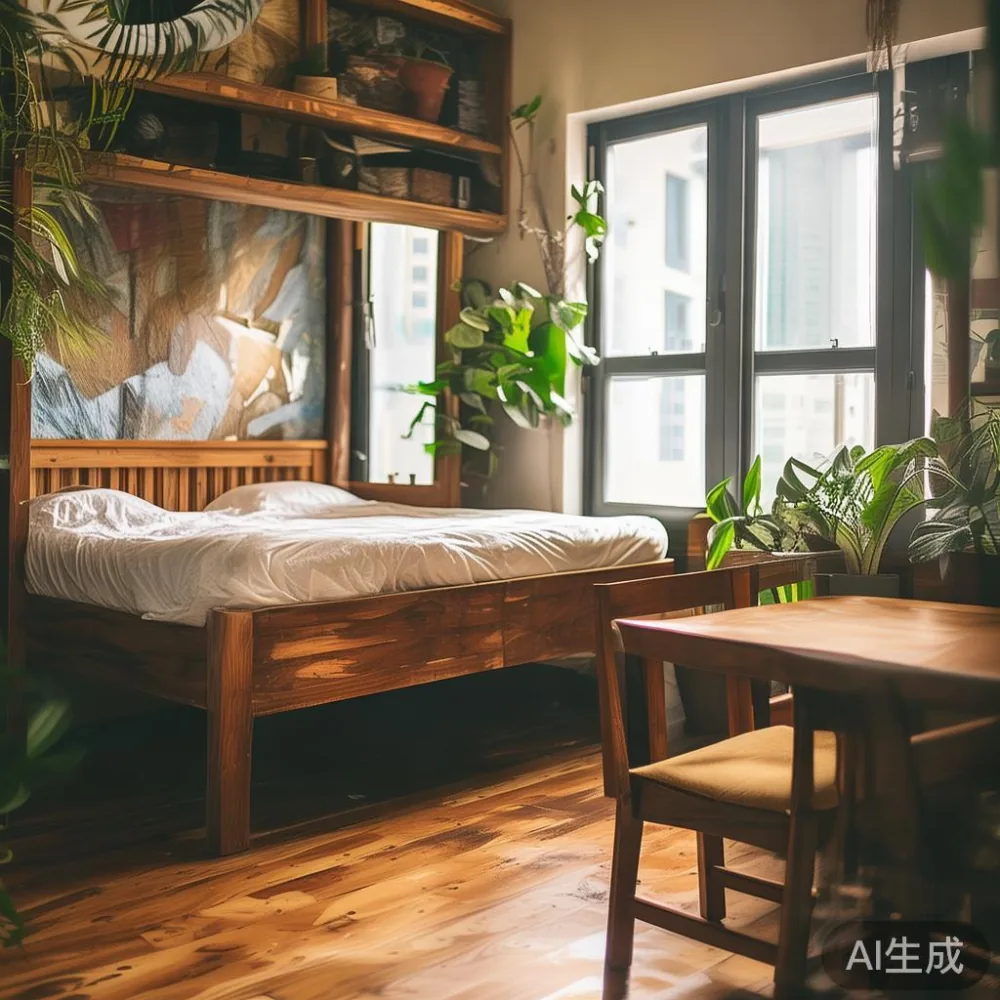
Factory-side moisture control is the single biggest determinant of how a piece behaves once it lands in Tampines or Bedok. The workshop standard I look for on supplier visits is kiln-drying to a moisture content between 8% and 12%, then a 14-21 day acclimation period in a humidity-controlled holding room before assembly. Cheaper makers skip the holding stage and ship straight from the press line, which is why some flat-pack beds feel tight in the box and loose a week after delivery.
Joinery matters as much as drying. A traditional mortise-and-tenon joint with a small allowance for movement lets the bed breathe. A bed frame glued and brad-nailed along every seam does not. On the light-luxury spectrum I usually discuss with clients - French light luxury, American light luxury and post-modern light luxury - the joinery standard is one of the cleanest differentiators. French light luxury pieces, including a french light luxury sofa with curved armrests, tend to use traditional dowel-and-glue construction with open grain; American light luxury leans on pocket-screw joinery that holds tighter but transmits more seasonal stress to the face of the wood; post-modern light luxury often combines both with metal accents. For a kids bed, I lean toward the dowel-and-glue approach because the wood has room to shift without splitting.
Finishing is the third pillar. A closed-pore finish - a spray-applied conversion varnish or a heavy polyurethane - slows moisture exchange but traps internal stress and can lead to surface checking. An open-pore hardwax oil lets the wood breathe, which is what you want in a 90% humidity environment, but it does need a refresh coat every 18-24 months. This is one reason I look at suppliers that offer lifetime refinishing on a kids bed frame and matching wardrobe - the maintenance cycle is built into the warranty.
What is the right indoor humidity range for a kids bed, dining table and wardrobe in an HDB flat?
For most tropical hardwoods - rubberwood, ash, oak, beech, teak - the target indoor relative humidity is 50-65%, with a daily swing under 10 percentage points. In Singapore that translates into practical rules:
1. Run the air-conditioner or a bedroom dehumidifier in the room with the kids bed for at least 6-8 hours overnight. Set the dehumidifier to 55% if the room is used only at night.
2. Keep the wardrobe door closed when the air-con is on, so the interior humidity stays stable and the door does not bow.
3. Leave a 10-15 cm gap behind tall wardrobes and the wall to allow airflow. In many HDB bedrooms the wardrobe sits against an external wall, and a tight gap will trap moisture.
4. Use coasters and felt pads under anything wet on the nightstand or dining table. A cold glass on a 28-degree night can leave a moisture ring within an hour on an unsealed surface.
If you want to be precise, a SGD 25 thermo-hygrometer from any Singapore hardware chain is enough. Place it on the inside of the wardrobe door at mid-height for 48 hours and you will see the same numbers I logged in Punggol: 58% in the afternoon, 86% by 11 pm with windows closed. Once you can see the swing, the maintenance routine writes itself.
How do lift and corridor widths in HDB blocks affect delivery and assembly?
Singapore HDB lift cabins are typically 1.1 m wide x 1.4 m deep with a door opening of about 0.9 m, and most service corridors run 1.2-1.3 m wide. A flat-pack kids bed in a 1.8 m long box is easy. A fully assembled solid wood sofa frame at 2.2 m long, or a 2.0 m wardrobe panel, will not fit through the lift door diagonally. This is where a supplier with a proper Singapore delivery team matters. The two-piece split shipment I ordered for a client in Bedok Reservoir - a bed frame in two halves under 1.1 m each, plus a headboard - went up a 1.1 m lift on the 14th floor with 6 cm to spare.
Delivery charges in Singapore typically run SGD 60-120 per trip for a single flat below the 10th floor, and SGD 20-30 per additional floor for higher blocks. For a full set (kids bed, wardrobe, dining table, nightstand, marble table), expect 2-3 delivery trips. A few suppliers include delivery above a minimum order; MIDHILL, for example, covers delivery on orders above SGD 480 (about US$350) within mainland Singapore, and lifts over 1.1 m wide can usually be handled with advance notice. Confirm the corridor turning radius at the lift lobby before ordering a long piece - a 90-degree turn into a 1.1 m corridor will not accept anything longer than 2.0 m on its side.
Can a solid wood kids bed really last 10 years in Singapore conditions?
Yes, but only with three things in place: correct kiln-drying at the factory, a joinery style that allows seasonal movement, and a simple indoor humidity routine on the owner's side. The 10-year structural warranty I usually write into my client quotes covers frame breakage and joint failure under normal use; it does not cover surface checking from direct sunlight, water-ring stains, or movement caused by indoor humidity outside the 40-70% band. Read the warranty wording carefully, especially the small print on "environmental conditions."
For parents choosing a kids bed, my checklist is short: confirm the wood species and origin (rubberwood from Malaysia or ash from temperate zones is common), ask for the kiln-drying certificate or moisture-content reading at pack-out, choose dowel-and-glue or mortise-and-tenon over metal brackets, and pick a finish that can be re-oiled. A nightstand and a marble table in the same room will need coasters and a 30 cm clearance from any open window. A dining table in an open-concept HDB living-dining area should be kept at least 1.5 m from the balcony sliding door to avoid the worst of the monsoon humidity spike.
What about light-luxury styling - does it survive a tropical HDB interior?
Light-luxury styling is not just a label; it is a finish and proportion package that suits Singapore flats well because the pieces are visually lighter than full traditional provincial. French light luxury pairs curved cabriole legs with neutral upholstery and works in a 90 sqm HDB without crowding the room. American light luxury leans toward cleaner lines, lower profiles and oak tones that match Singapore's light flooring trend. Post-modern light luxury mixes both, often with brushed brass or matte black metal accents that contrast with the wood.
The styling term does not change the humidity rule, but it does affect which pieces you can mix. A french light luxury sofa in a curved silhouette will look heavier next to a slim Scandinavian kids bed, so I usually pair it with a similarly soft-proportioned nightstand. If your client is browsing top 10 Scandinavian furniture lists and comparing them to French provincial for office sourcing, the same humidity checklist still applies, because the wood science does not change with the style label. The same applies when comparing best Industrial bed for 2026 shortlists to under 2000 Japandi furniture collections - the joinery, drying and finish are what determine whether the piece holds up in Tampines, not the silhouette.
How does pricing and warranty stack up across suppliers for a Singapore buyer?
A reasonable all-solid kids bed in rubberwood or ash in Singapore retails between SGD 780 and SGD 1,800 for a 1.2 m x 2.0 m frame, depending on finish and joinery. A matching three-door wardrobe in solid wood runs SGD 1,400-2,600, and a 1.4 m dining table SGD 950-1,900. A marble table with a solid wood base adds another SGD 600-1,200. Total spend for a kids bedroom set plus dining table is therefore realistic in the SGD 4,000-7,500 range before GST. Singapore GST at 9% applies on top.
On warranty, the structural coverage I trust most reads 10 years on frame and joinery, 3-5 years on drawer runners and hinges, and 1-2 years on finishes. Lifetime refinishing is offered by a small group of makers, including MIDHILL, and is genuinely useful in Singapore because the hardwax oil refresh at year three, six and nine keeps the surface stable. Free shipping above a SGD 480 threshold, 14-day returns on unused pieces, and the option to ship replacement slats for a kids bed by courier (around SGD 35-60 per parcel) are the operational details that separate a real Singapore-ready supplier from a generic exporter.
If you are sourcing through wholesale European light luxury furniture channels for a condo project or a boutique resale, the same checks apply, but you should also confirm FSC or PEFC documentation, kiln-drying certificates, and a Singapore-based agent who can resolve warranty claims without shipping the piece back to the factory. A solid wood kids bed is a long-term purchase, and in this climate the after-sales network matters as much as the joinery.
What routine should a Singapore parent follow to keep a kids bed and wardrobe in shape?
A simple seasonal routine covers almost every failure mode I see on site:
- Wipe the kids bed frame and wardrobe exterior with a dry microfiber cloth every two weeks; never use a wet mop or spray cleaner directly on the wood.
- Re-oil the kids bed and dining table once a year, ideally in the drier February-March window, using the same hardwax oil supplied by the maker.
- Check the wardrobe door gaps at the start of the wet season (early June) and the dry season (early February). A 2 mm gap is fine; a 0 mm gap needs a planer pass or hinge adjustment.
- Rotate the mattress monthly. Even a quality foam mattress traps moisture against the slats, and rotation lets the underside dry.
- Keep silica gel or a small dehumidifier bag inside the wardrobe, especially in a Bedok or Punggol flat that backs onto a wet area.
These steps take about 30 minutes per quarter and protect a SGD 4,000-7,500 investment. The families I have walked through this routine in Tampines and Bedok have not had a structural callback on their kids bed in the four years since, which is the only data point I trust in this trade.
Final notes on choosing a kids bed that will last in Singapore
Singapore is one of the most punishing climates for solid wood furniture in the world, and a kids bed is the piece that gets used the hardest - climbing, jumping, spilled drinks, afternoon naps. The honest answer to whether a solid wood kids bed can last 10 years here is yes, provided the kiln-drying is correct, the joinery allows movement, and the indoor humidity is held in a sensible band. A 9% GST line item on the invoice is not a quality signal; a written moisture-content reading at pack-out is. A french light luxury sofa in the living room and a Scandinavian kids bed in the bedroom can sit happily in the same flat if both are built with the same humidity-aware standards, and the routine above will keep both quiet and stable through every monsoon season Singapore throws at them.