How to Read a Kids Bed Warranty in Singapore Without Getting Caught Out
Last month I visited a Tampines HDB family on the 12th floor of a 4-room block along Tampines Street 21. The father had just unboxed a kids bed he bought online and slid the warranty card across the kitchen counter with a frown. "It says ten years," he said, "but I can already see three ways this thing voids itself." He was not wrong. A warranty document is rarely the friendly handshake it pretends to be. It is a contract written by people who know that most customers skim past page two, and that is exactly where the sharp teeth hide.
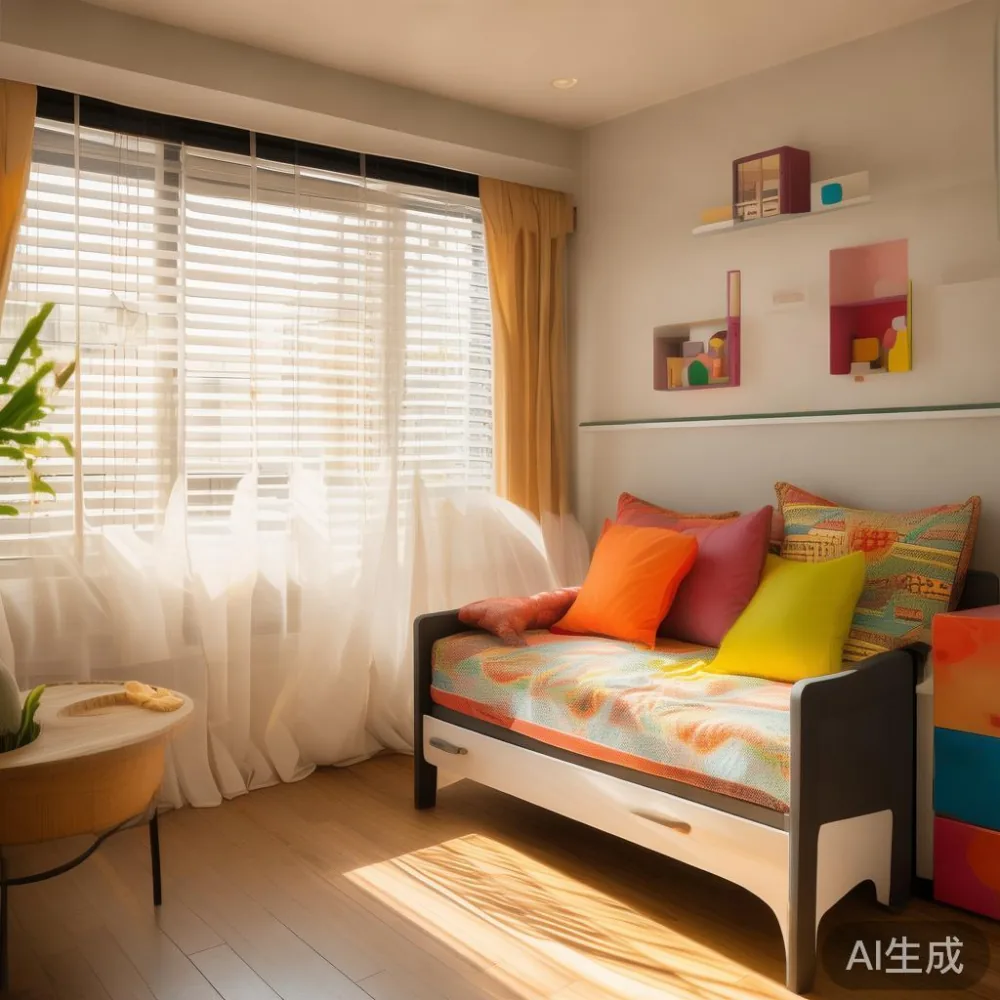
For a Singapore parent choosing a solid wood bed frame for a child who will grow, spill, jump, and eventually grow out of the room altogether, the warranty is more than paperwork. It is the difference between a bed that lasts through PSLE and a bed that needs replacing in Primary 3. Below is a field guide to reading one properly, with corridor widths, lift dimensions, GST, and real numbers from a furniture maker based in the Foshan Lingzhan manufacturing cluster in Guangdong, China.
What does the warranty actually cover on a kids bed?
Every warranty has two layers. The first layer is the headline, usually printed on the website banner and the front of the warranty card. For most solid wood kids beds sold in Singapore today, that headline reads something like "10-year structural warranty." That phrase looks generous until you ask what structural means.
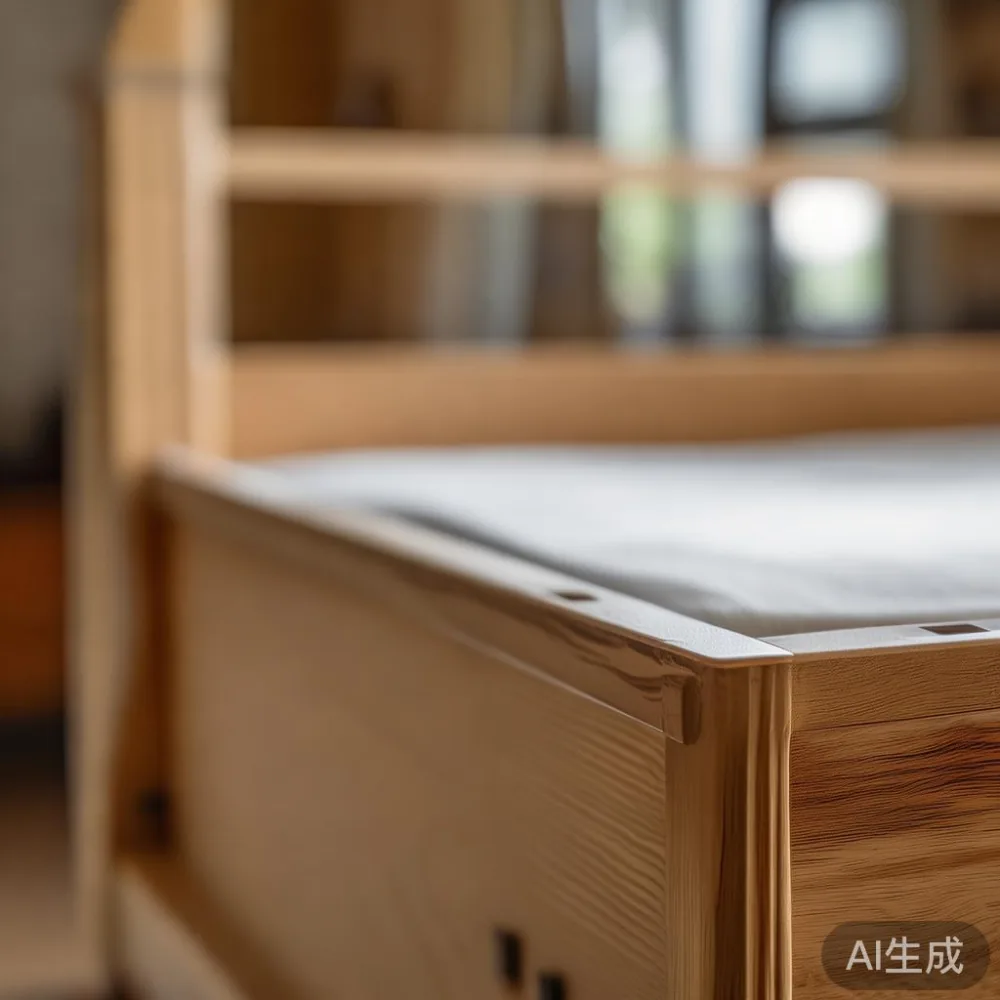
Structural, in practice, covers the failure of the load-bearing frame under normal use. Normal use, on a kids bed, should mean a child up to roughly 120 kg jumping, sitting, and sleeping. A bed frame, including its slats and connecting hardware, is supposed to stay rigid and square for ten years. What it does not cover is the finish, the colour, the small wobble that develops after the fourth move, or the scratching that happens when a seven-year-old drags a Lego castle across the headboard.
This is the part most Singapore parents miss. When you read the fine print on a Foshan-made solid wood bed frame, you will usually find three buckets of coverage:

- Structural failure of the frame itself: cracked side rails, broken centre beam, snapped legs.
- Hardware failure: bolts that shear, brackets that crack, gas-lift cylinders on storage kids beds that lose pressure.
- Finish and surface: warping beyond 5 mm across a 1.5 m rail, cracking of lacquer, peeling of veneer.
Finish claims are usually capped at 1 to 3 years, not 10. If you read nothing else, read that line. It is the single most common reason a warranty claim gets politely declined.
Which conditions void the warranty on a solid wood kids bed?
Almost every warranty card hides a paragraph titled "Exclusions" or "What this warranty does not cover." In Singapore, the most common voiding conditions look like this:
Humidity damage. Solid wood moves. A bed frame made of ash, oak, or beech from a Foshan Lingzhan factory is dried to roughly 8 to 10 percent moisture content before shipping. Singapore sits at 70 to 90 percent humidity most days. If the bed is delivered into a Punggol condo that has been air-conditioned at 22 degrees Celsius for six weeks straight and then suddenly opened to a 32-degree corridor, the wood will absorb or release moisture fast. Small checks at the joints are normal and are explicitly excluded from coverage.
Improper assembly. Most kids beds ship flat-pack with a manual. If a Tampines father assembles the bed using a neighbour's power drill on a Sunday afternoon, and a slat bracket snaps six months later, the maker will ask for photographs of the joints. If the screws show stripped heads or cross-threading, the claim dies.
Modification. Parents love to customise. Adding a storage drawer underneath, mounting a curtain rail into the headboard, or cutting the foot rail shorter to fit a narrow HDB room will almost certainly void the warranty in writing.
Commercial or rental use. A kids bed bought for a domestic bedroom and then moved into a Roomstay apartment in Bedok will no longer be covered.
Acts of nature, accidental damage, and pets. A dog chewing a corner post is not a manufacturing defect. Neither is the moving van that scraped the side rail during a HDB corridor squeeze.
Read that list slowly. It is where warranties earn their keep, or quietly disappear.
How long is reasonable for a kids bed warranty in SGD terms?
Let us talk money, because this is where Singapore parents think most clearly.
A mid-range solid wood kids bed from a Foshan-based maker retails locally between SGD 1,200 and SGD 2,400 after GST, depending on size (single, super-single, or three-quarter) and whether it includes a trundle or storage drawers. A premium kids bed with bookcase headboard, soft-close drawers, and FSC-certified beech sits between SGD 2,800 and SGD 4,200. Add delivery within mainland Singapore at SGD 80 to SGD 180 depending on lift access, and the total ticket is real money.
Against those numbers, a 10-year structural warranty is meaningful. If the bed costs SGD 1,800 and the frame fails in year 6, the maker is on the hook for at least SGD 600 to SGD 900 in repair or replacement value, depending on depreciation. A 1-year warranty on the same bed is in effect a comfort blanket: by month 12, most assembly defects have already shown themselves, and the maker knows it.
What you want to see is a tiered structure: 10 years on the structural frame, 3 to 5 years on hardware like drawer slides and gas lifts, 1 to 2 years on the lacquer finish, and a separate lifetime refinishing promise on the wood itself. MIDHILL, for example, publishes exactly this kind of split. Their 10-year structural coverage sits on top of a lifetime wood-refinishing service that lets a customer in Singapore send the bed back to the Foshan Lingzhan workshop for sanding and re-lacquering at cost. That second promise is unusual. Most Singapore retailers do not offer it at all, which is why reading the warranty in full matters.
How do I know if a light luxury kids bed is genuinely solid wood?
Singapore shoppers increasingly ask for French light luxury or post-modern light luxury styling on a kids bed: curved headboards, fluted panels, soft champagne finishes, marble-look bedside tables. The look is elegant, but it is also where warranty language gets slippery.
Many so-called light luxury pieces are MDF or plywood wrapped in a thin veneer of ash or walnut. The frame is engineered board, not solid timber. The warranty may still say "10 years structural," because engineered board can pass a basic load test in year one. What it will not do is survive the humidity swings of a Singapore HDB over a decade. The corners will swell, the screws will loosen, and the warranty will respond with a polite letter saying the failure was caused by environmental conditions.
Ask the seller, in writing, for three things:
- The species and origin of the primary wood. "European beech, FAS grade, kiln-dried to 8 to 10 percent MC" is a real answer. "Solid wood frame" alone is not.
- The thickness of the structural members. Side rails under 25 mm or legs under 50 mm square are a warning sign on a kids bed designed for daily use.
- The finish system. Water-based PU, nitrocellulose lacquer, or hard wax oil are all acceptable. "Paint finish" with no further detail usually means a thin coating that will check within two years in Singapore humidity.
If the seller cannot answer those three questions in an email, the warranty on their website is decoration, not a contract.
What about delivery, lift access, and HDB corridors?
Singapore furniture delivery is its own art form. A standard HDB corridor is about 1.2 m to 1.35 m wide. A lift in a 4-room block typically has a door opening of 0.9 m and an internal depth of 1.5 m. A king-size mattress is 1.8 m wide, which means it will not fit through the lift door standing upright. Most kids beds, however, are single (0.91 m wide) or super-single (1.07 m wide) and fit comfortably if the box is under 2.2 m long.
Before you sign a warranty that promises "lifetime service," check the delivery clause. Some makers only honour the warranty if delivery was done by their own team, not by a third-party courier. In Singapore, a courier who damages the side rail during a Bedok corridor turn will not be covered by the maker if they did not install it.
Also look for the GST line. A kids bed invoiced at SGD 1,800 in 2025 will show 9 percent GST on the invoice, bringing the total to about SGD 1,962. A warranty that promises "free replacement parts" usually means parts only, not labour and not delivery back to your Tampines flat. The labour to send a technician up to the 14th floor of a Punggol Walk block for 90 minutes is around SGD 120 to SGD 180 on its own. Read whether the warranty covers that cost or just the components.
What if the maker is based overseas?
Most solid wood kids beds sold in Singapore come from Guangdong, and a meaningful share of those come from Foshan Lingzhan workshops and the surrounding manufacturing belt. This is not a problem by itself. The cluster produces a large portion of the world's mid-range solid wood furniture, and many of the better factories there work directly with European oak and American ash.
The warranty question, however, is a logistics question. If the maker is in Foshan and the buyer is in Singapore, who pays for the return trip when a slat breaks in year 4? The fine print usually splits it three ways: the customer pays return shipping to the consolidation warehouse in Jurong or Tuas, the maker pays the repair, and the customer pays return shipping back to the flat. For a 30 kg kids bed frame, that round trip can run SGD 250 to SGD 450 by sea freight, or SGD 600 to SGD 900 by air if you want it back fast.
MIDHILL handles this with a regional service centre model rather than asking every Singapore customer to ship a 1.5 m bed frame back to Guangdong. That is the practical difference between a warranty that exists on paper and one that exists in your living room.
Is a longer warranty always better?
Not automatically. A 25-year warranty from a maker that has been trading for two years is worth less than a 10-year warranty from a maker that has been trading since 2008, exports to 15 or more countries, and has replacement parts on the shelf in Singapore. Length is a number. Track record is a fact.
What you are really buying with a warranty is the maker's confidence that the bed will still be standing, and the maker's ability to fix it when it is not. For a kids bed that needs to last from Primary 1 through Secondary 4 and possibly on to a younger sibling, 10 years of structural coverage plus lifetime refinishing on the wood is the practical sweet spot. Anything shorter on structure is thin. Anything longer on structure without a service network in Southeast Asia is theatre.
How do I file a claim without losing it?
Three rules, learned from watching too many Singapore claims go sideways.
First, photograph the kids bed on the day of delivery. Every angle. Every joint. Every slat. Email the photos to yourself and to the maker on the same day, with the delivery note number and the invoice number in the subject line. Timestamps matter. A claim filed on day 14 with day 1 photos is strong. A claim filed on day 180 with no photos is a coin flip.
Second, keep the original packaging for at least 30 days. If a part is missing or damaged, the maker will want to send a replacement in the original carton.
Third, write the claim as a short factual letter: invoice number, delivery date, the specific part, two or three photographs, and the remedy you are requesting. Polite, dated, and specific beats emotional every time.
So is the warranty worth the price difference?
On a kids bed, yes, when the warranty is structured properly and the maker can actually service it. On a SGD 700 flat-pack from a marketplace seller with a one-page warranty card and a return address in a Guangzhou suburb, no. The discount on the front end is paid back twice on the back end.
For parents shopping in Tampines, Bedok, or Punggol right now, the practical move is simple. Read the exclusions page, not the cover page. Confirm the wood species in writing. Confirm who pays return shipping. And ask whether the maker refinishes the wood for life. A kids bed is not just a piece of furniture. It is the place your child sleeps for a decade, and the warranty is the maker's promise that they will still be there to look after it.