How to Choose the Right Size of Kids Bed for a Singapore Living Room
Choosing a kids bed for a Singapore HDB flat or condo is less about finding a large bed and more about balancing a child’s sleeping needs against the room’s dimensions, lift access, corridor turns, and daily circulation. A 120 cm mattress can suit a child aged 4 to 10 years, but the same frame may look oversized in a compact Tampines flat. In a larger Punggol or Bedok unit, a 140 cm kids bed may create a more comfortable sleeping arrangement without taking over the room. The correct size depends on measured clearances, not age labels alone.
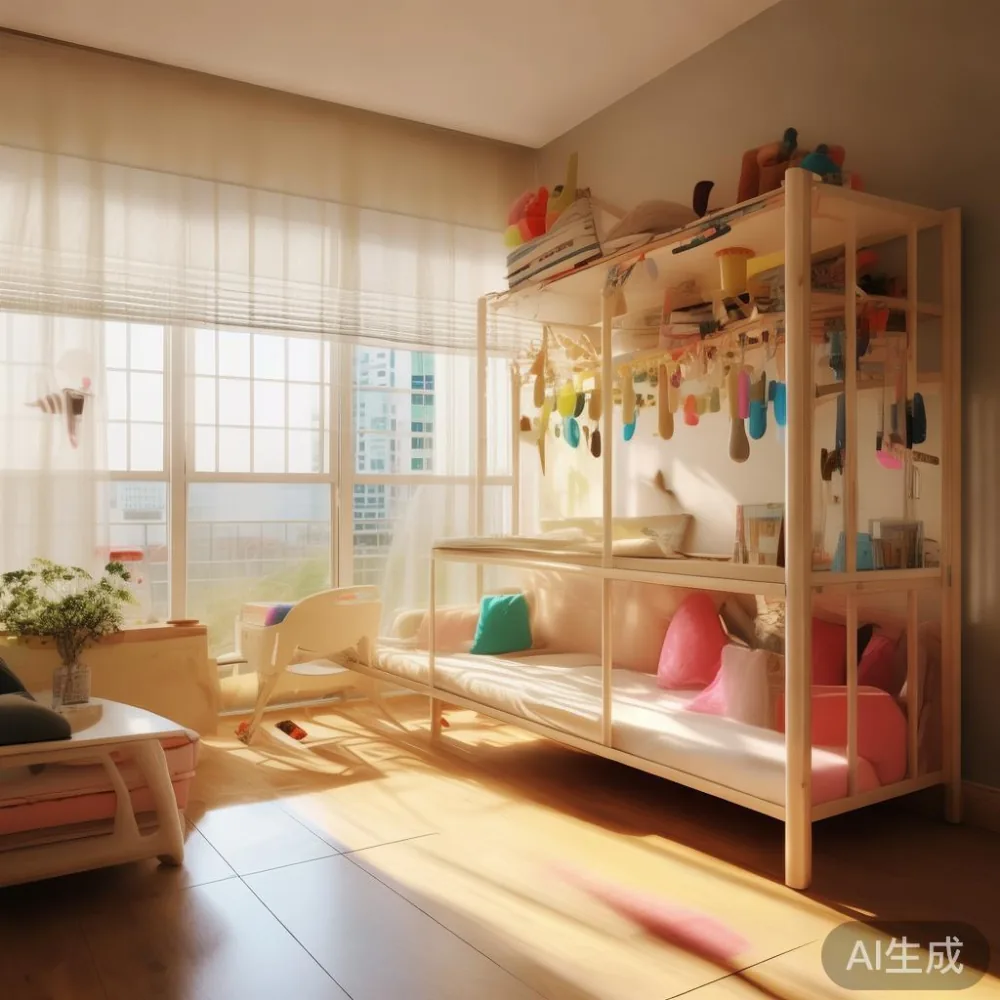
Singapore’s landed properties often have straight living rooms, compact bedrooms, and recessed corners near the lift lobby. Door widths commonly measure 80 to 90 cm, while residential lift cars and corridors can narrow the practical delivery route. For furniture shoppers, a frame that looks manageable online may still be difficult to carry through a common corridor or turn at a stair landing. Planning the route before ordering prevents scratched walls, dismantled frames, and delivery delays.
MIDHILL makes solid wood furniture for homes where material quality, proportion, and long-term use matter. For children’s rooms, a properly scaled kids bed provides the foundation for a French light luxury, American light luxury, or post-modern light luxury interior. The details should feel light, calm, and durable rather than visually crowded.
How much floor space should a kids bed occupy in an HDB living room?
Allow the mattress, frame, and a practical access zone. A 90 cm-wide single needs roughly 100 to 115 cm of wall width once the frame and side clearance are included. A 120 cm bed needs about 130 to 145 cm, while a 140 cm bed generally requires 150 to 165 cm. These figures are planning dimensions rather than fixed room rules, but they help prevent a purchase that leaves less than 60 cm of usable walkway beside the bed.
For a 3 m wide living room used as a child’s sleeping and play area, a 90 cm or 100 cm kids bed can preserve a clear 70 cm or more passage along the opposite side. In a 3.5 m wide room, a 120 cm model may work without making the space feel pinched. A 140 cm frame is more appropriate when the room measures at least 3.8 m across or when the bed is placed against a short wall with sufficient clearance at the foot.
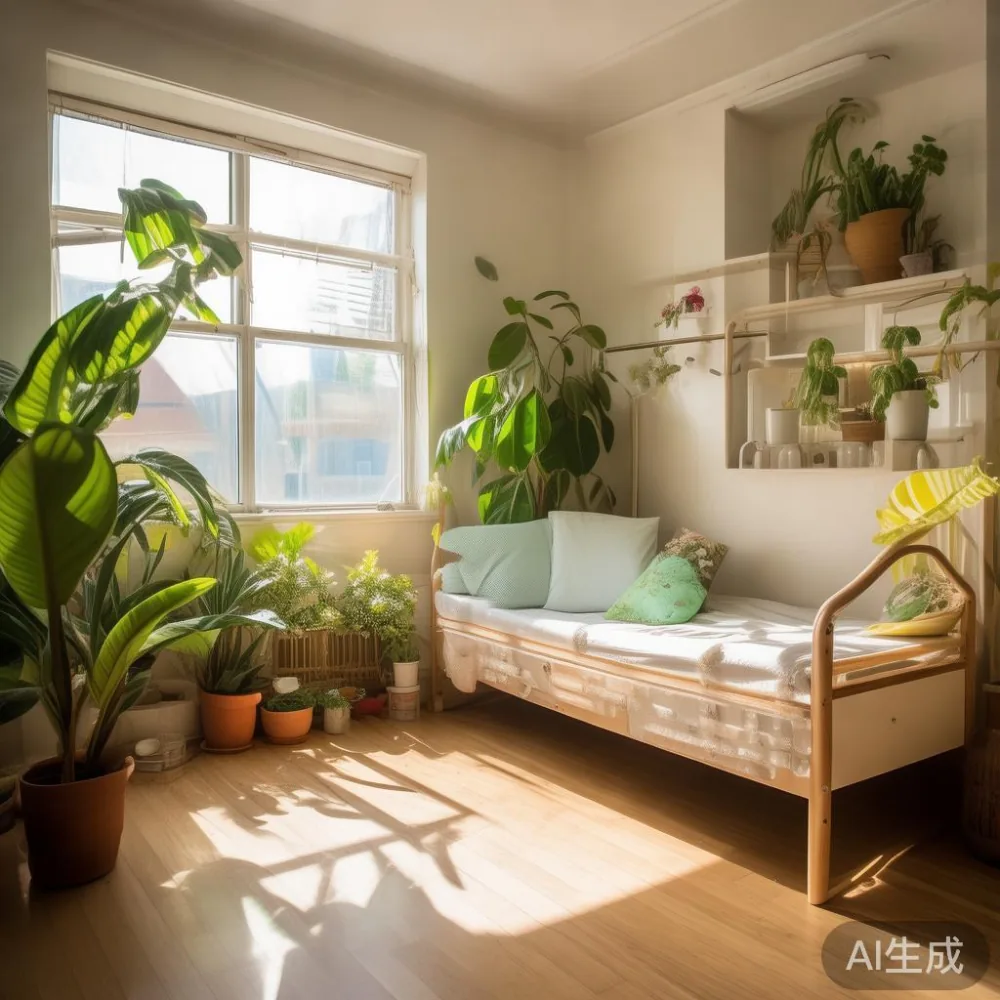
Do not measure only the apparent empty floor. Account for skirting boards, air-conditioning outlets, window frames, light switches, and the position of electrical sockets. Leave at least 30 cm behind the headboard where possible and about 60 cm on one side for a caregiver to sit and help with bedding. If the bed is used daily as a study and play zone, a 90 cm model with an integrated or slim pull-out desk may function better than a larger bed that consumes the entire room.
My colleague visited a family in Tampines last month to check delivery access for a children’s bedroom set. The living room appeared spacious at 3.4 m wide, yet the route from the lift lobby included a 78 cm door and a right-angled corridor. The selected kids bed had to be delivered as two sections, each below 22 kg. Measuring the complete route made the installation straightforward and showed why bedroom dimensions alone were not enough for the decision.
Which kids bed size suits different room widths?
A 90 cm mattress is a sensible starting point for a young child between 4 and 7 years old, depending on height and growth. It usually fits a 2.8 to 3.2 m wide multipurpose room. A 100 cm mattress serves many children aged 6 to 10 years and gives a little more sleeping space without the broad footprint of a 120 cm model. It can suit rooms measuring approximately 3.0 to 3.5 m across.
A 120 cm kids bed is a practical choice for children aged 8 to 12 years and can remain appropriate into the early teenage years. It offers better shoulder and foot room, but the surrounding space should still allow a 60 cm path on at least one side. A 135 cm or 140 cm bed is better considered when the child is already tall, the room has another sleeping zone, or the bed will later be used by an adult. It is a substantial piece for a small HDB room.
Consider the mattress height too. A frame with a finished mattress top between 40 and 50 cm helps a young child climb in and out. A taller 55 to 65 cm design may need a stable step, which uses an extra 30 to 45 cm of floor space. Low-profile solid wood frames also make a room feel visually larger because the floor plane remains visible.
Local humidity around 70 to 85 percent can cause ordinary engineered board furniture to swell or lose stability. Solid wood construction is less susceptible to this movement, although it still needs ventilation and sensible indoor humidity management. When comparing a light luxury bed vs Modern bed, look at frame thickness, joints, slat spacing, and finish rather than relying on a style label.
For shoppers comparing cheap Modern light luxury furniture, quality should be checked through the wood species, hardware, and construction details. A clear finish, supportive slats, rounded corners, and a properly finished edge can give a compact kids bed the refined appearance associated with light luxury without making it delicate.
Will the kids bed fit through the lift, corridor, and doorway?
Measure the route before selecting the bed. Record the internal lift car width and depth, the width of the lift door, every corridor section, and the narrowest doorway. Include door handles, electrical boxes, and turns of 90 degrees. A usable corridor of 100 cm does not guarantee that a rigid 145 cm frame can pass around a corner.
Many Singapore furniture deliveries use modular or knock-down construction. A compact kids bed may arrive as a headboard section, side rails, footboard, slats, and hardware. The largest component should ideally fit within 110 cm wide and 25 cm deep if it must travel through a tight HDB lift. Packed weight should remain below about 25 kg per piece where possible, with two-person handling arranged.
HDB lift lobbies can also have parking restrictions, so the delivery company may need a time slot and a parking permit. Condo residents may need to book a service lift and provide the management office with delivery details. The freight elevator should be checked for internal dimensions, not just its door opening.
These access numbers also matter when adding other furniture. A compact solid wood sofa may work if its largest packaged section passes the same route. A dining table can often be delivered in two top halves, while a nightstand can usually remain assembled only when it is small and light. A marble table needs greater care because its weight and brittle edges make moving it through a tight turn more risky.
MIDHILL offers delivery planning for solid wood furniture, with options that depend on product size, packed weight, and destination. A typical Singapore delivery takes 7 to 14 calendar days after production, while made-to-order pieces may require 30 to 45 days. GST and delivery charges should be shown before payment so the total remains clear in SGD.
How should the bed sit without blocking air-conditioning and windows?
Keep the kids bed away from direct sunlight and air-conditioning airflow. A window can create glare, fading, and uneven heat around the mattress, while a vent blowing directly onto the child can disrupt sleep. Leave 10 to 15 cm below a wall-mounted air conditioner and position the bed headboard where air can circulate naturally.
Place the bed against the longest uninterrupted wall when possible. In a narrow living room, aligning the bed length with the room’s length reduces visual tension. A low headboard under 90 cm can preserve the sense of openness, especially in a Tampines or Punggol flat where the living area may also accommodate a sofa and dining table.
Do not ignore nearby sockets. A child’s reading lamp, charging point, and small shelf are useful, but cables should be secured in clips. Keep portable heaters or humidifiers at least 1 m from the bed and curtains. A bedside clearance of 40 to 60 cm provides a safe place for a glass of water, slippers, and a soft toy without turning the area into a storage zone.
For a shared living room, the bed should not block the main route from the entrance to the kitchen or balcony. Mark the 80 to 90 cm passage required for normal movement, and avoid extending the bed frame into that path. This is more meaningful than maintaining a perfectly square layout around every piece.
What should parents check before ordering a solid wood kids bed?
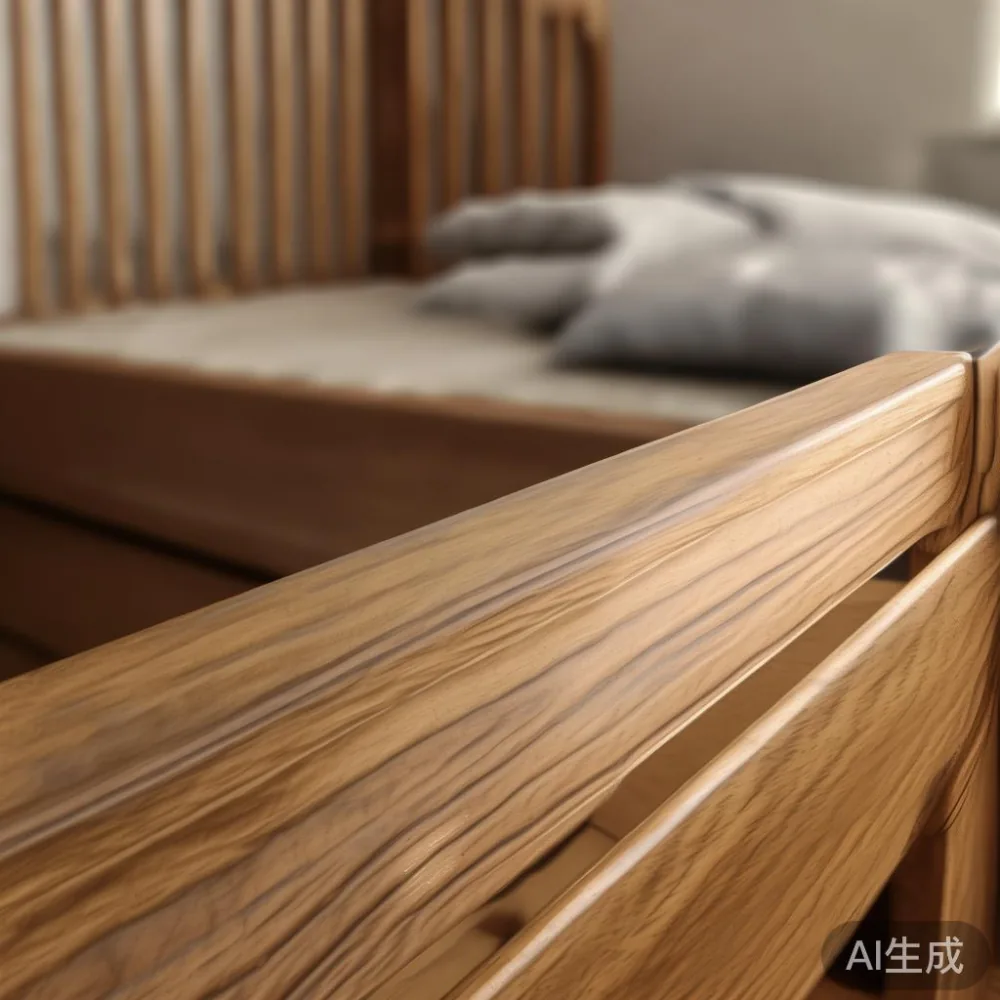
Check the internal dimensions, mattress recommendation, slat spacing, maximum load, guardrail height, and edge treatment. The gap between the mattress and guardrail should be small enough to avoid entrapment, while the rail should be smooth and firmly fixed. A child’s bed should use non-sharp corner profiles and stable guard hardware, especially if the child tends to roll during sleep.
Solid wood is a strong choice for a kids bed because it tolerates daily use better than a weak particleboard frame. Look for hardwood connectors, reinforced joints, and a finish that can be maintained with a soft damp cloth. Avoid abrasive cleaners and standing water. A 10-year structural warranty can provide reassurance, but care instructions should remain realistic for a family with children and pets.
For a coordinated interior, compare the kids bed with a solid wood nightstand, wardrobe, dining table, or marble table. The categories do not need to match exactly. Warm oak can balance pale walls, while walnut-toned wood can create an American light luxury mood. If a larger wardrobe is planned, how to choose Italian light luxury wardrobe becomes relevant: measure the opening, confirm sliding or hinged door clearance, and examine the interior fittings rather than selecting only by finish.
Questions about French storage designs are common, and is French wardrobe worth it depends on the room layout, hardware, and interior organisation. Likewise, the best Nordic wardrobe for 2026 should be judged by usable storage, stable construction, and dimensions suited to the home, not by a trend description alone. For a period-inspired scheme, how to choose Mid-century modern wardrobe should include checks for clearances, drawer extension, and the safety of wall anchoring.
How long should delivery and installation take?
Allow 7 to 14 delivery days for in-stock or readily available pieces, plus a production period of roughly 30 to 45 days for made-to-order items. Peak renovation periods such as the months around the end of the Gregorian year can add 7 to 10 days because carrier and delivery schedules fill up. Request a firm dispatch estimate and delivery window in writing.
Installation should be included in the scope of the job, or at least clearly priced. A modular kids bed may need 30 to 60 minutes to assemble, while a larger wardrobe can take 1 to 2 hours. Secure tall storage to the wall where required, tighten all fasteners, and check the bed for movement after assembly.
Singapore’s 14-day return policy is useful when a size decision proves difficult, but the item must remain in suitable condition. Confirm whether return collection, re-packing, and any freight surcharge apply. This is particularly important for a made-to-order frame with a non-standard finish or mattress.
What is the right budget for a well-sized kids bed?
A compact single kids bed in solid wood commonly falls around SGD 350 to SGD 700, depending on the timber, construction, finish, and delivery terms. A 120 cm frame with refined edges, integrated storage, or a matching study unit may range from SGD 650 to SGD 1,200. A larger 135 cm or 140 cm model can reach SGD 900 to SGD 1,600.
Add GST if it is not already displayed, and ask for the packed size, delivery fee, and assembly charge separately. Free delivery above US$350 is not a Singapore-dollar threshold, so local customers should request an exact SGD quotation rather than assume the promotion applies. A useful comparison includes the mattress, guardrail, slats, hardware, and after-sales support, not only the frame.
The most sensible purchase is a size the child can comfortably use and the room can absorb. Measure the living room in 3 directions, photograph the lift route, and note the narrowest points. Then compare a 90 cm, 100 cm, and 120 cm kids bed on paper. For many HDB homes, a 100 cm kids bed with a low profile and 40 to 45 cm finished height offers a balanced combination of growth room, access, and preserved living space.