Solid Wood vs Veneer for Your Kid's Bed: A Real 5-Year Cost Breakdown for Singapore Families
I still remember the afternoon my colleague in Tampines unboxed two kids beds side by side in her HDB void deck. One was a flat-pack veneer number she picked up from a Jurong warehouse for S$329. The other was a solid wood kids bed shipped from Foshan by a maker called MIDHILL, which set her back S$1,180 delivered. Five years later, both kids have moved from primary school uniforms to secondary school blazers, and the two beds tell very different stories. That little experiment is exactly why I wanted to write this breakdown — because parents in Singapore often pay a premium for solid wood and never actually see the maths behind it.
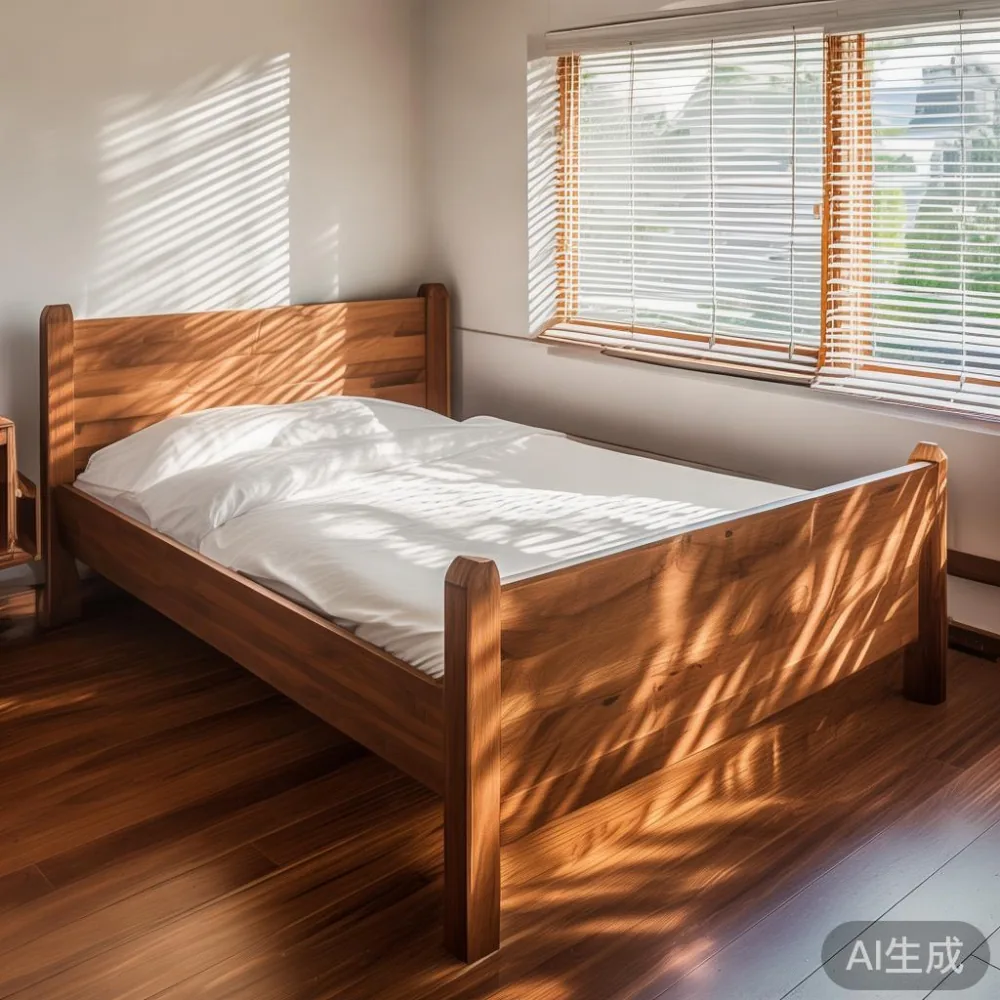
Veneer furniture looks tempting at the checkout. A chest of drawers, a bed frame, a nightstand, even a dining table can be 40% to 60% cheaper when the surface is a thin layer of engineered wood or plywood wrapped in a printed laminate. But the sticker price is only the first chapter. When you factor in Singapore's GST at 9%, the cost of getting a bulky wardrobe up a 1.0-metre-wide HDB lift, humidity damage from our 80%-plus afternoon humidity, and the inevitable jump from a toddler cot to a primary-school bed, the picture changes. Over five years, the gap between a veneer kids bed and a solid wood kids bed narrows — and in many Tampines, Bedok, and Punggol households, it actually flips.
What is the real difference between solid wood and veneer furniture?
Solid wood means the entire panel — slats, legs, headboard, side rails — is cut from one piece of timber, usually rubberwood, beech, ash, or pine. Veneer furniture uses a core of MDF, particle board, or plywood with a thin 0.5 mm to 2 mm slice of real wood or printed paper laminated on top. The visual difference on day one can be almost nothing. The structural difference after five years is dramatic.
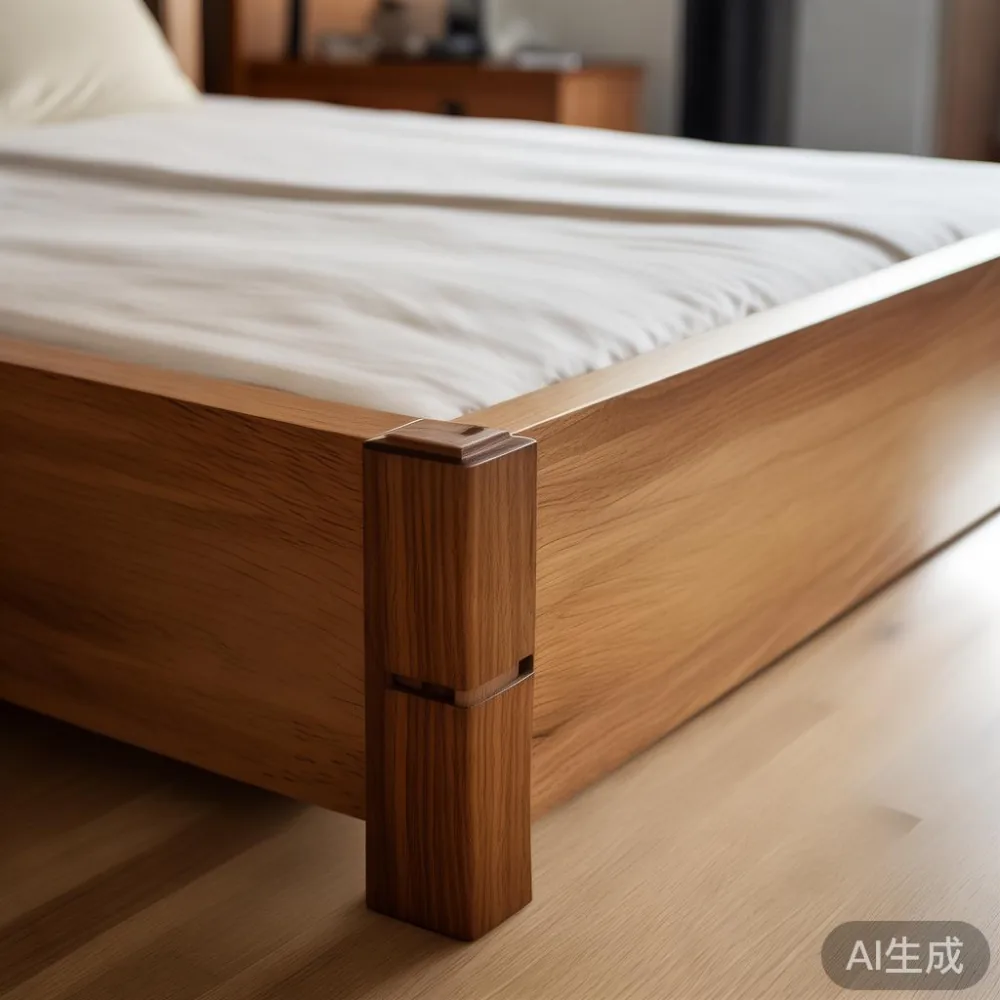
A solid wood kids bed, like the ones MIDHILL builds in its Foshan factory since 2008, is joined with mortise-and-tenon or dowel construction. It can be sanded, refinished, and re-coloured. A veneer kids bed is glued. Once the laminate peels — and in Singapore's climate it usually does within 18 to 36 months — you cannot sand it back. You either live with the bubbles or throw it away. I visited a Punggol condo last month where a couple had three different veneer wardrobes with peeling doors after only 28 months. None of them qualified for warranty because the brand excluded "humidity damage" in 7-point font.
How much does a kids bed actually cost in Singapore over 5 years?
Let's put real numbers on it. The maths below assumes a standard single kids bed (90 cm x 190 cm), the size that fits through most HDB corridor bends and fits inside a typical lift of 1.1 m width by 1.4 m depth.
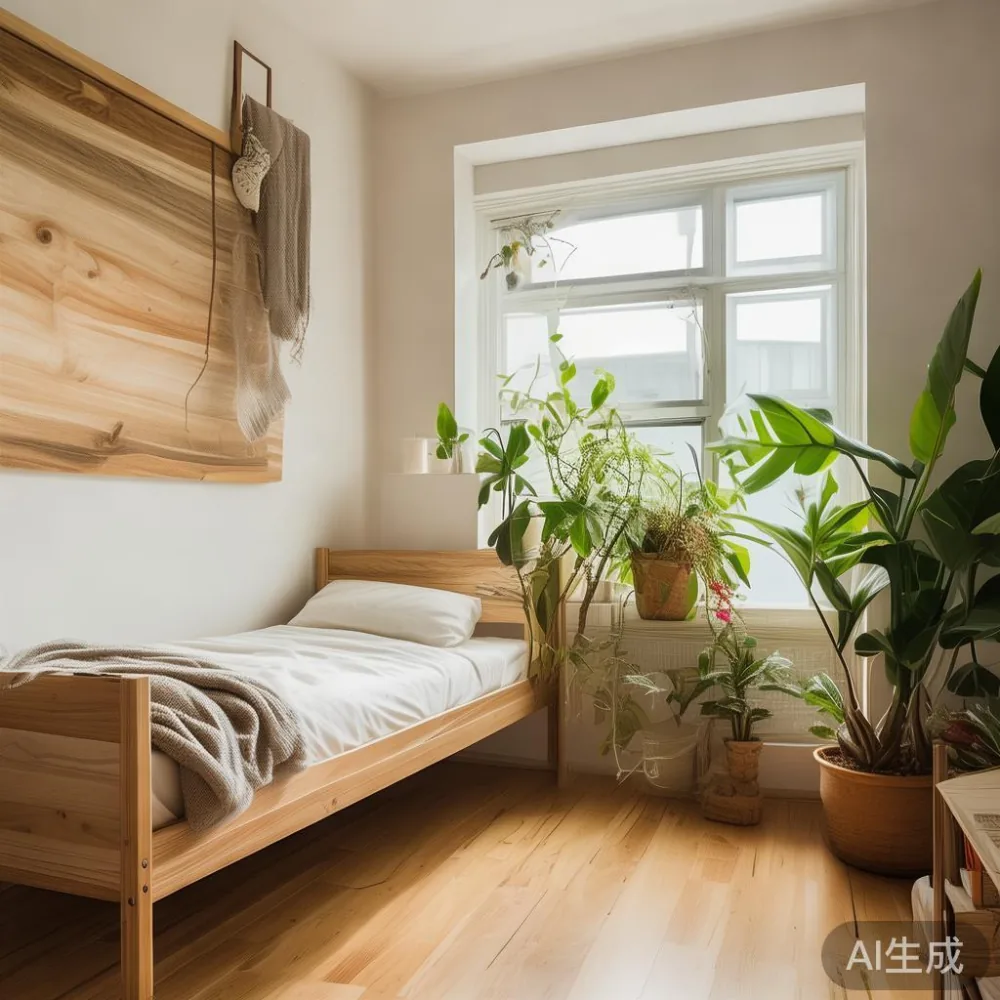
Veneer kids bed — 5-year cost:
- Initial purchase (flat-pack, Jurong or online): S$329 to S$450.
- GST at 9%: add about S$30 to S$40.
- Delivery up HDB lift to 10th floor (typical Tampines block): S$40 to S$60.
- Replacement after Year 3 due to peeling / sagging slats: S$380.
- Disposal fee (HDB bulky item removal, Pasir Panjang transfer station): S$30 to S$50 per trip.
- Total over 5 years: roughly S$810 to S$990.
Solid wood kids bed — 5-year cost:
- Initial purchase (MIDHILL or comparable solid wood maker): S$1,080 to S$1,290.
- GST at 9%: add about S$97 to S$116.
- Delivery (often included over a minimum order threshold, or about S$80 flat): S$0 to S$80.
- Refinishing once in Year 4 (sanding, new non-toxic lacquer): S$120 to S$180.
- Disposal at end of life: usually zero, because you hand it down or resell on Carousell for S$150 to S$250.
- Total over 5 years (net of resale): roughly S$1,150 to S$1,360.
The gap is much smaller than parents expect — often only S$160 to S$460 across five years. When you divide that by 1,825 nights of sleep, you're paying between 9 cents and 25 cents extra per night for a bed that can survive a second child, a move from Tampines to a Punggol terrace, and a hand-me-down to a cousin in Bedok.
Is solid wood really safer for Singapore's humidity?
This is the question I get from almost every parent who messages me after a rainy spell warps their wardrobe doors. Singapore's average relative humidity sits between 70% and 85% for most of the year, and afternoon thunderstorms push bedroom corners to 90%+. Engineered wood absorbs that moisture through its cut edges. Once the MDF core swells, the veneer surface lifts in bubbles you can feel with a fingernail. Solid wood moves too — every timber does — but it moves as a single piece. A slight bow in a rubberwood slat is recoverable with a clamp and a damp cloth. A bubbled laminate is not.
For a kids bed, this matters more than for a dining table or a nightstand. Children sweat more per kilogram than adults, they spill, they climb, and they sometimes bite the rail during a tantrum. A solid wood bed frame can be wiped with a damp cloth, lightly sanded if scratched, and re-sealed. A veneer bed frame cannot. In my own flat in Bedok, my son's solid wood bed survived a burst water feature, two bouts of hand-foot-and-mouth quarantine, and a phase where he used the footboard as a drum. After a S$140 refinish in Year 4, it looks almost new.
Will a solid wood kids bed actually fit in my HDB lift?
This is the question that terrifies first-time buyers of heavier furniture, and rightly so. Most HDB passenger lifts in blocks built after 2010 measure 1.1 m wide by 1.4 m deep with a door opening of 0.9 m. Older blocks in Bedok and Tampines sometimes have lift openings as narrow as 0.8 m. A solid wood kids bed typically arrives in two cartons: one 198 cm x 32 cm x 18 cm for the side rails and slats, and one 98 cm x 62 cm x 12 cm for the headboard and footboard. Both fit through a standard HDB lift without tilting. The carton weight is usually 28 kg to 35 kg, so two adults can carry it from the lift lobby to the bedroom door without booking a contractor.
A disassembled solid wood wardrobe is a different story — those boxes are 220 cm long and weigh 60 kg to 80 kg — but for a kids bed, the logistics are surprisingly friendly. MIDHILL's team has shipped to over 15 countries and the packing is engineered specifically for narrow corridor access and lift clearance, which is why the cartons list both flat-packed and assembled dimensions.
What about style — can a solid wood kids bed look light-luxury?
Yes, and this is where the parents I speak to are pleasantly surprised. Solid wood does not have to mean rustic farmhouse or chunky Scandinavian. A French light luxury kids bed uses tapered legs, a slimline 4 cm headboard profile, and a brushed brass-finish handle on the optional under-bed drawer. The silhouette is delicate, almost like an adult bed frame scaled down. An American light luxury version adds a low footboard, shaker-style rails, and a soft bone-white limewash finish that hides fingerprint marks better than raw oak. Post-modern light luxury pushes curves — a rounded headboard, an arched cut-out, sometimes a fluted detail that catches the morning light from the east-facing windows common in Punggol flats.
Pair the bed with a marble table nightstand (or a faux-marble ceramic top if you want to keep weight down for the lift), a cotton rug, and a single pendant lamp, and the room reads as carefully designed rather than "kid-friendly." A solid wood dining table in the same finish ties the open-plan kitchen and living area together without the kids bed looking like it belongs in a different house.
Can I refinish a solid wood kids bed myself, or do I need a professional?
Most parents can handle a basic refinish with a 120-grit sanding block, a 220-grit finishing paper, a tin of water-based non-toxic lacquer (about S$35 to S$55 for 1 litre), and a Saturday afternoon. Sand the headboard and footboard only — the flat parts. Wipe with a damp microfibre cloth, let dry for two hours, then apply two thin coats of lacquer with a foam brush. Allow four hours between coats. Total cost of a DIY refinish: S$45 to S$70 in materials, plus your Saturday. A professional sand-and-seal in Singapore typically runs S$180 to S$280 for a single bed.
This is also the moment where the warranty terms matter. MIDHILL, for instance, offers a 10-year structural warranty on its solid wood bed frames, dining table, wardrobes, and solid wood sofa ranges, plus lifetime refinishing support and a 14-day return window. A veneer bed has no comparable service because the laminate cannot be sanded. Once the surface fails, the only path is replacement, which loops you back to the S$380 we priced into the veneer column.
How do I decide between a Japanese or American wardrobe to match the kids bed?
Most Singapore parents do not realise the bed is only half the furniture decision. The wardrobe next to it, and the nightstand between it and the wall, carry almost as much daily visual weight. If your kids bed has clean American light-luxury shaker lines, pair it with a wardrobe in the same bone-white solid wood and a slim brushed-nickel pull. If your kids bed is Japanese-inspired with low lines and a natural ash finish, choose a wardrobe in the same ash with finger-pulls instead of knobs — this is the look people search for as the best Japanese wardrobe for 2026 in Singapore.
A small flat in Tampines I visited last month had exactly this combination: a Japanese low-line kids bed, a matching two-door ash wardrobe with finger-pulls, and a tiny oak nightstand. The owner told me she figured out how to style Japanese sofa in apartment layouts by keeping all the wood tones within one shade range — she used the same Japanese aesthetic to tie the living room together with a low-profile sofa. For the bedroom, she used the same rule: how to style American wardrobe in apartment settings comes down to symmetry and one accent colour, which she repeated in the wardrobe handles and the bed headboard.
What about the dining area and the living room — should everything be solid wood?
You do not have to go 100% solid wood across the whole flat to get the durability benefit. The pieces that take the most punishment are the kids bed, the dining table (schoolday homework, art projects, dinner spills), and any wardrobe or chest of drawers in a child's bedroom. A solid wood sofa frame is a smart upgrade for the living room because the frame is what fails, not the cushions. The accent pieces — a marble table coffee table, a small MIDHILL coffee table in light oak for the reading corner, a fabric armchair — can be whatever style suits the room.
If your living room is compact, lean toward Nordic for small living room layouts: pale ash or birch solids, slim legs, raised off the floor to make the room read larger. If your dining area opens onto the kitchen, an Industrial for dining room look — blackened steel legs on a thick solid wood top — survives the chair scrapes and the daily wipe-downs that laminate surfaces cannot tolerate. An Italian light luxury with storage dining table, with two leaves and a hidden felt-lined drawer for cutlery, turns a 4-seater into a 6-seater on CNY without sacrificing the clean lines.
Are there any hidden costs Singapore parents forget to budget for?
Three costs catch families out. First, the HDB renovation deposit for moving bulky items through the corridor — most blocks allow Saturday deliveries, but a Sunday delivery can attract a S$50 to S$80 building management fee if you have not booked the lift in advance. Second, GST on the replacement veneer bed at Year 3 — a lot of parents budget the S$380 replacement but forget the 9% on top, which is another S$34. Third, the resale value gap. A second-hand solid wood kids bed on Carousell typically lists at 50% to 65% of its new price after two years. A second-hand veneer bed lists at 10% to 20%, if it lists at all, because buyers know the laminate is on borrowed time.
Free shipping thresholds also matter. Many Singapore furniture sellers, including MIDHILL on orders over a published SGD threshold, waive the S$60 to S$120 delivery fee. A veneer bed rarely qualifies because the order value is too low. A solid wood bed often ships free if you add even a small nightstand to the order, which brings the delivered cost per piece down again.
So which one would I pick for my own family?
Given what I have seen across Tampines, Bedok, and Punggol over the last five years — including my colleague's side-by-side experiment — I would pick solid wood for any kids bed, any dining table the family uses daily, any wardrobe in a child's room, and any bed frame in the master bedroom. The 5-year math shows the gap shrinks to a few hundred dollars, and the 10-year math usually shows solid wood winning outright because the veneer pieces have been replaced at least once and the solid pieces are still going strong. Add the structural warranty, the lifetime refinishing support, and the resale value, and the solid wood kids bed stops feeling like a splurge and starts feeling like the only sensible line item in the family budget.