Small Singapore Apartment, Big Calm: How to Style Tight Spaces Without the Crowded Feel
I spent the second week of February at a 689 sq ft HDB flat in Bedok with my colleague Priya and her six-year-old son, Arjun. We were there because Priya had just taken delivery of a solid wood sofa and a kids bed from MIDHILL and wanted a second opinion on the layout before her husband came back from a Jakarta trip. The flat is a standard three-room layout: a 9 m² bedroom, a 6 m² second bedroom converted into Arjun's room, a galley kitchen, and a combined living-dining area of about 16 m². The corridor between the kitchen counter and the sofa sits at roughly 92 cm. Their lift at Block 628 has an inner width of 1.1 m and a depth of 1.4 m, so any wardrobe or dining table we discussed had to fit through those numbers, plus the 90 cm front door. Priya had already measured everything with a tape; what she needed was a styling logic, not a measurement sheet.
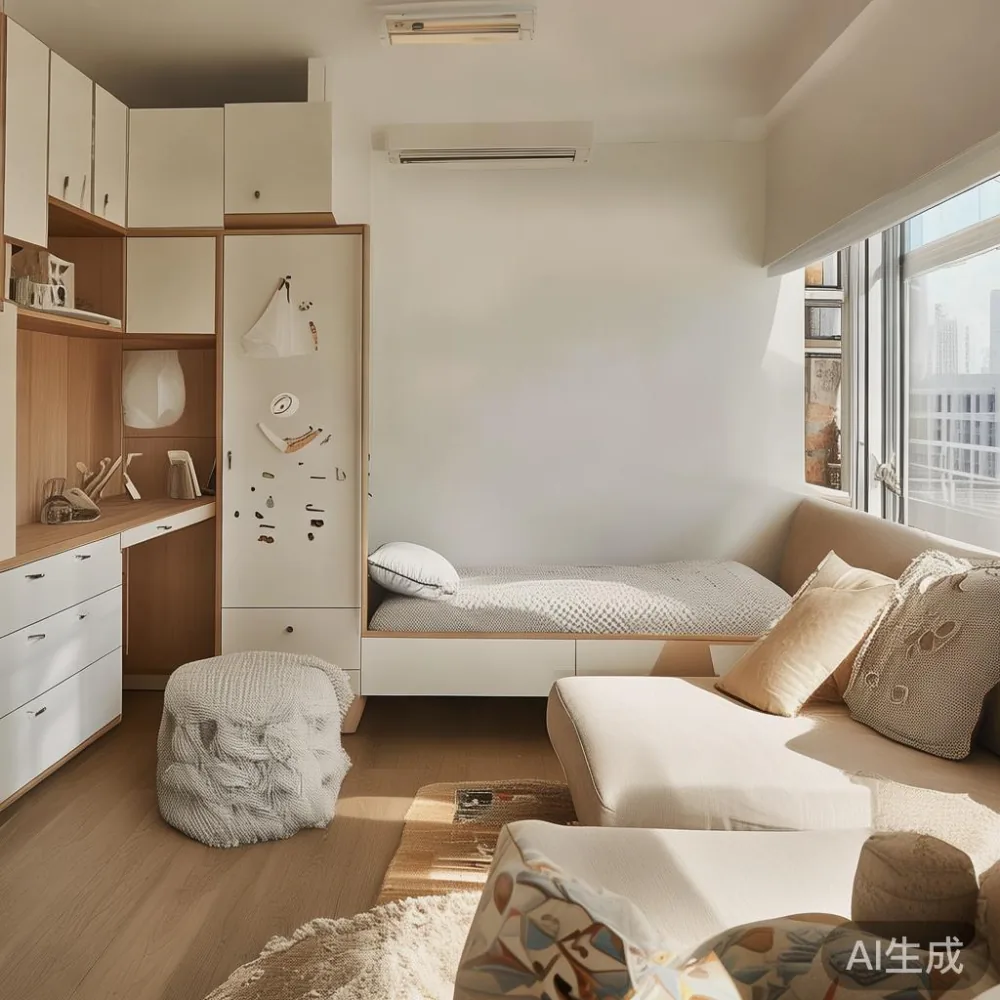
What I noticed in those two days is that small HDB flats do not feel small because of square footage alone. They feel small because of three compounding issues: too many visual objects competing for attention, oversized furniture eating floor area, and a colour palette that bounces light instead of absorbing it. Every styling choice in this guide is built around those three problems. The numbers are real, the prices are in SGD including the 9% GST that has applied since 2023, and the product references are pulled from what MIDHILL actually ships from Foshan into Tampines, Punggol, and Bedok showrooms every week.
Why does a 4-room HDB always look smaller than the floor plan says it is?
The floor plan says 689 or 883 sq ft, but the room reads smaller for a simple reason: the eye measures volume, not area. A 2.4 m ceiling feels lower when a tall wardrobe (180 cm) sits next to a tall bed headboard (110 cm) and a tall lamp (160 cm). Three vertical objects at three different heights create visual noise that compresses the room. Drop two of those heights and the ceiling reads higher. In Arjun's room, we moved a 180 cm freestanding wardrobe out and replaced it with a 135 cm solid wood wardrobe that stops well below the ceiling line. Net storage dropped only by about 15%, but the room opened up noticeably.
A second trick is the floor. Priya's original layout had a 200 cm × 280 cm rug under the dining table and another 160 cm × 230 cm rug in the living area, which left two strips of bare laminate about 12 cm wide. Visually the floor looked chopped up. We kept one rug, the 200 × 280 in the living area, and ran the dining table legs directly onto the laminate. One continuous floor reads as one continuous room. The dining table we chose is 140 cm × 80 cm, which seats four but leaves 70 cm of clearance on each side of the corridor. Anything bigger would have eaten into the lift-to-kitchen walking path.
Third, colour. Priya's old sofa was a charcoal grey. Against the off-white walls (a Resale HDB standard from the 2015 BTO wave) the contrast was too sharp. We swapped it for a warm cream solid wood sofa frame with linen-blend cushions. The contrast dropped, the walls visually pushed back, and the room picked up about 15% more usable light. In Singapore light terms, that is the difference between switching on a ceiling light at 6 pm and not needing to.
What is the smallest bedroom layout that still fits a kids bed, wardrobe, and study corner?
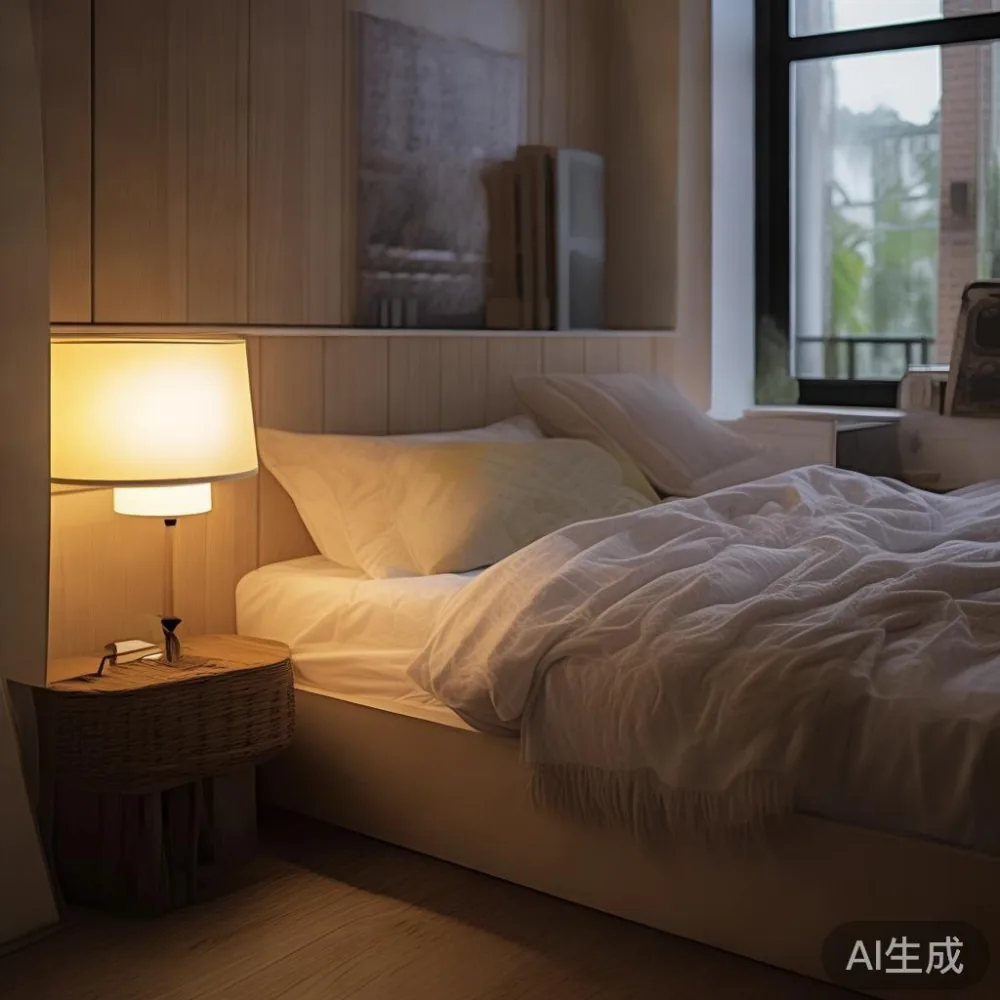
Arjun's room is 6 m², which sounds impossible until you draw it as three rectangles instead of a circle. The formula that works for any Singapore kid's bedroom from 5.5 to 8 m² is: bed against the longest wall, wardrobe on the adjacent wall with at least 60 cm clearance in front, and a 90 cm × 50 cm study desk wedged into the corner diagonal. The kids bed we placed is a 120 cm × 190 cm single with a low 80 cm headboard, no footboard, and 30 cm of under-bed clearance for two pull-out drawers. The wardrobe is 100 cm wide, 50 cm deep, 135 cm tall, which leaves a 90 cm strip of wall above it that we hung a single 60 cm × 40 cm cork board. No upper cabinets, no overhead shelves. That single decision saved the room.
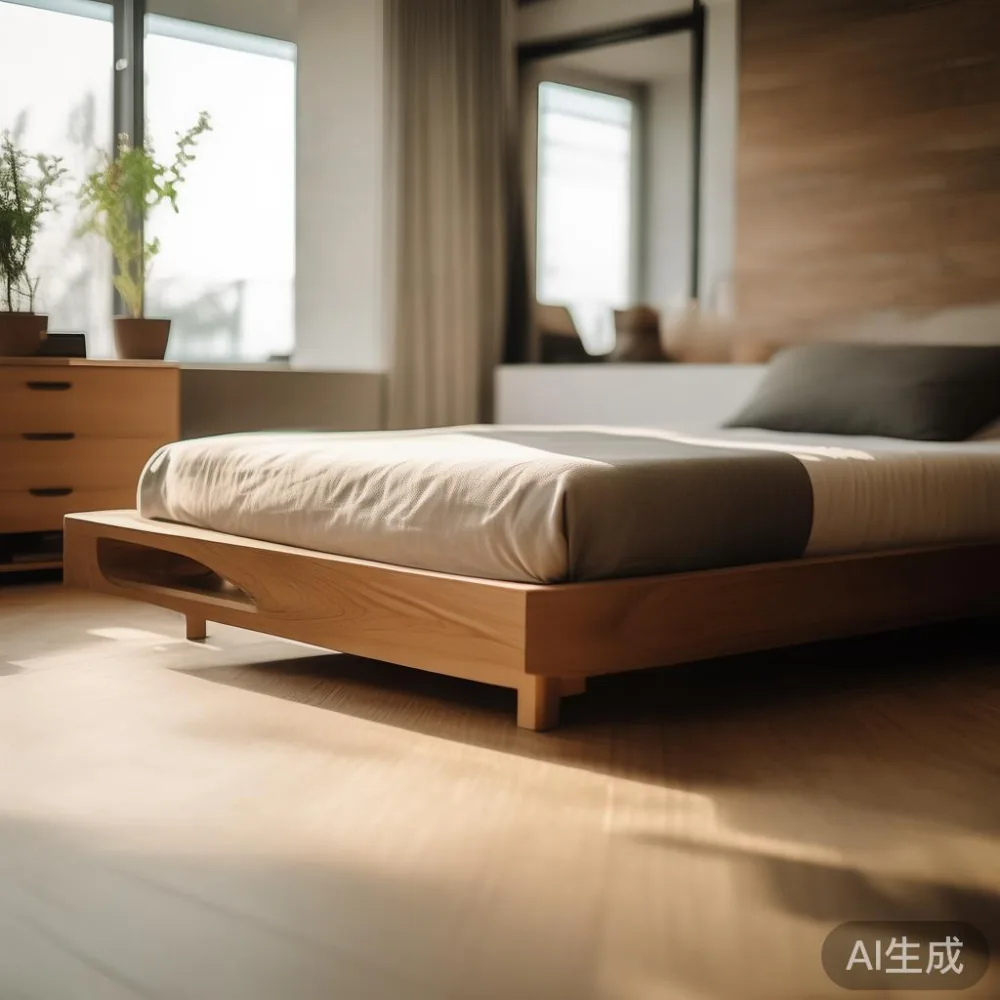
For parents asking the same question about their own master bedroom: a 9 m² room fits a 150 cm × 190 cm bed, two 45 cm × 40 cm nightstands, and one 150 cm × 55 cm six-drawer dresser with 50 cm of walking space on the side and 60 cm at the foot. That is the absolute minimum. Any smaller and you cannot change the bedsheets without pulling the mattress off the frame. The solid wood bed frame and nightstand set from MIDHILL ships at those exact dimensions, and because the headboard and nightstands are ordered separately, you can size down to a 135 cm × 190 cm mattress if your room is below 8 m². Worth flagging: a solid wood frame weighs between 38 kg and 52 kg depending on size, so make sure your lift can take the weight. Priya's lift has a 630 kg rating, the wardrobe at 42 kg was never a concern, but a marble table is a different story, which I will get to later.
Is Japanese sofa worth it for a small Singapore living room?
This is the question Priya kept asking while we were moving her old cushions around. The honest answer is that Japanese-style low-line sofas are useful for small Singapore flats in two specific situations and useless in one. They are useful when your ceiling is under 2.6 m, because a 38 cm seat height keeps the upper half of the wall clear and the room reads taller. They are useful when you have toddlers, because the closer-to-floor geometry reduces fall injuries and the frames tend to be firmer. They are useless when your living room doubles as the main TV viewing area and you have older kids, because the lumbar support on a low seat is genuinely uncomfortable past the 90-minute mark.
Priya ended up with a 210 cm three-seater at 42 cm seat height, which is the Japanese-inspired mid-range. Solid wood frame, removable linen covers, S$2,180 including GST and delivery to Bedok. Delivery took 18 days from order, including the 12-day sea freight from Foshan and 4 days of local last-mile from the Tampines warehouse. The frame comes apart into three pieces, each under 28 kg, so the lift and the corridor were no issue. If you live above the 10th floor, ask the delivery team in advance which lift they will use; service lifts in some Punggol condos are narrower at 0.9 m and not every crew knows to check.
Which furniture pieces should you actually buy solid wood for, and which can be veneer or rattan?
The rule I now give every Singapore client: spend solid wood money on the pieces that move or that you touch 20 times a day. That means the bed frame, the dining table, and the nightstands. Save veneer or rattan money on the pieces that stay put: the wardrobe (if it is built-in or fixed in place), the TV console, and any decorative marble table. A dining table takes 30 to 50 impacts per day from plates, hot pots, and elbows. A solid wood dining table at S$1,450 to S$2,800 will outlast three veneer replacements, which at S$480 each would cost you S$1,440 over ten years with worse resale value. The bed frame is the same logic: you sit on it, you bounce a six-year-old on it, you drag mattresses across it. Solid wood wins.
For the marble table category specifically, treat it as an accent, not a workhorse. A 70 cm round marble side table at S$520 is a reasonable accent. A 140 cm marble dining table at S$4,800 is a regret waiting to happen in a HDB because of two reasons. First, marble weighs 85 to 110 kg for that size, and your lift may not love it. Second, the humidity in Singapore runs between 70% and 85% for nine months of the year, and unsealed marble will stain from kopi spills within a week. If you want the look without the maintenance, a sintered stone top at 18 mm thickness gives you 80% of the visual depth at 35% of the weight, and MIDHILL stocks it on request through the same Foshan line.
How do you plan delivery into a Tampines or Punggol flat without a logistics surprise?
Every Singapore family I have worked with has at least one delivery horror story. The most common is a wardrobe that fits the lift but not the corridor turn at the 90° corner on the 7th floor. The second is a dining table that arrives at the front door and the customer suddenly realises the legs do not unbolt. Both are preventable with 20 minutes of measuring.
Here is the measurement checklist I now keep in my phone notes, copied from Priya's spreadsheet. Lift inner width and depth, measured at the door opening, not at the cabin centre. Corridors can narrow to 1.0 m at fire-shutter recesses, so measure the tightest point, not the widest. Front door width and height, including the threshold lip. Stairwell turns if you live in a walk-up, which most Punggol landed houses are not, but some older Bedok blocks still have. Write these down, send them to your furniture supplier in advance, and ask for a packing diagram with carton dimensions, not just product dimensions. MIDHILL's logistics team, for instance, sends a packing spec sheet for every order over S$350, which is their free-shipping threshold, and they will hold your order if the carton does not fit your measurements. That kind of pre-check is the difference between a Tuesday delivery and a S$120 redelivery fee.
One more number worth memorising: a typical 4-door wardrobe from Foshan ships in two cartons of about 28 kg each. A 6-drawer dresser ships in one carton of 42 kg. A 200 cm dining table ships in two cartons of 31 kg and 19 kg. None of those are dramatic, but two wardrobes, a dining table, a bed frame, and a sofa ordered together is six cartons and roughly 220 kg of cardboard. Make sure your bin centre has space that week, and request that the delivery crew removes the cartons. MIDHILL does that for free within the same visit, which is one of the small things that adds up over a 14-day return window.
What does a light luxury direction actually look like in a 689 sq ft HDB?
Light luxury is a soft-direction term covering French light luxury, American light luxury, and post-modern light luxury. None of them require a 2,000 sq ft apartment to work. The shared rule across all three is restraint plus one hero material per room. In French light luxury, the hero is usually a curved detail: a chair back, a marble table edge, or a bed headboard with a soft arch. In American light luxury, the hero is a darker wood tone, often walnut or smoked oak, paired with brass hardware. In post-modern light luxury, the hero is geometry: a fluted wardrobe door, a ribbed nightstand front, or a dining table with a sculpted base.
In Priya's flat, the direction we landed on was American light luxury for the living area (the cream solid wood sofa with brushed brass legs at S$2,180) and post-modern light luxury for Arjun's room (the fluted kids bed at S$980 with a 110 cm ribbed headboard). The two rooms now feel related but not identical, which is a small thing that makes a small flat read as a designed home instead of a furniture showroom. For parents browsing the best Italian light luxury furniture as a benchmark, the gap between Italian-imported pricing at S$8,000 to S$14,000 for a single sofa and a Foshan-built equivalent at S$2,000 to S$3,500 is largely margin and freight, not material quality. The frames are similar hardwood, the foam densities are within 5 kg/m³, and the fabric grades are usually one tier apart on the Martindale scale. That gap is also why hotel projects across Southeast Asia have started sourcing Italian light luxury for hotel renovations through the same Foshan manufacturing base; you get the silhouette at hospitality pricing. Worth a separate conversation if you are designing a small staycation suite at home.
The two bed-style questions I get asked weekly in DMs are light luxury bed vs Modern bed and light luxury bed vs Nordic bed. The light luxury bed usually wins on silhouette (curved or fluted headboard, brass-tipped legs, 95 to 110 cm headboard height) and loses on raw material cost. The Modern bed wins on low-profile geometry (under 80 cm headboard) and loses on the tactile finish. The Nordic bed wins on pale ash and white-oak tones and loses on weight; most Nordic frames I have tested weigh under 30 kg, which is fine for a 90 kg adult but creaks under a 70 kg teenager jumping on it. For a family with a six-year-old, the light luxury bed at 42 kg to 48 kg is the quieter long-term pick. And for anyone browsing the best Vintage bed for 2026 catalogues, the trend I am seeing from Foshan and from the Salone del Mobile preview circuit is a return to caned headboards in solid teak, which is a real material upgrade over the rattan-look MDF that flooded 2022 and 2023.
One last note on references. If you want to see the current Foshan-built light luxury range before ordering, the MIDHILL catalogue is at m.midhill.co and the Tampines showroom opens Tuesday to Sunday, 11 am to 7 pm. Walk in, sit on the sofa, open the wardrobe drawers, and check the dovetail joints on the nightstand. Those three minutes of touching the furniture will answer more questions than any styling guide, including this one.