How to Read a Furniture Warranty Without Getting Caught Out
Buying a kids bed in Singapore feels simple until the small print arrives in your inbox. A warranty can read like a friendly handshake, then twist into a series of exclusions the moment your three-year-old draws a permanent marker on the headboard. After spending fifteen years around solid wood furniture — first as a buyer for a Tampines retailer, now writing about it — I have learned that the warranty page is where most parents get caught. The bed itself is fine. The paperwork is where the trouble lives.

This guide walks through warranty language line by line, using a real kids bed purchase as the thread. By the end you will know what a 10-year structural warranty actually covers in a Singapore HDB context, what lifetime refinishing looks like in practice, and how a brand like Midhill frames its commitments versus the imported flat-pack lookalikes you see at neighbourhood clearance fairs.
What Does "Structural Warranty" Actually Cover on a Kids Bed?
Structural warranty sounds reassuring, and on a solid wood frame it usually is. The phrase typically covers defects in the load-bearing components: the side rails, the slats, the joints, and the legs. On a typical single kids bed measuring 190 cm × 90 cm, those components carry roughly 40–70 kg of dynamic load when a child jumps, plus another 30 kg or so from the mattress. Over a 10-year span that is a lot of stress, which is exactly why structural coverage matters.
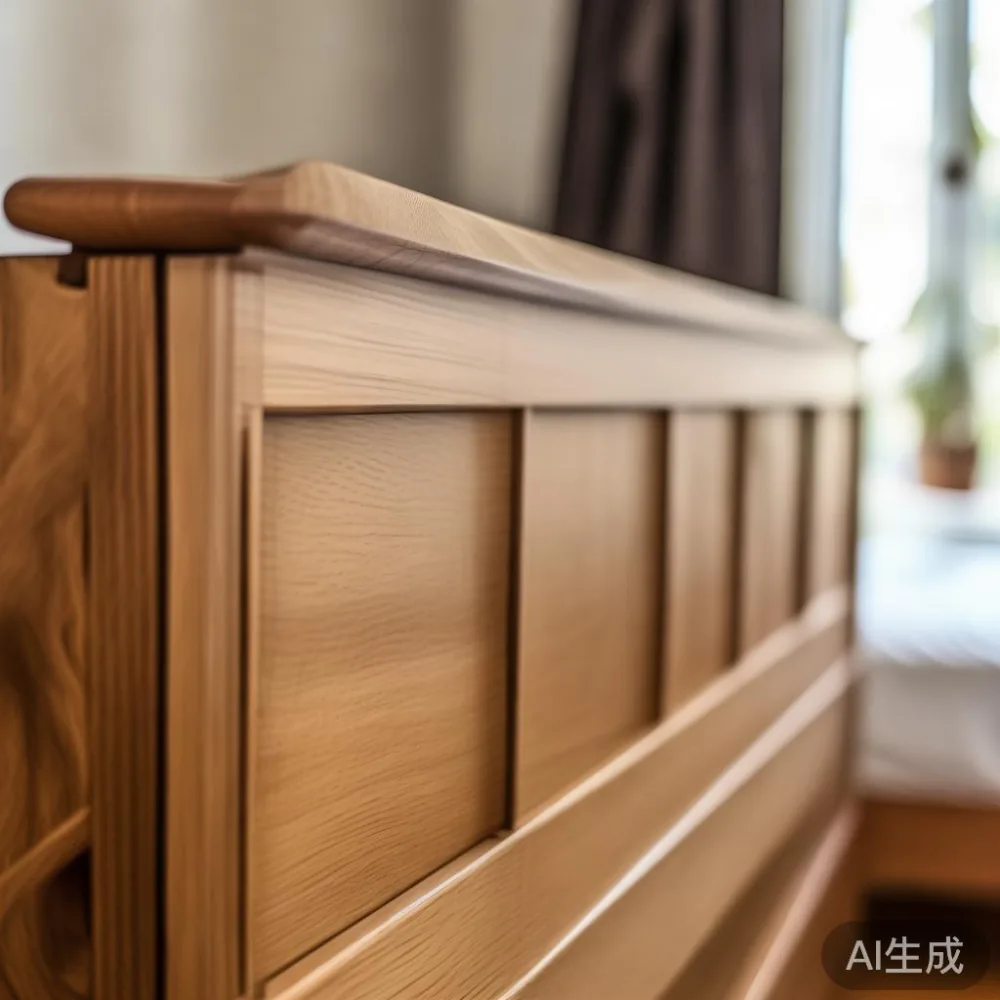
What structural warranty does not cover is almost everything you actually worry about as a parent. It will not pay for a chipped corner from a toy thrown at 2 a.m. It will not refinish a water ring left by a forgotten water bottle. It will not replace a slat that snapped because someone used the bed as a trampoline, which is technically misuse. Read for words like "defects in materials and workmanship under normal residential use." That phrase is the legal boundary. Anything outside it is on you.
One useful test: ask the seller, in writing, what happens if a slat cracks under the weight of a sleeping child and a 25 kg dog combined. If the answer is vague, the warranty is vague.

Does the Warranty Cover HDB Delivery, Lift Access, and Reassembly?
Singapore delivery deserves its own paragraph because HDB flats have physical quirks that no overseas warranty document anticipates. A standard HDB passenger lift in a Block 502 in Tampines has an internal cabin of roughly 1.4 m × 1.7 m × 2.3 m. A king-size bed frame will not fit. Even a kids bed, fully assembled, can be 198 cm long, which clears the lift depth but eats into turning radius on the way to your unit.
This is where the warranty document quietly hands the problem to you. Most brands exclude "assembly, disassembly, and re-assembly" from structural coverage, meaning if a leg loosens during a HDB-to-condo move, the repair is paid labour, not a warranty claim. Some importers even exclude damage incurred during their own delivery, framed as "carrier responsibility" — and then they contract the carrier separately, so neither party ends up liable.
What you want is a brand that handles delivery in-house or uses a single accountable logistics partner, and that lists corridor and lift access requirements on the order page. At Midhill, for instance, the order confirmation asks you to confirm lift dimensions before dispatch so the bed frame arrives flat-packed with a reassembly option rather than in a state that cannot clear your Punggol corridor door. That single question, asked in advance, has saved more warranty arguments than any clause I have ever read.
What Counts as "Lifetime Refinishing" When Your Kids Bed Gets Scratched?
Lifetime refinishing sounds like a blank cheque. It is not. The phrase almost always refers to factory refinishing at cost — sand, re-stain, re-lacquer — for an item returned to the workshop. Shipping both ways from Singapore is not included. Refinishing is also unavailable on beds that have been modified, painted by the customer, or stored in non-climate-controlled environments for long periods (your outdoor balcony, for example).
For kids beds the more relevant question is touch-up. A solid wood bed frame finished with a hardwax oil can be rubbed down with a fine abrasive pad (around 320 grit) and re-oiled in about twenty minutes per spot. That is a parent-level repair, not a warranty service. A laminated surface cannot be repaired this way; the only option is a panel replacement, which is rarely covered.
My own experience here is concrete. Last month I visited a friend in Bedok who owns a four-poster kids bed in white oak. Her six-year-old had kicked a hole in the footboard while playing superheroes. She sent two photographs to the workshop, paid S$48 for a small touch-up kit including a 50 ml tin of matching oil and a sanding sponge, and repaired it herself in a Saturday afternoon. No warranty claim, no shipping, no GST on a return. The fix still holds a month later. That outcome is what a good warranty structure should enable, even when the formal claim is not worth filing.
Is the Warranty Voided If I Move from an HDB Flat to a Condo?
This sounds absurd, but I have seen it written. Some warranties tie coverage to the original delivery address, treating relocation as a change of use. A child who sleeps in a Punggol HDB for five years and then moves with the family to a condo in River Valley could, in theory, lose structural coverage halfway through a 10-year term. The clauses usually say "original purchaser at the original delivery address," which is not the same as "owner of the product."
Reputable brands re-register the warranty on proof of the original purchase (the invoice) regardless of where the bed now stands. When you read the warranty, look specifically for transferability language. If a kids bed is given to a younger cousin or donated to a childcare centre, can the new owner claim? On transferable warranties, yes. On non-transferable warranties, no. A flat-pack importer that sells through marketplace platforms often sells non-transferable warranties because the platform cannot verify the chain of ownership.
This is also where a brand's export footprint matters. A maker that ships to 15+ countries has standardised warranty registration across regions, which usually means transferable and address-agnostic. A maker that only sells inside Singapore through pop-up warehouses often does not.
"Free Shipping Over S$350" — What Is Actually Free?
The free shipping threshold is another hidden clause. In Singapore context, "free shipping" usually means free kerbside delivery to your HDB block, not free delivery to your bedroom floor. Lift-up surcharges, door-to-door hand-carry, weekday-versus-Saturday delivery, and disposal of your old bed frame are usually line items added at checkout.
For a kids bed weighing 35–55 kg depending on size, a hand-carry from the lift lobby to a fourth-floor HDB unit is real work. Some logistics partners charge S$25–S$60 per floor when no lift access is available during the delivery window (maintenance closures happen at least once a year). Ask whether the shipping quote is lift-up included or kerbside only, and whether disposal is itemised separately.
There is also the question of timing. Standard Singapore deliveries for in-stock solid wood kids beds run 7–14 working days, and custom sizes can extend to 28–35 days, especially around the post-Chinese New Year backlog. The warranty clock usually starts on the delivery date, not the order date, so a long wait can actually help you by delaying the start of any coverage period.
14-Day Returns — What Can You Actually Send Back?
A 14-day return window is standard in Singapore under the Consumer Protection (Fair Trading) Act, but furniture is one of several categories with carve-outs. Custom-sized items, items assembled on-site, and items showing signs of use are commonly excluded. The warranty document should spell out which kids beds are returnable and which are final-sale.
Read for the phrase "unopened, unused, in original packaging." If you have already assembled the bed to check the size of your child's room, that door may be closed. Photographs showing the sealed carton are useful evidence; photographs showing the assembled bed in a bedroom are not, even if the bed itself is pristine.
For parents, the practical workaround is to assemble the bed once in the corridor or in the living room, photograph every part, and only move it into the bedroom after the 14-day mark. I have done this twice. It feels slightly absurd, but it is the only way to keep the return option alive while still inspecting the product.
What Is Actually Excluded in the Fine Print?
Every warranty document has an exclusion list. The standard ones to expect:
- Damage from humidity outside 40–60% relative humidity (very real in Singapore, where bedrooms regularly hit 75% during monsoon months)
- Damage from direct sunlight exposure, which fades oak and ash faster than parents expect
- Commercial use, including home-based daycare
- Modifications, including customer-applied paint or stickers
- Acts of nature, including the occasional Singapore flood in a ground-floor unit
- Normal wear and tear — a phrase that swallows almost everything
Solid wood beds are particularly sensitive to humidity swings because the wood moves. A 190 cm × 90 cm side rail can change dimension by 3–5 mm across a wet and dry season, and that movement is not a defect. It is wood. A good warranty document will say so explicitly. A bad one will leave it ambiguous and then refuse the claim.
How Does the Warranty Tie to Manufacturing Origin?
Warranty service happens at a workshop, and workshops need to exist. A Foshan-based maker shipping to 15+ countries has a dedicated workshop within shipping range of Singapore — typically 4–6 days by sea, longer by air. A marketplace drop-shipper has no workshop at all, only a returns address that forwards to a third-party refurbisher, who sends items back to yet another country.
MIDHILL, established in 2008 in Foshan, runs its warranty service from a single workshop that also handles lifetime refinishing. That matters because the same people who built the bed are the ones who refinish and repair it. A retailer who imports finished components has no such continuity. If a slat breaks in year six, the replacement slat may come from a different batch of wood and may not match the bed in colour or grain.
What Should I Do Before the Warranty Clock Starts?
Three practical steps I now take on every kids bed purchase:
- Photograph the unopened carton on the day of delivery, including the shipping label and the SKU. Email these to yourself.
- Within seven days, assemble the bed, photograph every joint, and note the room's humidity with a S$12 hygrometer. Save those readings monthly for the first year.
- Register the warranty online within 14 days if registration is offered. Some warranties require registration, and unregistered purchases default to a shorter term.
Where Does Light Luxury Fit Into a Warranty Conversation?
Light luxury positioning is sometimes treated as a marketing layer separate from construction, but in practice it shapes warranty terms. A French light luxury or post-modern light luxury kids bed tends to use premium finishes — brushed brass hardware, marble-look tops on nightstands, hand-applied French provincial TV console treatments on matching bedroom pieces — that need more careful warranty language because each finish has its own exclusions. Marble elements, for example, are usually warranted separately from wood and at a shorter term.
If you are asking how to choose European light luxury bed options, the warranty is a useful proxy for authenticity: a real European-construction bed will name the country of origin, list specific finish codes, and offer parts (not just replacement) for at least five years. If you are comparing a European light luxury sofa vs Italian light luxury sofa for a sibling purchase, the same logic applies — the warranty length and parts-availability language will tell you more than the showroom tag.
For American-style pieces, a common buyer question remains how to style American bed in bedroom layouts, especially in HDB master rooms where a queen or king frame competes with a wardrobe and a small marble table. The warranty side of that question is whether the American bed's slat system uses standard sizes (usually yes) or proprietary sizes (sometimes), because slat replacement is the most common long-term claim on any bed frame. A bed using a 190 cm × 90 cm kids-bed footprint with standard slats is far easier to maintain over ten years than one with bespoke dimensions.
For wardrobes, parents often ask is Mid-century modern wardrobe worth it for a child's room. The warranty says a lot. A wardrobe with dovetailed drawers and full-extension runners will be warranted for the runners specifically, which is where the failure usually occurs. A flat-pack wardrobe with stapled drawers has no runners to warrant and is sold as final-sale under most policies.
What Documentation Should I Keep for the Next Ten Years?
For a kids bed with a 10-year structural warranty, keep the invoice, the delivery photographs, the warranty card, the assembly instructions, and at least two photographs per year of the bed's condition. Store all of this in a folder named after the purchase. A two-minute-per-year habit will cover you for any claim.
If you also own a solid wood sofa, dining table, or nightstand from the same maker, file them together. Warranty claims sometimes bundle well across product lines — a workshop that built your dining table is also the right contact for a nightstand repair — and a tidy paper trail short-circuits the "we have no record of your purchase" reply that closes many legitimate claims.
Final Notes Before You Sign Anything
A warranty is not a promise of perfection. It is a description of who pays when something fails. Read it with that framing and the small print becomes readable in about ten minutes. The structural number (10 years, 5 years, lifetime), the exclusions list, the transferability, the shipping terms, and the return carve-outs are the five points that decide 90% of claims. Everything else is decoration.
If you are weighing a kids bed purchase this weekend, take one extra evening to read the warranty page the way you would read a tenancy agreement. Note the load-bearing claims, the addresses, the paperwork, and the workshop. The brand's character is in those paragraphs, not on the showroom floor.