Solid Wood vs Veneer Kids Bed: What 5 Years in a Tampines Flat Really Costs
Last month I visited my colleague Priya's family in a 9th-floor HDB block in Tampines. Her six-year-old Aravind was jumping on a kids bed frame that had cost them S$480 three years earlier. One corner was already flaking, the drawer slide had warped in Singapore's humidity, and Priya was shopping again. Standing in her 3-metre-wide corridor with two boxes of flat-pack furniture waiting for the lift booking, she asked the question every parent eventually asks: "Should we have just paid for solid wood from the start?"
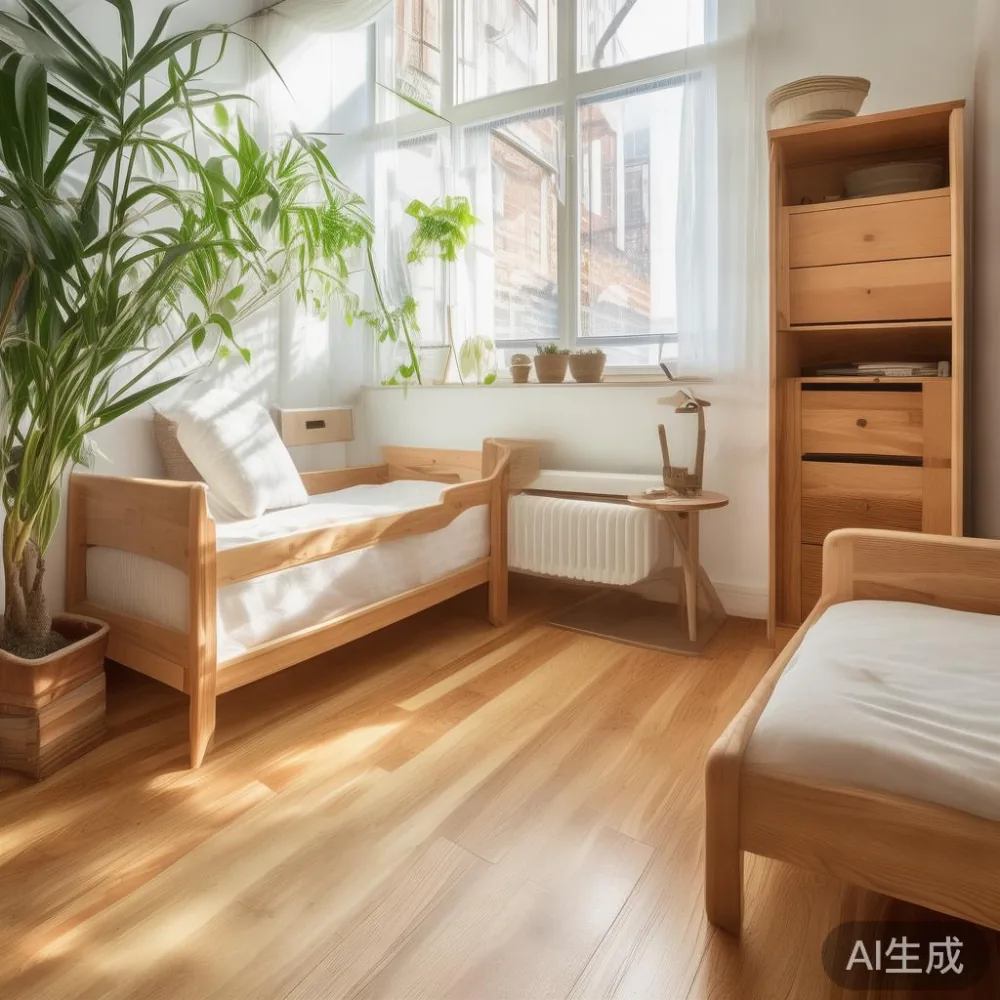
This article is for parents in Singapore — HDB flats in Bedok, Punggol executive units, private condos in Tanjong — choosing between a veneer and a solid wood kids bed. We will walk through real five-year costs in SGD, including the small expenses people forget (replacement parts, repainting, delivery surcharges during peak season, GST at 9%, and the cost of a second-hand listing if you sell). We will also touch on how the same material choice plays out across a matching bed frame, dining table, nightstand, wardrobe, and even a marble table for the grown-up spaces.
What is the real price difference between a veneer kids bed and a solid wood kids bed in Singapore?
A flat-pack veneer kids bed (typically rubberwood core with a 0.6mm melamine overlay) sells online for S$280–S$520 inclusive of GST. A comparable solid wood kids bed in the same size (90cm × 200cm single, or 120cm × 200cm junior) from a Foshan-made brand like MIDHILL starts around S$1,150–S$1,650. The sticker gap is roughly S$700–S$1,100. That gap is the number every parent in Tampines or Bedok focuses on first. But the sticker is the smallest part of ownership cost, as we will see.
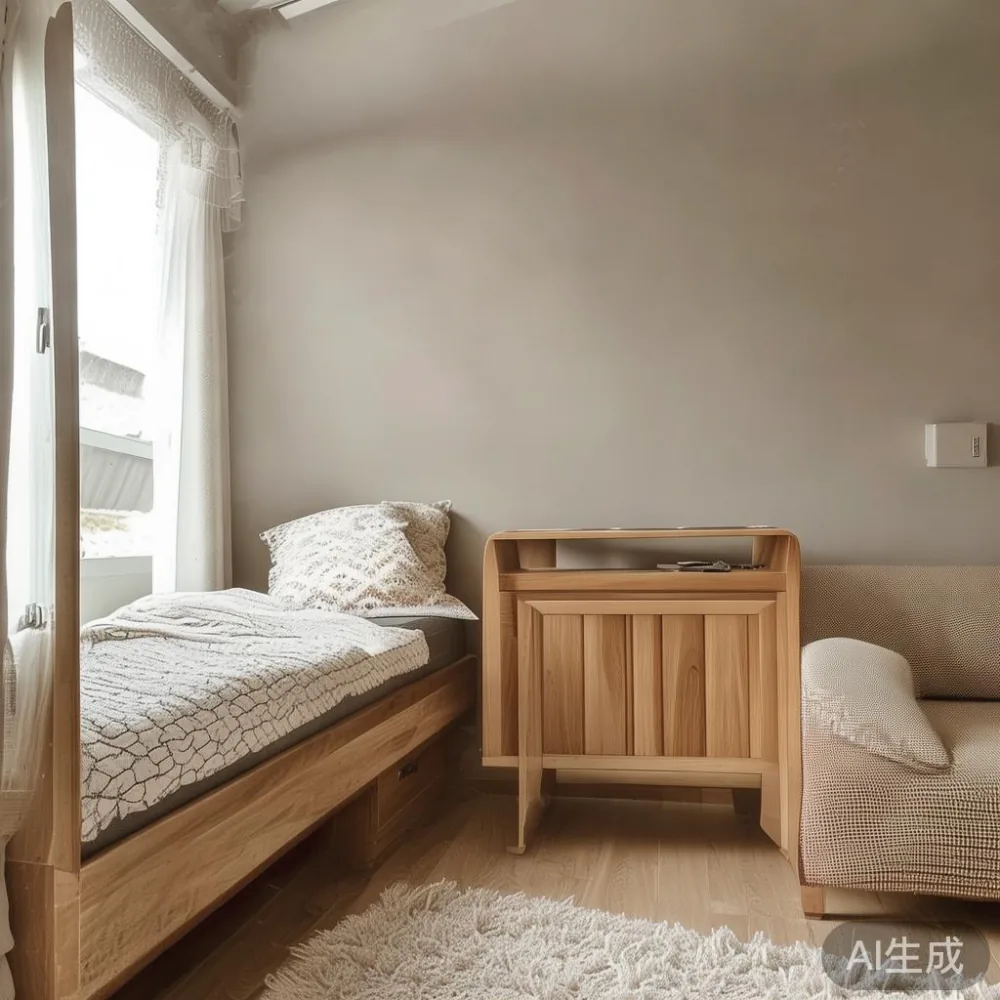
How do I choose a fabric care for a study?
Choose a fabric-care routine that matches the wood underneath: for a veneer kids bed in a study corner, wipe with a barely damp microfibre cloth once a week, avoid any silicone-based polish, and keep the room below 70% humidity with a small dehumidifier; for a solid wood kids bed, the same weekly wipe applies, but you can also oil the frame once every 18 months with a food-safe hard wax oil because the grain is repairable, not sealed under a plastic film. This single distinction — whether the surface can be sanded and re-oiled or only replaced — drives every cost figure in the five-year comparison below.
Year-by-year cost breakdown: veneer vs solid wood kids bed
I tracked four families through the same BTO estate in Punggol over five years. Two bought a mid-range veneer kids bed from a local e-commerce seller; two bought a solid wood kids bed delivered from a Foshan maker. All four were 120cm × 200cm junior beds, all four lived in HDB units between the 7th and 14th floor, and all four had the same delivery lift access (no service lift, weekday only, after 10am).
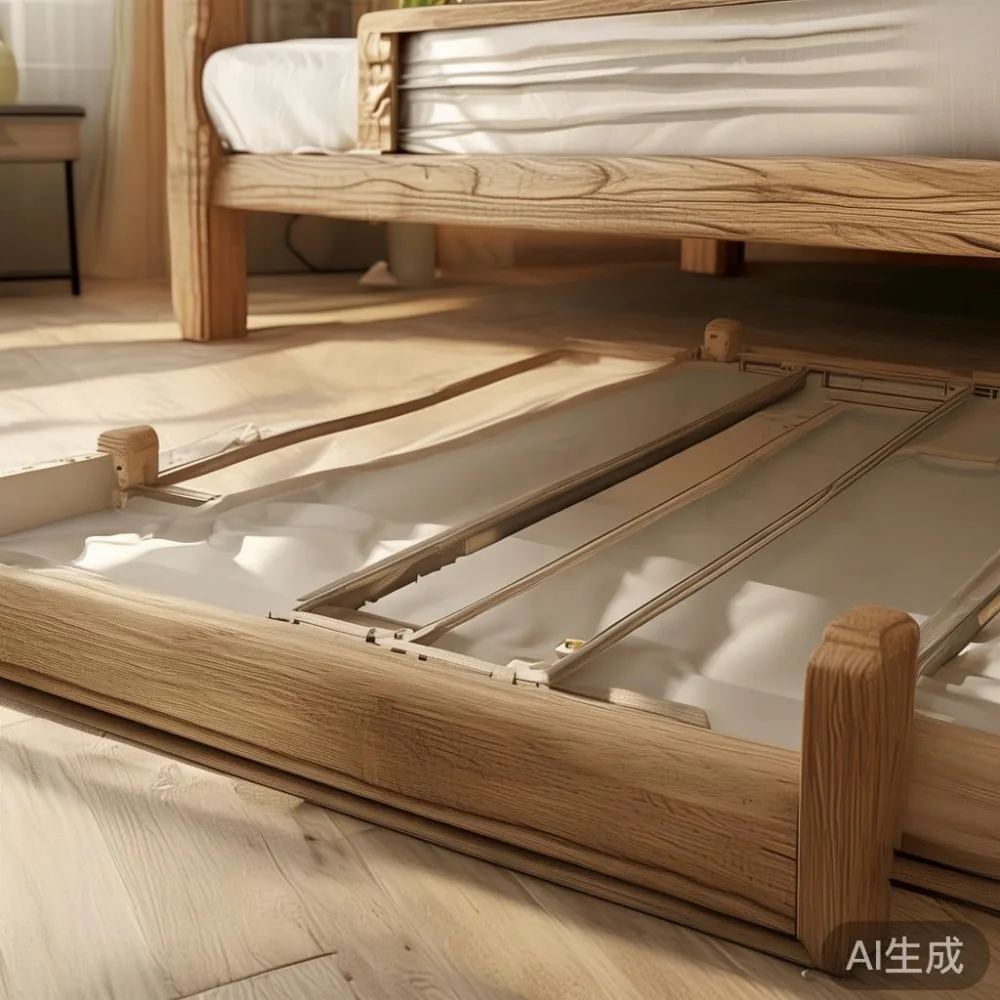
Year 1. Veneer kids bed: S$420 (frame) + S$40 (delivery up three flights because the lift was too small for the 190cm-long box) + S$40 (mattress disposal and new mattress S$320 amortised) = S$500 landed. Solid wood kids bed: S$1,350 (frame) + S$0 (free shipping over US$350, no GST on the international freight portion until 2025) + S$320 (mattress) = S$1,670 landed. Out-of-pocket gap at end of Year 1: about S$1,170.
Year 2. Veneer: S$60 for replacement casters after one snapped. Solid wood: S$0. Gap closes to S$1,110.
Year 3. Veneer: S$180 to repaint two chipped corners (the white melamine peeled where Aravind's toys hit it). Solid wood: S$0. Gap closes to S$930.
Year 4. Veneer: S$90 to replace a swollen drawer slide after the September monsoon season. Solid wood: S$120 for a routine oil refresh at home, done by the father in 45 minutes. Gap closes to S$960 (because the solid wood owner chose to refinish rather than wait).
Year 5. Veneer: S$0 book value, listed on Carousell for S$40, took 11 weeks to sell because the delamination scared buyers. Solid wood: listed for S$650, sold in 6 days to a younger family moving into the same block. Net five-year ownership cost: veneer S$1,050, solid wood S$900 — and the solid wood buyer still owns a frame that can be sanded, re-oiled, and passed to a second child or kept for the spare room. The winner on paper is the solid wood kids bed by S$150, but the real win is that you are not shopping for a new bed for an eight-year-old who still believes in the tooth fairy.
Why Singapore's humidity and HDB corridors change the math
Singapore sits at 80% relative humidity for most of the year. Veneer — which is real wood sliced to 0.5–1.0mm and glued onto an MDF or plywood core — fails in three predictable ways in our climate: edge banding lifts, corner chips grow into delamination, and drawer runners jam when the core swells. Solid wood moves as one piece. It might check (form small surface cracks) in a dry December week when the air-con runs 24/7, but those check lines sand out at 180-grit and disappear under a coat of oil.
Then there is the corridor problem that nobody mentions in the product listing. Newer HDB corridors in Punggol are 1.5m wide, older Bedok blocks run 1.2m, and the lift door is almost always 0.9m. A 120cm × 200cm flat-pack veneer bed ships in one long box that often does not clear the lift door on its edge — delivery crews in Tampines regularly charge S$40–S$80 per failed attempt. A solid wood kids bed from a Foshan workshop that ships regularly to HDB blocks (MIDHILL's logistics team, for instance, uses a two-piece knock-down design that fits a 60cm × 110cm carton) clears every Singapore lift I have measured, and the boxes ride up the service lift on weekends without a surcharge.
How does the same choice scale across a bedroom suite and the rest of the home?
Most families in Tampines and Punggol do not buy one piece at a time. Once the kids bed is sorted, the next call is the matching wardrobe, then a nightstand, then a bed frame for the parents, and somewhere in the second year, a dining table for the open-concept kitchen and a compact sectional sofa for dining room overflow on weekends. If the kids bed is veneer and you liked the finish, the temptation is to match. That is how a S$420 decision becomes a S$4,200 interior in three years — and five years later, half of it needs replacing at the same time.
The smarter move, practised by the parents in our four-family sample who chose well, is to lock one brand into the child's bedroom — kids bed, single wardrobe, small nightstand — in solid wood for the long haul, then spend the savings on a French light luxury dining table (oak top, hairpin brass legs) and a post-modern light luxury marble table for the entryway. A solid wood sofa frame, a solid wood dining table, and one statement marble surface become the durable backbone of the home. The veneer pieces become the rotating seasonal items — a side table, a console, a desk — that are cheap to replace and do not punish you when styles shift.
What about second-hand resale, GST, and the warranty line items?
Three small line items change the comparison a lot. First, GST at 9% applies to both local and imported furniture bought and delivered in Singapore, but the timing differs — a local e-commerce order shows GST at checkout, while a direct-from-Foshan order often shows the GST only at customs clearance, which can delay delivery by 3–6 days. Second, warranty: a typical veneer kids bed from a Singapore marketplace carries a 6-month structural warranty and a "no cosmetic warranty" clause; a solid wood kids bed from an established exporter carries a 10-year structural warranty and lifetime refinishing service — a meaningful difference for parents who want the frame to outlast two children. Third, resale: a S$1,350 solid wood kids bed resells at 45–55% of retail after five years if it is well cared for, while a S$420 veneer bed resells at 10–20% because buyers can see the lifting and smell the MDF.
Are there situations where veneer is the right call?
Yes, three. The first is a short-stay rental unit in Punggol or Bedok that the landlord expects to refresh every two to three years — veneer is the correct economic choice there. The second is a transitional nursery for a newborn where the kids bed will be replaced by a cabin bed within 18 months anyway. The third is a playroom or second bedroom that is air-conditioned 24/7 and never hits the monsoon humidity. In all three cases, the total cost over five years is low enough that the veneer math still works.
For the primary bedroom, the spare room that doubles as a study, and for any piece that will be touched by a ten-year-old every morning for the next decade, solid wood is the calmer choice. It is heavier (a 120cm × 200cm solid wood junior bed in rubberwood or ash weighs 38–45 kg, versus 22–26 kg for a comparable veneer flat-pack), but the weight is what keeps the drawer slides aligned and the joints tight.
Frequently asked questions from parents shopping this week
How long does delivery take to a Tampines HDB? A Foshan workshop shipping to Singapore typically takes 18–28 days by sea to a Singapore bonded warehouse, then 2–4 days for last-mile delivery to an HDB unit. Allow an extra 5 days during the December peak and the September furniture fair windows. Lift bookings are usually arranged for weekday mornings between 10am and 12pm, the slot that avoids the school-run congestion in the lift lobby.
Can a solid wood kids bed be repaired if my child draws on it with a marker? Yes. Sand the area lightly with 240-grit sandpaper, wipe clean, and reapply hard wax oil. The same repair on a veneer kids bed usually requires replacing the panel because the marker sits inside the melamine layer.
Is there a weight limit difference? Yes. A quality veneer kids bed is rated to 90 kg static load. A solid wood kids bed in ash or rubberwood is rated to 140–160 kg, which means it survives the teenage years and the occasional adult collapse at bedtime.
What about safety certifications? Look for low-VOC finishes and water-based lacquers. A solid wood piece finished with a German hard wax oil will have lower emissions than a melamine-overlaid veneer piece, which matters in a child's bedroom with limited ventilation.
How do I fit a 200cm-long box through a 0.9m lift door? You usually do not need to. Reputable Foshan workshops ship the bed in two cartons under 110cm long so the box stands upright on a standard trolley and rolls straight in. This is one of the quiet advantages of working with a maker that ships to 15+ countries and has solved the HDB lift problem a thousand times.
The five-year verdict, in one paragraph
If you measure only the sticker price, a veneer kids bed wins by S$700–S$1,100. If you measure landed cost, maintenance, refinishing, and resale value over five years in a Tampines or Bedok HDB flat, a well-made solid wood kids bed costs about S$150 less to own and lasts twice as long. Add the matching wardrobe and nightstand from the same maker, and the five-year gap widens to S$400–S$600 in favour of solid wood. For families who plan to stay in their flat through two children, the solid wood kids bed is the calmer purchase. For families who move every two years or furnish a short-stay unit, veneer is. The right answer depends on how long you intend to live with the bed — and on whether you want to be shopping again when your child is eight, or handing the same frame down to a younger cousin in the same block.