Working through Kids Bed Warranties: What You Need to Know
Buying a kids bed in Singapore is rarely just a matter of choosing a colour. Before a child reaches 140 cm, a toddler’s bed may need to become a single bed, then a junior bed, and later a sofa or daybed for a study corner. Yet the product shown in a showroom might only describe its current size, while the warranty protects the frame under conditions that have little to do with a child’s timetable. To read a furniture warranty without getting caught out, you need to check 5 things: the item covered, the length of cover, the exclusions, the replacement process, and the paperwork you receive at delivery.

Local conditions make this especially important in Tampines, Bedok, and Punggol. An HDB lift opening of roughly 90 cm may accept the carton but not the assembled bed frame, while a condo corridor with 2 right-angle turns can be harder than the lift itself. A Singapore warranty is also only as useful as the company’s ability to diagnose the issue, arrange local service, and supply compatible parts years later. The material and construction matter, but so do the promises surrounding them.
MIDHILL was established in 2008 and exports to more than 15 countries, giving its warranty language an international perspective. Its stated 10-year structural warranty, lifetime refinishing, 14-day returns, and free shipping above US$350 are useful reference points, but buyers should still translate those terms into measurements, timelines, and real household use. A light-luxury kids bed can look French, American, or post-modern, yet its warranty should be judged with the same precision as its timber selection.
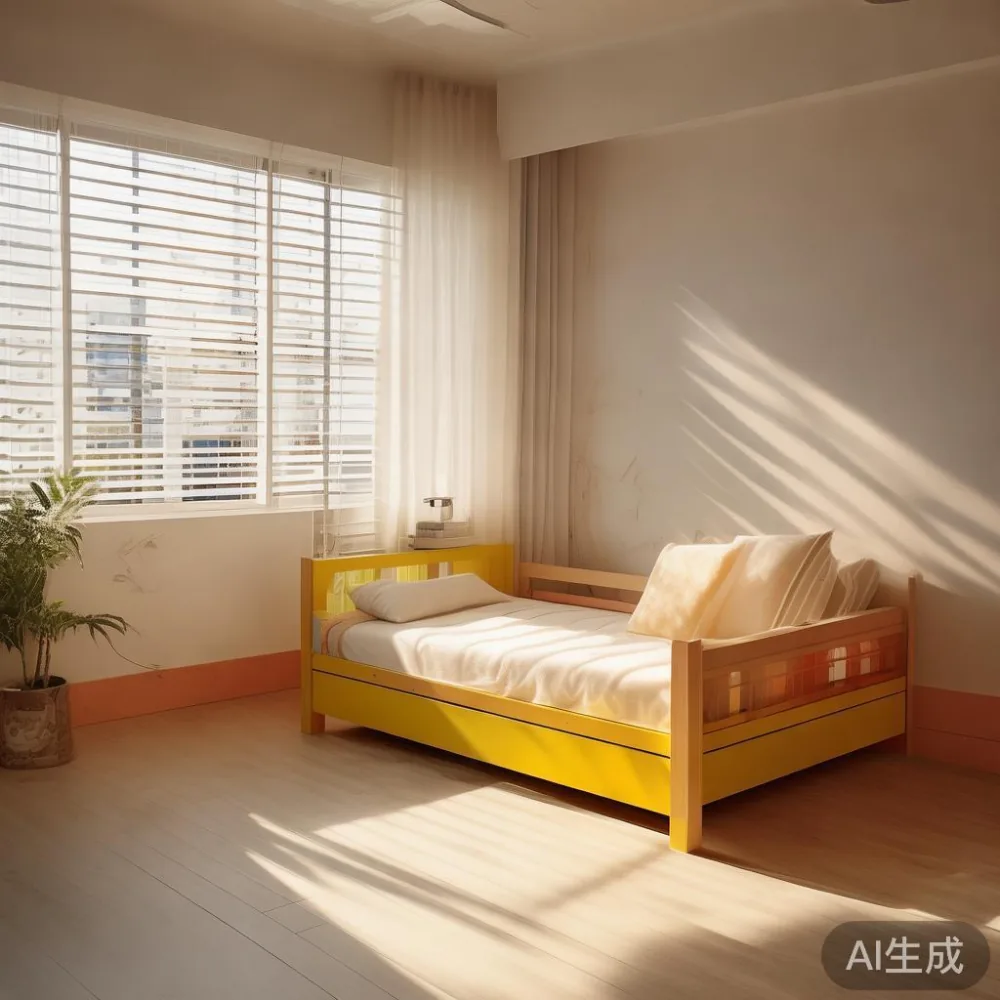
What exactly does a kids bed warranty cover?
The first page of a warranty should identify the covered product in plain language. Search for the model number, finish, dimensions, and component names. “Bed frame” may cover the headboard, side rails, slat support, legs, and fasteners, but it may not cover the mattress, mattress topper, ladder, guardrail, or a separately sold rail. If your child’s setup includes a trundle or a pull-out sleeper, ask whether that mechanism has the same 10-year structural cover or only a 2-year parts warranty.
Do not assume that a warranty for a “kids bed” also covers a matching nightstand. For furniture such as a nightstand, dining table, wardrobe, solid wood sofa, or marble table, the limits can differ because of the materials and use involved. A marble table, for example, may have a structural warranty while natural stone variations, chips, and sealer maintenance are excluded. The same principle applies to a kids bed: specify every movable or add-on component rather than relying on a broad product description.

Look for the date that coverage begins. Some policies start on the purchase date, while others begin on the delivery date or the date of installation. Ask for a receipt showing the SGD amount, GST treatment, delivery address, and order date. For business buyers, a 9% GST registration may affect the invoice format, while household purchases usually show GST-inclusive pricing. If the warranty transfers with the home, request written confirmation; if it stays with the original purchaser, a family member may have no automatic claim rights.
Is the 10-year structural warranty the same as a 10-year full warranty?
No. A structural warranty generally addresses defects in load-bearing components under ordinary use. It does not automatically cover surface scratches, dents, colour changes, ordinary wear, or every moving part. A child jumping on a bed with a stated safe limit of 35 kg, for example, may create a load outside domestic expectations even if the timber remains sound. Ask whether the limit applies per child, per mattress, or across the frame.
Last month, I tested a sample frame with a colleague in a Singapore showroom. We applied 60 kg of test weights gradually and checked the joints, slat spacing, and floor contact over 30 minutes. The frame stayed firm, but that test did not create a warranty claim. What it demonstrated was why assembly instructions matter: 8 of the 12 bolts were hand-tightened initially, and the 4 corner braces still moved slightly. The retailer then showed us how a 4 mm hex key and torque sequence changed the joint. I learned to ask how a claim would be diagnosed before assuming every looseness qualified as a defect.
Check whether the warranty covers screws, dowels, brackets, slats, and hardware supplied with the product. If replacement hardware is free, ask whether the company pays for labour or only ships parts. If labour costs SGD 180 for an in-home visit, will that be reimbursed? A clear answer should distinguish labour from transport, diagnosis, and return freight. A 10-year term sounds substantial, but a 3-day replacement window and SGD 120 collection charge can still make the practical value of that cover quite different.
What do “solid wood” and “solid wood sofa” mean in a warranty?
Solid timber is not the same as solid wood veneer or engineered wood, and the warranty should state which parts use which material. Solid timber can move as humidity changes, so the policy may allow minor surface checking, joint movement, or colour variation within documented limits. A defect such as a split running through a load-bearing rail may be covered, while a 4 cm surface fissure in a decorative panel may not be. The size, location, and function of the flaw all matter.
For a solid wood sofa, frame construction may have 10 years of structural cover while cushions, springs, upholstery, and finish have separate terms. On a kids bed, ask whether the headboard, side rails, feet, and slat deck are solid timber or veneer. If only the visible faces are veneer over engineered board, the policy may refer to the “solid wood frame” but exclude delamination at a different product level. Ask for a material map showing which of the 6 main assemblies are timber, plywood, metal, or plastic.
Finish care is another area where definitions change. “Lifetime refinishing,” as MIDHILL describes it, is a service commitment, but it may require proof of purchase, shipment to the factory, return freight, and a schedule for colour matching. A refinishing option does not necessarily include replacing a stained mattress, treating moisture damage, or repairing a third-party guardrail. Ask whether local touch-up is available within 14 days, whether major refinishing takes 21 days, and whether the customer pays SGD 35 per service request or a higher amount for collection.
Does moving house or using a lift affect coverage?
Delivery damage is not the same as a manufacturing defect, so the delivery record matters. Photograph the kids bed carton before opening it and record its 6 visible sides. Note dents, tears, water marks, crushed corners, and broken pallet boards. Most furniture policies require damage to be reported within a short period, often 3 to 7 days, and may require the original packaging to be retained. Keep the carton for at least 14 days if assembly and inspection will take longer.
Singapore access should be checked before the order is dispatched. Measure the HDB or condo lift door, internal height, internal width, and depth; the relevant lift cabin may be only 107 cm wide in some blocks. Add 10 cm of working space for packaging and do not forget the corridor. A typical 90 cm doorway fits a flat-packed carton but may not fit a 135 cm long assembled frame. If the supplier offers room-of-choice placement, clarify whether the team carries the box to the lift or into the child’s room.
Self-assembly may also affect a claim. The warranty might require the supplied screws, an 8 mm hex key, the recommended 2-person method, and all 16 fixings to be used. Missing washers, over-tightening, or modifying the bed into a 2-tier structure could lead to refusal. Ask whether wall anchoring is recommended for children above 90 cm, what anchor kit is compatible, and whether anti-tip hardware counts as an accessory or part of the frame.
What should the exclusions section tell you?
Read exclusions for facts rather than frustration. Common exclusions include commercial use, hotel use, damp rooms, direct sunlight, pet damage, improper cleaning, and loads beyond the published limit. A covered defect should not require a police report unless there has been an accident, such as a lift dropping the package. Ask what happens after a fall, a flood, or a bed being used as a step to reach a high shelf.
For light-luxury positioning, visual expectations should also be understood. French light luxury often features curved profiles, upholstered details, and a soft heritage colour; American light luxury tends toward clean lines and understated proportions; post-modern light luxury may introduce asymmetry or mixed materials. None of those styles makes a timber immune to movement or finish wear. When searching for how to choose French provincial bed, check the carved or turned joints, leg construction, and finish options rather than choosing from a photograph alone.
Requests such as the best Vintage sofa for 2026, European light luxury for guest room, is Italian light luxury wardrobe worth it, for sale Nordic furniture, and Vintage for dining room may lead you beyond children’s furniture, but use the same warranty-reading method. A dining table needs its extension rails and leaf fixings checked. A wardrobe needs its 2 sliding tracks or 3 hinged doors examined. A guest room sofa requires seat and suspension terms. These categories are relevant as warranty comparisons, but the final purchase and every measurement should remain focused on the kids bed.
How long does a claim take, and who pays for the repair?
A warranty without a service workflow is only a statement of intent. Ask for 4 practical answers: how to report, what evidence is needed, who arranges collection, and how long repair or replacement should take. A useful claim should be acknowledged within 2 working days, diagnosed within 5 working days, and assigned a target completion date. Keep photographs of the defect, the full bed, the connection points, and the care label. Include the warranty number, order number, delivery date, and a description of when the problem began.
Determine whether an in-home technician is available or whether the frame must go to a workshop. For a bulky kids bed, workshop repairs can take 4 to 8 weeks and may involve dismantling 12 joints. If the bed is replaced, ask whether the new item is identical, a current equivalent, or a credit at the original SGD value. Also check whether the replacement receives a fresh 10-year term or inherits the remaining period.
Do not discard a damaged component before approval. A company may need to inspect a broken slat, bracket, or fastener. In some cases, return freight is covered only after a defect is confirmed; in others, the customer pays an initial inspection fee. Ask for the limits in writing, including any SGD 60 collection charge or SGD 120 return charge. MIDHILL’s 14-day return period is a separate matter from a later structural claim, and a return should not be described as warranty repair.
How do I compare light-luxury kids beds beyond appearance?
Compare the specification sheet, not just the finish. Check the external dimensions, mattress size, maximum recommended load, slat spacing, rail height, guardrail position, ladder type, and under-bed clearance. A mattress commonly supported by 6 slats may need 12 evenly spaced slats or a center support rail. Confirm whether a 90 cm mattress fits with less than 2 cm of movement on each side, and whether the safety certificate applies to the exact model rather than the factory.
Assess access and assembly through numbers. Ask for the carton dimensions, packed weight, number of packages, assembly time, and tool list. A 25 kg package may need 2 people on a stair landing, while a 38 kg package may exceed one person’s safe carrying guidance. Singapore delivery commonly takes 7 to 14 working days after stock confirmation, but made-to-order pieces can require 6 to 10 weeks. A precise lead time protects you more than a vague promise of “fast delivery.”
Price comparisons should be made on the same basis. Confirm the SGD price, GST inclusion, delivery charge, lift surcharge, installation charge, mattress, guardrail, and any ladder. Compare products over their full 10-year structural period rather than by the first invoice alone. A lower upfront price with a 2-year cover may suit a child who quickly outgrows the bed, while a higher SGD 980 frame with a 10-year structural warranty may be more economical for a child expected to use it for 6 years.
What questions should I ask before paying for a kids bed?
Ask the retailer or manufacturer to give you the warranty document before payment, including the covered components, exclusions, claim channel, service times, and ownership transfer rules. Request the exact model number in the order and invoice. Check whether the stated 10-year structural warranty applies to the headboard and footboard as well as the side rails, and ask for the maximum load in kilograms. Obtain any local service arrangement in Singapore rather than relying only on an international contact form.
One useful wording is: “Does this kids bed remain covered if it is moved from an HDB flat to a condo and assembled by a different person?” Another is: “If a slat breaks within 36 months, do you collect it, repair it at home, or replace the complete bed frame, and who pays each cost?” A competent answer should include numbers for response periods, repair windows, and charges. If all the supplier can say is that the warranty is “10 years” and “for quality problems,” ask for the missing details in writing.
Before signing, place the bed in the room and check the mattress fit, guardrail alignment, ladder clearance, and lift route. Take 8 photographs, including serial numbers and finish details. Keep the warranty, invoice, assembly instructions, and care guide together in 1 digital folder. A clear record makes a claim faster; an accurate reading of the warranty makes the purchase less risky.
The practical lesson is simple: structure, finish, components, logistics, and service must all appear in the same warranty story. If any of those 5 parts is vague, obtain a written answer before the order is confirmed. For questions, contact MIDHILL at +86 188 2788 2512 and ask for the warranty terms that match the exact kids bed model, including the applicable measurements, coverage period, and claim process.