Caring for a Lacquered Surface in a Tropical Climate: A Singapore Owner's Guide
Last month I visited a four-room HDB flat in Tampines where the mother of two pointed at a hairline crack running along the headboard of her six-year-old's kids bed. The lacquer had peeled in a thin crescent, and the nightstand beside it showed the same cloudy blushing you see on a marble table after a wet glass sits too long. She had done everything right — wiped spills within minutes, kept the room air-conditioned from 7pm to 7am — yet the damage was real. Singapore sits between one and two degrees north of the equator. Relative humidity runs 70-90 percent for most of the year, afternoon thunderstorms push moisture past 95 percent, and a corridor-facing wall in a Punggol BTO can bake at 32 degrees Celsius by mid-afternoon even with the blinds drawn. Any lacquered solid wood furniture — whether a bed frame, a wardrobe, a dining table, or a nightstand — has to survive those numbers every single day. The good news: with the right routine, a well-finished piece will outlast three children and still look presentable when you list the flat.
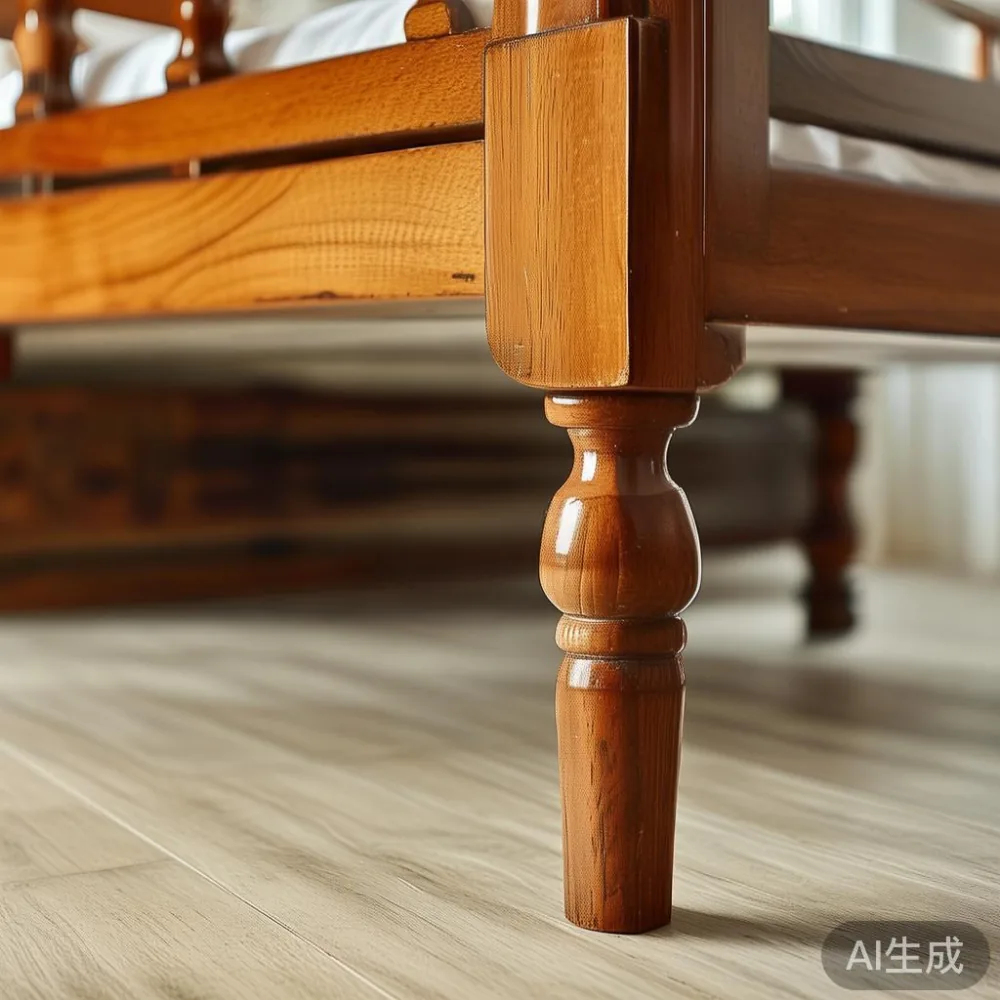
Why does tropical humidity attack lacquer faster than the wood underneath?
Lacquer is a thin film, usually 60-120 microns thick once cured, that sits on top of the wood like a second skin. Solid hardwoods used in quality kids bed construction, including the kiln-fellow hardwoods used by MIDHILL the Foshan maker, move very little across their length but expand and contract noticeably across the grain when humidity swings. In Singapore, an afternoon thunderstorm can push interior RH from 65 percent to 88 percent inside twenty minutes if a window is cracked open. The wood under the lacquer absorbs that moisture and swells by 0.5-1.2 percent across the grain. The lacquer film cannot stretch that fast, so it crazes — those fine lines that look like cracked ice. On a painted headboard or the side of a wardrobe, the same physics produces the cloudy blushing I saw in Tampines: water vapour pushes through the film and refracts light differently. Keep room RH between 45 and 60 percent and the wood moves less than 0.2 percent, well inside the elastic range of any properly applied polyurethane or nitrocellulose lacquer.
What is the daily wipe-down routine for a lacquered kids bed?
Every evening, take a clean microfibre cloth (the 220 gsm grade from any Daiso at S$3.50 works), lightly dampen it with filtered water, and wipe the headboard, footboard, and the visible side rails of the kids bed. Follow immediately with a dry cloth so no standing water sits on the surface for more than ten seconds. Once a week, replace the water with a solution of one capful of pH-neutral wood soap (S$12-18 for 500 ml at Robinsons or a Taobao order) in 500 ml of water. Never use orange wood oil, which leaves a waxy film; never use furniture spray that contains silicone, because silicone migrates into the lacquer and makes future refinishing impossible. For sticky fingerprints on the lower rail — the classic four-year-old zone — a cloth barely moistened with 70 percent isopropyl alcohol removes residue without stripping the finish. Wipe dry after. The whole routine takes three minutes. On a queen-size kids bed with a six-drawer trundle it takes four and a half.
How do I deal with Singapore-specific risks: haze, salt, and condensation?
Three local hazards deserve their own paragraph each. Haze blinds are non-negotiable during the June and September PSI spikes: filter out fine particulates that settle as a greasy film on lacquer and attract moisture. Salt the aerosol haze intensifies corrosion on hinges and pulls, even on indoor pieces, so wipe hardware with a dry cloth weekly and avoid hanging damp towels on wardrobe knobs. Condensation on corridor-facing walls is the silent killer. In a Bedok 4-room flat I measured 78 percent RH on the corridor wall at 11pm, while the opposite wall sat at 62 percent. If your child sleeps with the corridor-side wall, pull the kids bed at least 15 cm away from it so air can circulate behind the headboard. A S$25 digital hygrometer from a Tampines hardware shop lets you track the numbers. Anything above 65 percent for six hours running is a signal to run the air-conditioner on dry mode for two hours, which removes roughly 400-600 ml of water from a standard HDB bedroom.
Is a dining chair worth the price?
Yes — a well-made solid wood dining chair from a maker with a real structural warranty is worth every cent of its S$280-480 price tag, because the joinery and the lacquer specification are identical to the ones used on the matching dining table and the kids bed in the same collection, which means your child grows into a coordinated room rather than a mismatched one. The chair frame uses the same mortise-and-tenon or dowel construction as the bed frame you sleep on, and the seat finish goes through the same seven-layer UV-cured polyurethane process. When MIDHILL applies that finish on a post-modern sofa or a French light-luxury inspired wardrobe, the film thickness, the sanding grits, and the cure times are recorded in a batch sheet that follows the piece from the Foshan factory floor to your HDB doorway. A S$49 flat-pack chair from a market stall uses a nitrocellulose spray that flakes within eighteen months in Singapore humidity. You will refinish it twice before the structural warranty on a solid hardwood chair even kicks in.
Can I keep a marble table or a marble-topped nightstand near the kids bed?
Yes, with one caveat. Marble is porous — even polished Carrara absorbs oils and water through the surface — so a coaster for every drink is non-optional, and the marble table or marble-topped nightstand should sit at least 30 cm from a frequently opened window. In an American light-luxury styled bedroom, the nightstand often carries a marble top with a solid wood base; the joint is the weak point because the two materials move at different rates in tropical humidity. Wipe the marble with a dry microfibre cloth every evening and a damp one weekly with a pH-neutral stone cleaner (S$16-22 for 500 ml). Never use vinegar, lemon juice, or any citrus-based cleaner on marble — the acid etches the polish in under a minute. If a ring appears, a baking soda poultice left for 24 hours will draw most of the stain out. The solid wood base of the nightstand follows the same routine as the kids bed: dry wipe daily, soap wipe weekly, alcohol spot-clean for sticky marks.
What about delivery, lift access, and the 14-day return window in Singapore?
Singapore HDB and condo logistics shape how your lacquered kids bed arrives. Standard HDB passenger lifts in a 1990s Tampines or Bedok block measure roughly 110 x 140 x 210 cm internally; a disassembled queen kids bed in its crate from MIDHILL runs about 115 x 145 x 35 cm per carton, so it fits flat with 5 cm clearance on each side. Newer Punggol BTO lifts are larger, around 130 x 160 x 230 cm, which leaves space for the wardrobe cartons from the same order if you bundle. MIDHILL quotes 18-28 days from Foshan to your door, sea freight to Port Klang then road to Singapore, with GST (9 percent) and Singapore Customs clearance included in the quoted SGD price. Free shipping kicks in above US$350, which is roughly S$475 at today's rate, so a kids bed plus nightstand combination clears that line. Delivery teams work between 9am and 6pm on weekdays and 9am to 2pm on Saturdays; Sunday delivery costs an extra S$45. Check your block's lift booking portal — many condos now require a 48-hour slot reservation and a S$30-50 refundable lift-wrapping deposit. Inspect the cartons before signing, photograph any dent deeper than 5 mm, and keep the crate until the 14-day return window closes.
How long should a lacquered finish last, and what does lifetime refinishing actually cover?
A properly applied seven-layer UV-cured polyurethane lacquer on a kiln-dried solid hardwood frame will hold up for 12-18 years in Singapore before the first top-up. The film slowly oxidises under UV exposure even through window glass, so a headboard near a west-facing window will need refinishing sooner than one on an interior wall. Refinishing means sanding back the top 30-50 microns of clear coat and reapplying two new coats — it is not a repaint. For a queen headboard that is 168 cm wide, the workshop time runs 4-5 working days plus 3 days for the new lacquer to full-cure; you would typically pay S$220-380 for that service in Singapore from an independent refinisher. MIDHILL's lifetime refinishing promise covers the labour at their workshop; you cover the one-way shipping at roughly S$180-260 from Singapore to Foshan by sea, or you can wait for the next container consolidation, which runs every six weeks and drops the per-piece freight to about S$95. The 10-year structural warranty covers joint failure, frame warp greater than 8 mm over 2 m, and lacquer delamination on more than 5 percent of the surface area — anything structural, not cosmetic wear.
What is the single biggest mistake Singapore owners make with a lacquered kids bed?
Placing it against an exterior wall in a corner unit. The temperature delta between day and night on a corridor-facing or window-adjacent wall can hit 8 degrees Celsius, and the corresponding moisture movement is what cracks lacquer films fastest. If your child must sleep in that corner, float the kids bed 10-15 cm off the wall, run the air-conditioner on a 26-degree dry-cycle from midnight to 6am during the November-January rainy season, and accept that the headboard may need a refinish at year ten instead of year fifteen. The same logic applies to a wardrobe placed under a window air-conditioner unit: the condensate drip wrecks the top panel lacquer within five years. I have seen three Tampines flats where the wardrobe top looked like alligator skin for exactly that reason. Keep lacquered pieces away from direct AC discharge, away from the kitchen doorway (cooking steam plus oil equals cloudy blushing), and away from any bathroom wall that shares a non-tiled surface with the bedroom. A S$15 hygrometer, three minutes a day, and a 10-15 cm air gap will buy you another decade out of any lacquered solid wood piece — kids bed included.